

Last Updated: October 29, 2026
Quick Summary
To choose a pain relief clinic in San Jose, look for a thorough evaluation of your pain’s cause, a written treatment plan you can understand, and a clear answer about cost before you commit. A clinic that promises a fast cure for every condition is a warning sign.
- Confirm the clinician’s license and board status with the California state licensing agency.
- Ask what the full treatment plan costs and what your insurance will cover.
- Ask how long before you should expect improvement and how many visits you will need.
- Check that the clinic has a plan if the treatment does not help.
- Bring past imaging, a medication list, and notes on treatments you have already tried.
Table of Contents
- What a Pain Relief Clinic in San Jose Should Offer You
- Types of Pain Relief Treatments to Know About
- Pain Specialist Credentials to Verify
- Pain Clinic Consultation Questions to Ask
- Understanding Pain Management Insurance Coverage
- How to Evaluate a Pain Treatment Plan
- Booking Your First Consultation in San Jose
- Frequently Asked Questions
What a Pain Relief Clinic in San Jose Should Offer You
Choosing a pain relief clinic in San Jose starts with knowing what a good one should offer.
A solid clinic should take time to listen. It should review your history, past treatments, and daily limits before recommending anything. Many patients find that a thorough first visit tells them more than any brochure.
Look for these basics when you compare clinics:
- A full evaluation of the cause of your pain, not just a symptom check
- A written treatment plan you can read and understand
- A straight answer about cost before you commit
- Options that fit your goals, such as returning to work, golf, or daily tasks
- Honest talk about what treatment can and cannot do
Watch out: A clinic that promises a fast cure for every condition is a warning sign. Pain care often takes time and benefits from a plan you can track.
Types of Pain Relief Treatments to Know About
Pain relief covers many approaches, and the right one depends on the cause of your pain. Non-surgical care is a common starting point for chronic back, neck, and joint pain. Regenerative medicine is one option that focuses on supporting the body’s own healing.
Common categories include:
- Non-surgical treatments: Therapies aimed at reducing pain and restoring movement without operating
- Drug-free options: Approaches that avoid or reduce reliance on pain medication
- Regenerative medicine: Treatments meant to address the underlying tissue problem, not only the pain signal
- Rehabilitation and movement care: Exercises and training that rebuild strength and mobility over time
No single treatment fits everyone. Ask a clinic how each option applies to your condition, and what results you can reasonably expect.
Pain Specialist Credentials to Verify
Before you book, check who will treat you. Ask about training, licenses, and experience with your specific problem. Our article on how to choose a reputable regenerative medicine clinic walks through vetting providers step by step. If you have diabetic neuropathy, auto injury, or a long-term joint issue, ask how often the clinic treats patients with that condition.
Verify these details directly:
- The clinician’s license and board status with the California state licensing agency (License Verification)
- Years of hands-on experience with conditions like yours
- Whether the clinic coordinates with your primary doctor or specialists
A reputable clinic will answer these questions without hesitation.
Pain Clinic Consultation Questions to Ask
A first consultation is your chance to judge fit. Bring a list of questions so you leave with clear answers. For a deeper set of questions, read our guide on how to choose a non-surgical pain clinic.
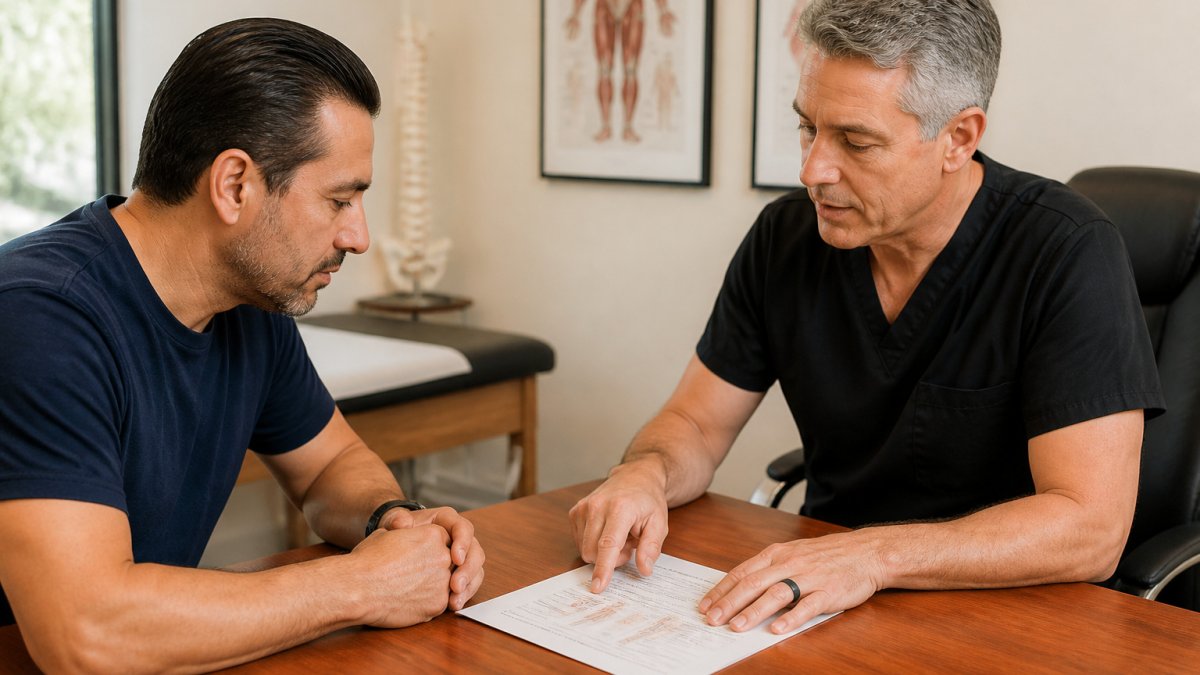
Useful questions include:
Book your consultation today! →
- What do you think is causing my pain, and how sure are you?
- What treatment do you recommend first, and why?
- How long before I should expect improvement?
- How many visits will I need, and how often?
- What does the full plan cost, and what is covered?
- What happens if the treatment does not help?
Write down the answers. Compare them with the next clinic you visit.
Use this quick reference to see what each consultation question is meant to reveal before you book.
| Question | What it reveals | When to ask |
|---|---|---|
| What do you think is causing my pain? | How confident the clinician is in the diagnosis | First visit |
| What treatment do you recommend first, and why? | Whether the recommendation follows from your evaluation | First visit |
| How long before I should expect improvement? | Realistic expectations for progress | First visit |
| How many visits will I need, and how often? | The total time and commitment involved | Before committing |
| What does the full plan cost, and what is covered? | Total out-of-pocket cost and coverage | Before committing |
| What happens if the treatment does not help? | Whether the clinic has a backup plan | Before committing |
Understanding Pain Management Insurance Coverage
Insurance coverage for pain care varies widely. Some plans cover physical therapy and certain procedures, while other treatments may be billed out of pocket. Coverage also depends on your specific plan, so do not assume anything until you check. Our guide to whether regenerative medicine is covered by insurance explains what to ask your plan.
Before you start, call your insurer and ask:
- Is this treatment covered for my diagnosis?
- Do I need a referral or prior authorization?
- What will I owe after my deductible and copay?
- Are there limits on visits or sessions?
Get the answers in writing if you can. Keep a record of who you spoke with and when.
How to Evaluate a Pain Treatment Plan
A good treatment plan should be clear, specific, and easy to track. Our article on how long chronic back pain treatment takes to work explains typical timelines. Use this checklist to judge it:
- The plan names the likely cause of your pain
- It lists the steps and the order you will take them
- It gives a realistic timeline for progress
- It explains how progress will be measured
- It states the total cost or a clear cost range
- It includes what to do if you are not improving
If a plan is vague on any of these points, ask for more detail before you agree.
Booking Your First Consultation in San Jose
When you are ready to act, start by reaching out to a clinic that answers your questions directly. You can review our new-patient offer before you book. Bring any past imaging, a list of medications, and notes on what treatments you have already tried.
Choosing the right clinic takes a little effort, but it pays off. Use the checklist above, ask the hard questions, and trust a clinic that explains its plan in plain language.
Frequently Asked Questions
How do I choose a pain management clinic in San Jose?
Start by checking the clinic’s credentials, the types of treatment it offers, and whether its approach fits your condition. Ask whether the clinic evaluates the cause of your pain or only treats symptoms, and whether it coordinates with your primary care doctor. Compare two or three clinics using the same checklist so you can judge them on equal terms. A good first visit includes a thorough exam and a clear explanation of options before any treatment begins.
What credentials should a pain management doctor have?
Look for a physician who is board certified in pain medicine or a related specialty, and confirm the license is active with the California Medical Board. Ask about their training, such as residency and fellowship programs, and whether they have experience with your specific condition. Credentials should be easy to verify and discussed openly during your consultation.
Does insurance cover pain management in San Jose?
Coverage depends on your health plan, the type of treatment, and whether your provider is in network. Many plans cover evaluation and common pain treatments, but some regenerative or elective procedures may be excluded. Before booking, call your insurer and ask whether the specific clinic and treatment are covered, and request any prior authorization requirements in writing. Pricing varies, so ask the clinic for a written estimate or contact Advanced Health Center directly for current pricing and a quote.
What questions should I ask at a pain clinic consultation?
Ask what is causing your pain, which treatments the clinic recommends and why, and what results are realistic within a given timeframe. Find out how many visits are typically required and how progress is measured. Ask what happens if a treatment does not help and whether the clinic offers a plan to reassess. Also ask how the clinic coordinates with your other doctors, especially if you take prescribed medications.
