

Table of Contents
- Why Golfers Are Turning to Regenerative Medicine in 2026
- PRP Therapy for Golfer’s Elbow: What the Research Shows
- Stem Cell Therapy for Lower Back Pain and Disc Degeneration
- Prolotherapy: A Non-Surgical Treatment for Golf Injuries
- Regenerative Medicine Recovery Time: What to Expect Week by Week
- Insurance, Cost, and Long-Term Maintenance for Aging Golfers
- Frequently Asked Questions
Last Updated: September 15, 2026
Why Golfers Are Turning to Regenerative Medicine in 2026
Golfers are increasingly choosing regenerative medicine for golfers because it targets the root cause of joint and tendon damage rather than masking symptoms. At Advanced Health Center, we’ve watched this shift accelerate as active adults look for ways to stay on the course without surgery or long-term pain medication.
The golf swing is a violent motion disguised as a gentle one. A full drive rotates the lumbar spine, loads the lead knee, and stresses the elbow and shoulder in a fraction of a second. Repeated hundreds of times a month, that motion wears down tendons, ligaments, and cartilage.
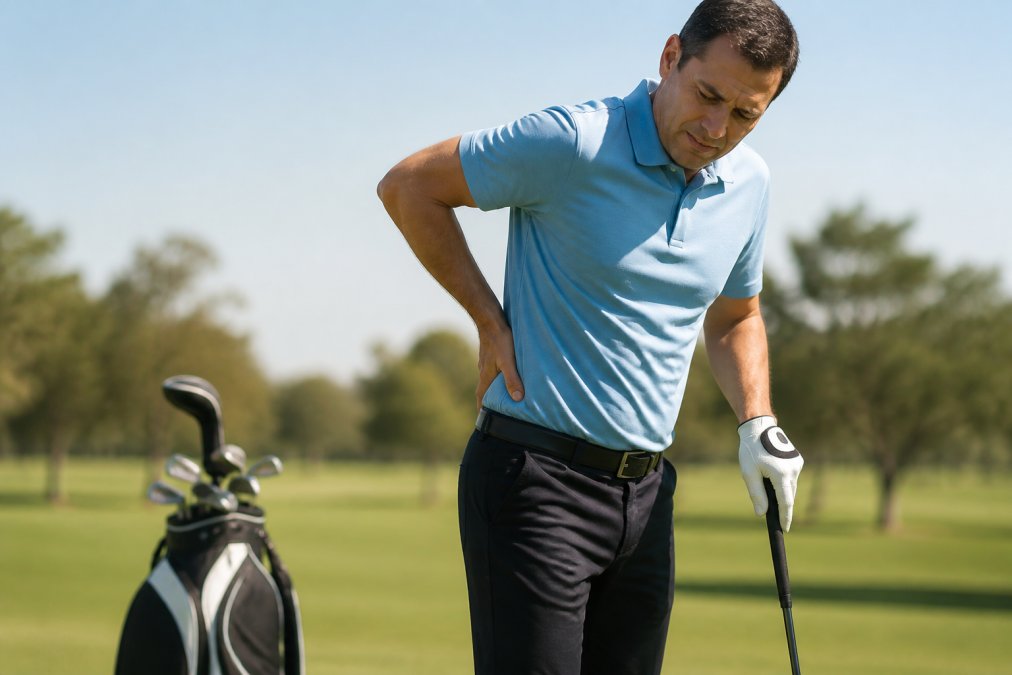
The Biomechanical Toll of the Golf Swing
The modern swing generates significant biomechanical stress on the body’s connective tissues. The lumbar spine absorbs rotational force, the lead elbow takes the brunt of the downswing, and the lead knee twists under load. Over years, this repetitive strain causes tendon degeneration, ligament sprains, and joint inflammation.
Regenerative medicine for golfers addresses these injuries at the tissue level. Instead of cortisone, which suppresses inflammation temporarily, orthobiologics like platelet-rich plasma and mesenchymal stem cells aim to stimulate actual tissue repair.
What Makes a Treatment the Best Option for You
The best regenerative medicine for golfers depends on three factors: the specific injury, its chronicity, and your recovery goals. A golfer with acute golfer’s elbow has different needs than one with lumbar disc degeneration.
- Injury type: Tendon injuries often respond well to PRP; cartilage and disc issues may need stem cell therapy
- Chronicity: Acute injuries may need fewer sessions than long-standing degeneration
- Recovery goals: Competitive players may prioritize faster return; others prioritize long-term joint preservation
PRP Therapy for Golfer’s Elbow: What the Research Shows
PRP therapy for golfer’s elbow is a minimally invasive treatment that uses your own concentrated platelets to accelerate healing of the damaged tendon. It’s one of the most studied regenerative options for epicondylitis.
How Platelet-Rich Plasma Targets Tendon Degeneration
Platelet-rich plasma (PRP) is a concentration of your own blood plasma containing growth factors that signal tissue repair. When injected into a degenerated tendon, these growth factors attract repair cells and support new collagen formation.
The procedure takes under an hour. A small blood sample is spun in a centrifuge, the platelet-rich layer is isolated, and the concentrate is injected into the injured area under ultrasound guidance.
Session Frequency and What to Expect
Expect mild soreness for a few days after each injection as the inflammatory healing response begins (pubmed.ncbi.nlm.nih.gov). Many patients notice meaningful improvement in tendon pain within six to eight weeks, though full tissue remodeling can take three to six months.
The biggest mistake golfers make after PRP is returning to full swings too soon. Give the tendon at least two weeks of relative rest before progressively loading it, or you risk undoing the healing response.
Stem Cell Therapy for Lower Back Pain and Disc Degeneration
Stem cell therapy for lower back pain uses mesenchymal stem cells to address degenerative disc disease and joint inflammation that cause chronic pain. It’s typically reserved for golfers whose pain hasn’t responded to conservative care like physical therapy, anti-inflammatories, or corticosteroid injections.
Where the Cells Come From
In practice, most regenerative clinics use one of three sources:
- Bone marrow aspirate concentrate (BMAC): Marrow is drawn from the back of the pelvis, then concentrated to isolate mesenchymal stem cells and supporting growth factors. This is the most common autologous (your-own-tissue) option.
- Adipose-derived cells: Fat tissue harvested via a small lipoaspirate contains a high concentration of mesenchymal stem cells. Some clinics prefer this for volume.
- Umbilical cord or amniotic tissue products: These are donor-derived and regulated differently from autologous procedures. The FDA has taken an active enforcement stance against unapproved products marketed as stem cell treatments, so ask any clinic to explain the regulatory status of what they’re injecting (the FDA).
What Happens During the Procedure
A typical lumbar stem cell procedure takes one to two hours. The physician harvests the source tissue, processes it in a centrifuge or closed system, and injects the concentrate into the disc space, the surrounding facet joints, or both. Some protocols combine the injection with platelet-rich plasma to add growth factors.
Who Is a Good Candidate
Stem cell therapy is generally considered for golfers with:
Book your consultation today! →
- Moderate disc degeneration confirmed on MRI, not full disc collapse
- Chronic pain lasting more than three to six months that hasn’t responded to conservative care
- No instability or nerve compression requiring surgical decompression
- Realistic expectations, this is a repair and pain-modulation strategy, not a structural rebuild
Golfers with severe spinal stenosis, spondylolisthesis, or active radiculopathy are usually steered toward other options first.
Recovery and Realistic Outcomes
Recovery trajectories vary widely. Some patients report reduced pain and improved functional mobility within four to six weeks, while others see gradual change over three to six months as the injected cells modulate the inflammatory environment and support cartilage repair.
Because stem cell therapy is more involved than PRP, it’s usually recommended for chronic or advanced cases where simpler options have failed. Ask for a written treatment plan that specifies the cell source, the injection targets, and the expected follow-up schedule before committing.
Be cautious of clinics advertising “stem cell” injections that are actually processed amniotic or cord products with no live cells. Ask directly what is being injected and how it is regulated.
::: Verifying the biological viability of these substances remains essential, as many golfers are now exploring the therapeutic potential of cellular regeneration products to support long-term tissue health.
The Golfer-Specific Angle: Protecting the Swing Pattern
For golfers, the lumbar spine is the engine of the swing, it drives the rotational force that generates clubhead speed. A degenerating disc doesn’t just cause pain; it changes how you move. Many golfers unconsciously shorten their backswing or shift to an arms-dominant motion to avoid the pinch, which costs distance and consistency.
That’s why stem cell therapy for lumbar disc degeneration should be paired with a swing assessment.
Prolotherapy: A Non-Surgical Treatment for Golf Injuries
What Is Actually Injected
Prolotherapy solutions typically contain one of the following:
Which Golf Injuries It Suits Best
Prolotherapy is a strong fit for golfers dealing with:
How It Differs From PRP
Session Frequency and What to Expect
Schedule prolotherapy sessions in the off-season if you can. The treatment works best when you can avoid heavy rotational loading for a few weeks after each injection, and that’s hard to do mid-tournament season.
The Golfer-Specific Angle: Why Ligament Laxity Matters for Your Swing
Regenerative Medicine Recovery Time: What to Expect Week by Week
| Phase | Timeframe | Focus | Typical Activity |
|---|---|---|---|
| Acute protection | Week 1 | Let inflammation begin healing | Rest, light walking |
| Early rehab | Weeks 2-4 | Restore range of motion | Stretching, light putting |
| Loading | Weeks 4-8 | Rebuild tissue strength | Chipping, short irons |
| Return to play | Weeks 8-12 | Full swing progression | Gradual full rounds |
Post-Treatment Rehabilitation Protocols
Skipping the graded return and jumping straight back to full driver swings is the most common reason golfers re-injure a treated tendon. The tissue may feel fine before it’s strong enough to handle full rotational load.
Insurance, Cost, and Long-Term Maintenance for Aging Golfers
Comparative Efficacy by Injury Type
| Injury Type | Often Best Suited To | Why |
|---|---|---|
| Golfer’s elbow (tendinopathy) | PRP therapy | Targets tendon degeneration directly |
| Ligament sprains / joint laxity | Prolotherapy | Strengthens weakened connective tissue |
| Lumbar disc degeneration | Stem cell therapy | Addresses disc and cartilage repair |
| Rotator cuff tendinopathy | PRP or stem cell therapy | Depends on chronicity and severity |
There is no single best regenerative medicine for golfers. The right choice depends on which tissue is injured, how long it’s been damaged, and your goals for returning to play.
Frequently Asked Questions
What is the biggest problem with regenerative medicine for golfers?
The main issue is inconsistent insurance coverage. Most regenerative treatments, including PRP and stem cell therapy, are considered elective by insurance carriers and are paid out-of-pocket. This financial barrier means golfers must weigh the potential for long-term pain relief against the upfront expense.
How long does it take to recover from PRP for golfer’s elbow?
Recovery from PRP therapy for golfer’s elbow typically involves a phased return to activity. Initial inflammation lasts a few days, followed by a gradual strengthening phase over 4 to 6 weeks. Many patients resume light golf practice by week 6, but full pain-free play may take 3 to 6 months. Your regenerative medicine recovery time depends on injury severity and adherence to post-treatment rehabilitation protocols.
Will insurance pay for regenerative medicine treatments?
Most insurance plans in the U.S. do not cover regenerative medicine for musculoskeletal conditions like golfer’s elbow or lower back pain, classifying them as experimental or elective. Patients should request a detailed cost breakdown from their clinic and explore flexible spending accounts or payment plans to manage out-of-pocket expenses.
Are stem cell treatments effective for chronic joint pain in golfers?
Stem cell therapy using mesenchymal stem cells has shown promise for chronic joint pain, particularly for lumbar disc degeneration and cartilage repair. Research indicates improvements in joint function scores and reduced inflammation. However, results vary by injury type and patient age. It is most effective when combined with a rehabilitation plan and reserved for cases where conservative treatments have failed.
What is the best non-surgical treatment for golf injuries?
The best non-surgical treatment for golf injuries depends on the specific condition. PRP therapy excels for tendon issues like golfer’s elbow, stem cell therapy is suited for degenerative disc disease, and prolotherapy works well for joint laxity. A comprehensive evaluation by a regenerative medicine specialist can determine which option, or combination, matches your injury and recovery goals.