

Table of Contents
- How Regenerative Therapy Works for Back Pain
- Types of Regenerative Procedures for Spinal Conditions
- Candidates for Regenerative Back Therapy
- Stem Cell Therapy for Back Pain Cost and Financial Considerations
- Success Rates and What to Expect
- Regenerative Therapy vs. Traditional Surgery
- Red Flags and What to Avoid
- Conclusion
Last Updated: August 19, 2026
How Regenerative Therapy Works for Back Pain
Regenerative therapy addresses the root cause of spinal degeneration rather than just masking symptoms. These treatments use the body’s own healing mechanisms, stem cells, platelet-rich plasma, or bone marrow concentrate, to repair damaged intervertebral discs, cartilage, and supporting tissues in the lumbar spine.
When an intervertebral disc degenerates, it loses hydration and structural integrity, leading to chronic low back pain. Regenerative procedures inject biologic materials directly into the damaged disc or surrounding structures. These materials contain growth factors and anti-inflammatory compounds that stimulate the body’s natural healing response.
A physician uses imaging guidance to position a needle precisely at the degeneration site, then delivers the biologic therapy directly to damaged tissue. This approach reduces inflammation, promotes cellular repair, and potentially regenerates disc material over time, fundamentally different from spinal fusion surgery, which removes the damaged disc and fuses vertebrae together.
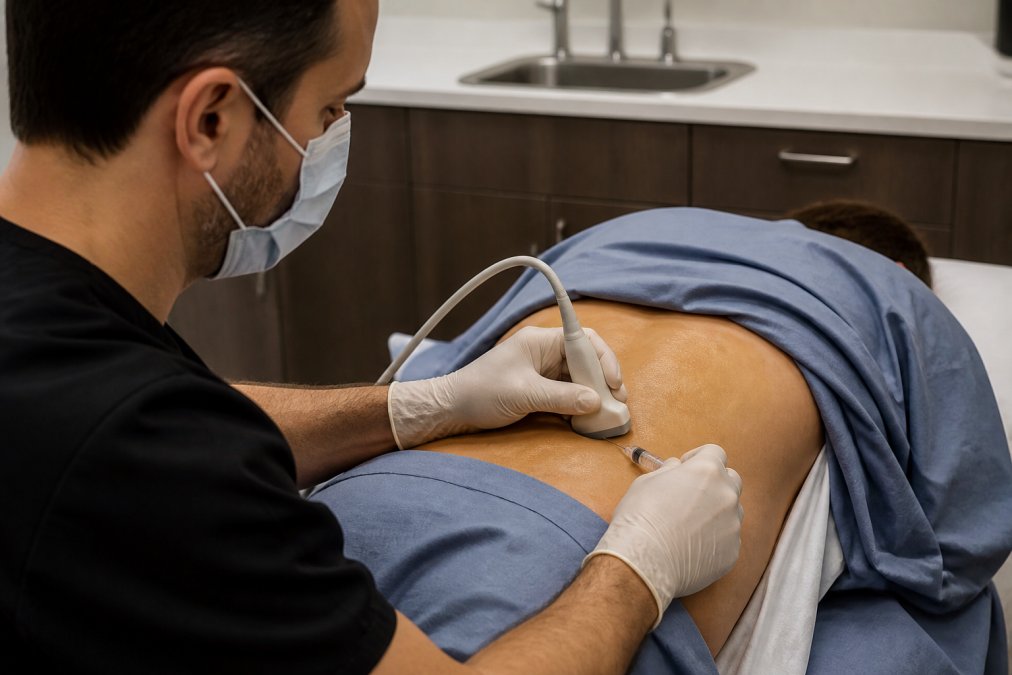
The key advantage of regenerative therapy is that it preserves your natural spine anatomy. Unlike fusion surgery, which permanently restricts spinal motion at the treated level, regenerative approaches maintain flexibility and allow for continued mobility in the affected area.
Types of Regenerative Procedures for Spinal Conditions
Several distinct regenerative therapies treat back pain, each with different mechanisms and applications.
Mesenchymal Stem Cell Therapy
Mesenchymal stem cells are undifferentiated cells capable of transforming into disc cells and cartilage. When injected into a degenerative intervertebral disc, these cells differentiate into disc-like cells and release anti-inflammatory compounds that reduce pain and support tissue repair.
The cells are typically harvested from bone marrow aspirate or adipose tissue, then either used immediately or expanded in a laboratory before injection. This approach addresses underlying degeneration rather than simply blocking pain signals. Many patients report functional improvement and pain reduction following treatment, though results vary based on degeneration severity, patient age, and overall health.
Platelet-Rich Plasma Therapy for Lumbar Pain
Platelet-rich plasma concentrates platelets from a patient’s own blood to create a solution rich in growth factors and healing proteins. When injected into degenerative discs or surrounding tissues, it triggers an inflammatory response that initiates tissue repair.
The procedure involves drawing blood, processing it through centrifugation to concentrate platelets, and injecting the concentrate directly into the affected area. Platelet-rich plasma is particularly effective for patients with mild to moderate disc degeneration or facet joint arthritis. The growth factors stimulate cellular healing and reduce pain-causing inflammation. Patients typically experience improvement within weeks to months as the healing cascade progresses.
Bone Marrow Aspirate Concentrate
Bone marrow aspirate concentrate is harvested directly from a patient’s pelvis and contains mesenchymal stem cells, growth factors, and other bioactive compounds that support tissue repair. Unlike laboratory-expanded stem cells, it’s used immediately, preserving the full spectrum of healing compounds.
The procedure involves needle aspiration of bone marrow, followed by centrifugation to concentrate regenerative cells. The concentrate is then injected into the degenerative disc or damaged tissues. This approach combines stem cell therapy benefits with the immediacy and cost-effectiveness of point-of-care treatment, making it particularly useful for patients seeking single-visit treatment without laboratory processing delays.
Candidates for Regenerative Back Therapy
Ideal candidates typically have specific clinical presentations and medical histories suggesting these treatments will be effective. Candidates generally include patients with degenerative disc disease, chronic low back pain unresponsive to conservative treatment, facet joint arthritis, and mild to moderate spinal stenosis. Patients who have failed physical therapy, injections, or other non-surgical interventions often benefit from regenerative approaches. Age alone is not limiting; active seniors frequently achieve excellent results.
Patients with recent auto accident injuries or long-term musculoskeletal pain from repetitive strain often respond well to targeted regenerative therapy.
Conversely, severe spinal stenosis with significant bone spur formation, advanced osteoarthritis with substantial bone loss, or complete disc collapse may require surgical intervention. Patients with active infections, uncontrolled diabetes, or certain blood disorders may not be appropriate candidates. A comprehensive evaluation by a physician experienced in regenerative medicine is essential.
Avoid providers who recommend regenerative therapy for every patient regardless of imaging findings or clinical presentation. Responsible practitioners perform thorough diagnostic imaging and clinical assessment before recommending treatment. If a provider suggests treatment without reviewing your specific condition, seek a second opinion.
Stem Cell Therapy for Back Pain Cost and Financial Considerations
The cost of stem cell therapy for back pain varies significantly based on the specific procedure, biologic material used, and treatment facility. Since regenerative therapies are often considered experimental by insurance companies, many patients face out-of-pocket expenses.
Treatment costs depend on whether the procedure uses bone marrow aspirate concentrate (typically lower cost due to point-of-care processing) or laboratory-expanded stem cells (higher cost due to processing and expansion time). Multiple injections or follow-up treatments may be necessary for optimal results.
Insurance coverage for regenerative therapies remains limited. Many plans classify these treatments as experimental and decline coverage. Patients should contact their insurance provider directly to understand coverage before pursuing treatment.
Advanced Health Center works with patients to discuss realistic costs and available financing options. Understanding the financial commitment upfront allows informed decisions about care.
Before committing to regenerative therapy, obtain a clear cost estimate from your provider, verify your insurance coverage, and understand what outcomes you can realistically expect. This prevents financial surprises and ensures you’re making a decision based on complete information.
Success Rates and What to Expect
Success rates for regenerative therapy vary based on the specific condition, patient age and health, and the type of procedure performed. Many patients report significant functional improvement and pain reduction following treatment, though results are not guaranteed.
For degenerative disc disease, functional improvement often becomes apparent within 4-12 weeks as the healing cascade progresses. Some patients experience immediate pain relief, while others notice gradual improvement over several months. Patient-reported outcomes show many individuals experience meaningful pain reduction and restored mobility for daily activities. Active seniors frequently return to hobbies like golf or gardening, while office workers report reduced pain with prolonged sitting.
Book your consultation today! →
Long-term data shows many patients maintain improvement for 3-5 years or longer following successful treatment. However, results depend on multiple factors: initial degeneration severity, adherence to post-treatment activity modification, overall health status, and the specific regenerative approach used.

Setting realistic expectations is crucial. Regenerative therapy addresses tissue damage and reduces inflammation, but cannot reverse severe structural degeneration or eliminate all pain in every case. Some patients may require additional treatments or complementary therapies for optimal outcomes.
Regenerative Therapy vs. Traditional Surgery
The choice between regenerative therapy and traditional spinal surgery depends on the specific condition, degeneration severity, and patient goals.
Regenerative therapy offers several advantages over traditional surgery. These minimally invasive procedures preserve spinal anatomy and maintain natural motion at the treated level. Recovery is typically faster, with most patients resuming normal activities within days or weeks rather than months. There’s no surgical scar, reduced infection risk, and no need for general anesthesia in most cases.
Spinal fusion surgery permanently restricts motion at the fused level. While effective for severe instability or neurological symptoms, it creates long-term biomechanical changes. Adjacent-level degeneration, accelerated wear at spinal levels above and below the fusion, occurs in many patients over time, potentially requiring additional surgery.
However, traditional surgery may be necessary for certain conditions. Severe spinal stenosis with significant bone spur formation, unstable vertebrae, or progressive neurological symptoms sometimes require surgical decompression or fusion.
Many patients now view regenerative therapy as a logical step between conservative treatment and surgical intervention. This approach allows tissue repair before considering the permanent structural changes that surgery entails.
Regenerative therapy works best for patients with mild to moderate degenerative disc disease, chronic pain unresponsive to conservative care, and a desire to avoid surgery. It’s ideal for active individuals who want to preserve spinal mobility and return to normal function quickly.
Red Flags and What to Avoid
The growing popularity of regenerative medicine has attracted providers making exaggerated claims or using unproven protocols.
Avoid providers who guarantee results or promise complete pain elimination. Responsible practitioners acknowledge that results vary. Claims like "cures arthritis" or "eliminates back pain permanently" should raise immediate concerns.
Be skeptical of providers offering treatment without proper diagnostic imaging or clinical evaluation. A thorough assessment should include MRI or CT imaging to confirm the specific problem. Providers recommending treatment based solely on a brief consultation are not following evidence-based medicine.
Questionable practices include using non-autologous stem cells (from donors rather than the patient) or unproven stem cell sources. Autologous approaches, using the patient’s own cells, have clearer safety profiles and documented outcomes.
Watch for high-pressure sales tactics. Legitimate practitioners give patients time to consider options and welcome questions. Verify that providers are appropriately licensed and credentialed in interventional spine medicine or regenerative orthopedics. Facilities should maintain proper sterility standards and use FDA-cleared equipment for cell processing when applicable.
Does regenerative therapy work for back pain? For the right patients with appropriate conditions, the answer is increasingly yes. These treatments address the underlying tissue damage causing chronic pain, offering an alternative to surgery and long-term medication dependence.
Advanced Health Center brings over 40 years of experience managing complex pain conditions and helping patients avoid surgery. Our physicians evaluate each patient’s specific condition to determine whether regenerative therapy, stem cell treatment, platelet-rich plasma, or bone marrow concentrate offers the best pathway to recovery.
If you’ve exhausted conservative treatments and want to explore regenerative options before considering surgery, consult with a regenerative medicine specialist to understand your options. Book your consultation today and discover how personalized regenerative therapy can help you regain mobility and live the active life you deserve.
| Regenerative Procedure | Best For | Recovery Time | Typical Timeline to Results |
|---|---|---|---|
| Mesenchymal Stem Cell Therapy | Moderate degenerative disc disease | 1-2 weeks | 8-16 weeks |
| Platelet-Rich Plasma Therapy | Mild to moderate degeneration, facet pain | 3-5 days | 4-12 weeks |
| Bone Marrow Aspirate Concentrate | Point-of-care treatment preference | 1 week | 6-12 weeks |
| Spinal Fusion Surgery | Severe instability, neurological symptoms | 6-12 weeks | 3-6 months |
Frequently Asked Questions
What is the success rate of regenerative therapy for back pain?
Success rates for regenerative therapy vary depending on the specific procedure and condition being treated. Clinical trials show that patients receiving stem cell therapy or platelet-rich plasma injections for degenerative disc disease report significant improvements in pain and functional ability. Many patients experience meaningful pain reduction within 3-6 months, though results depend on factors like age, severity of degeneration, and adherence to post-treatment protocols. Speak with your provider about realistic expectations for your specific condition.
How long does it take to see results from regenerative back injections?
Most patients begin noticing improvements within 2-4 weeks after treatment, with continued functional improvement over 3-6 months as the healing process progresses. Some patients experience faster results, while others require more time for tissue repair and cellular regeneration. The timeline depends on the extent of damage, the type of procedure used, and your body's natural healing capacity. Your treatment plan will include guidance on activity modification during the recovery period to support optimal outcomes.
Is regenerative medicine covered by insurance for back pain?
Insurance coverage for regenerative therapy varies significantly by plan and provider. Many insurance companies classify these treatments as experimental or investigational, which means they may not be covered under standard policies. However, some plans do provide coverage for specific procedures, particularly when they're performed as alternatives to surgery. Contact your insurance provider directly to understand your coverage options. Your healthcare provider can also help navigate insurance requirements and discuss financing alternatives if coverage is limited.
What conditions make someone a good candidate for regenerative back therapy?
Ideal candidates for regenerative therapy typically have degenerative disc disease, chronic low back pain unresponsive to conservative treatment, or specific musculoskeletal injuries affecting the lumbar spine. Candidates should generally be in reasonable overall health, have realistic expectations about outcomes, and be willing to follow post-treatment care instructions. Age alone is not a barrier, many patients in their 60s and 70s successfully undergo these procedures. Your healthcare provider will evaluate your medical history, imaging results, and symptoms to determine if regenerative therapy is appropriate for your situation.
This article was written using GrandRanker