

Table of Contents
- Identify Your Shoulder Pain: Common Causes of Chronic Shoulder Pain
- Recognize Your Symptoms: When Shoulder Pain Signals a Deeper Problem
- Step 1: Assess Your Posture and Ergonomics
- Step 2: Address Stress and Sleep Position Optimization
- Step 3: Implement Self-Care and Self-Myofascial Release Techniques
- Step 4: Non-Surgical Shoulder Pain Treatment Options
- When to See a Specialist for Persistent Shoulder Pain
- Common Mistakes That Keep Shoulder Pain From Healing
Last Updated: August 23, 2026
Identify Your Shoulder Pain: Common Causes of Chronic Shoulder Pain
Identifying the underlying cause of shoulder pain is essential for effective treatment and lasting relief. The shoulder is a complex joint with multiple components, bones, cartilage, tendons, ligaments, and bursae, that work together to provide mobility and stability. When any of these structures become damaged or inflamed, pain develops. Different underlying problems can produce similar symptoms, which is why pinpointing the exact cause matters.
Rotator Cuff Injuries and Tendonitis
Rotator cuff injuries involve damage to the muscles and tendons that stabilize the shoulder joint. Repetitive overhead activities, sudden trauma, or gradual wear can tear or strain these tissues, leading to inflammation and pain. Tendonitis occurs when tendons become inflamed from overuse or injury. Office workers with poor posture, athletes performing repetitive throwing motions, and people who sleep on the same side repeatedly all face elevated risk.
Pain from rotator cuff issues typically worsens with overhead reaching, lifting objects away from the body, or sleeping on the affected side. Weakness in the shoulder often accompanies the pain, making everyday tasks difficult.
Shoulder Impingement and Bursitis
Shoulder impingement happens when soft tissue structures get pinched between the bones of the shoulder. As the shoulder moves, tendons and the bursa (fluid-filled sacs that cushion joints) can become compressed, creating inflammation and discomfort.
Bursitis is inflammation of the bursa itself. When inflamed from repetitive motion or direct pressure, it causes sharp pain and limits range of motion. These conditions frequently occur together and share similar risk factors: poor posture, repetitive overhead movements, and muscle weakness.
Frozen Shoulder and Labral Tears
Frozen shoulder, medically known as adhesive capsulitis, involves stiffening of the shoulder joint capsule. The connective tissue surrounding the shoulder becomes thickened and tight, dramatically reducing range of motion and progressing through stages of pain and stiffness.
Labral tears affect the cartilage ring that deepens the shoulder socket and provides stability. These tears can result from acute injury or develop over time from repetitive stress, often causing pain with specific movements and a clicking or catching sensation in the joint.
Recognize Your Symptoms: When Shoulder Pain Signals a Deeper Problem
Understanding your specific symptoms helps differentiate between various shoulder conditions and determines when professional intervention becomes necessary.
Sharp pain that worsens with particular movements often signals a structural problem like a rotator cuff tear or impingement. Dull, aching pain that persists throughout the day might indicate bursitis or chronic inflammation. Stiffness that gradually worsens over weeks or months suggests frozen shoulder. A clicking, popping, or catching sensation typically points to labral involvement.
Pay attention to when your pain occurs. Pain at night that disrupts sleep often relates to rotator cuff issues or bursitis. Pain during specific activities like reaching across your body, lifting overhead, or throwing suggests the movement is aggravating a particular structure. The location of pain also matters: outer shoulder often relates to rotator cuff problems, front shoulder frequently indicates impingement or tendonitis, and inner shoulder can suggest labral issues.
Weakness without significant pain sometimes precedes other symptoms and can indicate rotator cuff damage. If you notice difficulty lifting your arm or loss of strength in the shoulder, this warrants evaluation.
Step 1: Assess Your Posture and Ergonomics
Your posture directly influences shoulder health and can be either a major contributor to pain or a significant part of the solution. Poor posture shifts stress onto shoulder structures, creating chronic tension and accelerating wear.
Forward head posture, where your head juts forward from your shoulders, is extremely common in desk workers and screen users. This position pulls the shoulders forward and upward, creating constant tension in the upper trapezius and shoulder muscles. Over time, this postural stress leads to muscle imbalance, reduced shoulder stability, and chronic pain.
Rounded shoulders similarly compromise shoulder mechanics by reducing the space available for rotator cuff tendons and weakening the muscles that stabilize the shoulder blade.

Evaluate your workspace setup:
- Monitor height: top of screen at or slightly below eye level
- Keyboard and mouse: positioned so elbows bend at 90 degrees
- Chair support: lumbar support that maintains natural spine curve
- Desk height: allows shoulders to remain relaxed, not elevated
- Frequent breaks: stand and move every 30-45 minutes
Postural awareness during daily activities matters as much as workspace setup. Notice whether you elevate your shoulders toward your ears during stressful tasks. Practice relaxing your shoulders down and back throughout the day. This simple awareness often reduces shoulder tension significantly.
Advanced Health Center helps patients identify postural patterns that contribute to their shoulder pain and develops targeted corrections to address the root cause.
Step 2: Address Stress and Sleep Position Optimization
Stress creates muscular tension throughout the body, and the shoulders absorb a disproportionate amount. When you experience emotional stress, your nervous system triggers a protective response that tightens the upper trapezius and shoulder muscles. Over time, chronic stress creates chronic muscle tension that feeds into shoulder pain.
Managing stress through regular practices reduces shoulder tension significantly. Meditation, deep breathing exercises, and progressive muscle relaxation all lower nervous system activation and reduce muscle tension. Even 10-15 minutes daily of intentional stress management can decrease shoulder pain substantially.
Your sleep position directly affects shoulder health throughout the night. Sleeping on your side, particularly on the same side repeatedly, places stress on the shoulder joint and rotator cuff. Sleeping on your stomach forces your neck and shoulder into awkward positions that create tension.
Sleeping on your back is optimal for shoulder health (the NIH). This position distributes weight evenly and allows shoulder muscles to relax fully. If you prefer side-sleeping, alternate sides nightly and place a pillow between your knees to maintain spinal alignment. Your pillow should maintain neutral neck alignment, not too high to elevate your shoulder or too low to allow your head to drop.
Step 3: Implement Self-Care and Self-Myofascial Release Techniques
Self-myofascial release addresses muscle tension and trigger points that contribute to shoulder pain. This technique involves applying sustained pressure to tight muscles, which releases tension and improves tissue quality.
Foam rolling the upper back and shoulder area provides significant relief. Position a foam roller horizontally across your upper back, just below your shoulder blades, and slowly roll up and down, pausing on tender spots for 20-30 seconds.
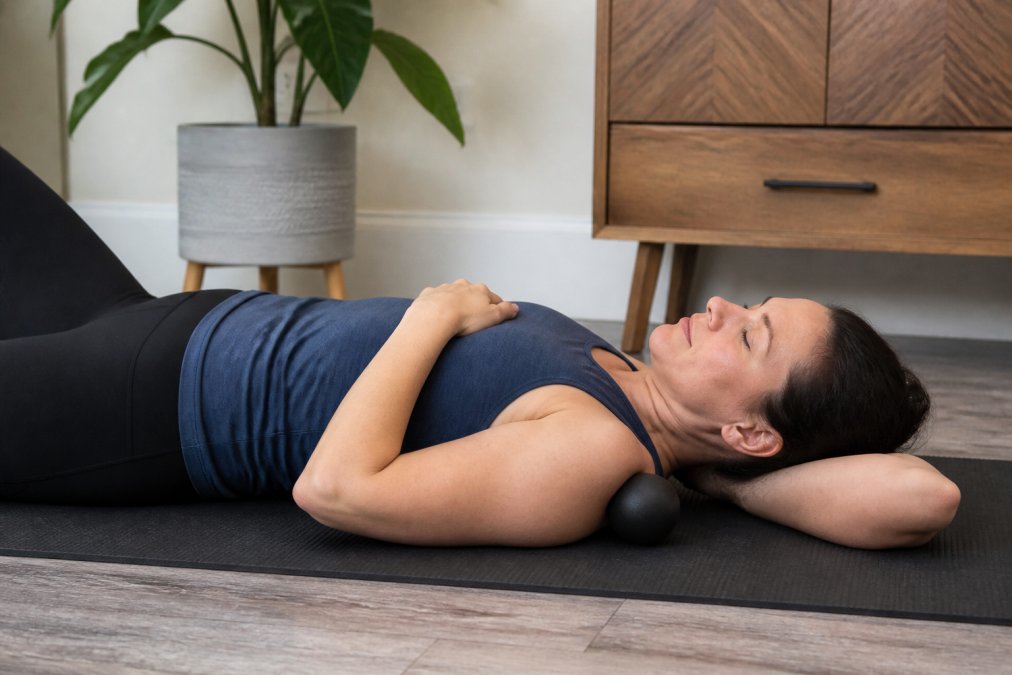
Massage balls work exceptionally well for targeted shoulder tension. Position the ball against a tight area and lean into it, allowing your body weight to apply pressure. Hold for 30-60 seconds, then slowly move the ball to adjacent areas.
Book your consultation today! →
Effective self-myofascial release sequence:
- Upper trapezius: ball positioned on the muscle between neck and shoulder
- Shoulder blade area: foam roller across upper back
- Chest muscles: ball against wall, leaning into it to release pectoral tension
- Arm muscles: foam roller under forearm or ball on biceps and triceps
Gentle stretching complements self-myofascial release. A cross-body shoulder stretch, pulling one arm across your chest, releases tension in the posterior shoulder. Hold for 30 seconds, repeating 2-3 times on each side. Doorway stretches open the front of the shoulder and chest, countering forward posture.
Consistency matters more than intensity. Performing these techniques for 10-15 minutes daily produces better results than occasional intense sessions. Many people notice reduced pain and improved range of motion within one week (peer-reviewed research).
Step 4: Non-Surgical Shoulder Pain Treatment Options
When self-care and posture correction aren’t sufficient, several evidence-based treatment approaches can address the root cause of shoulder pain without surgery.
Physical Therapy and Rehabilitation Exercises
Physical therapy targets the specific structures causing pain and addresses the underlying imbalances that created the problem. A skilled therapist evaluates your shoulder mechanics, identifies weak or tight muscles, and develops exercises to restore function.
Rotator cuff strengthening forms the foundation of most shoulder rehabilitation programs. Weak rotator cuff muscles cannot stabilize the shoulder joint properly, forcing other structures to compensate. Targeted strengthening restores stability and reduces pain.
Scapular stabilization exercises address the shoulder blade’s role in shoulder health. Exercises that strengthen the serratus anterior and lower trapezius improve shoulder blade positioning and reduce impingement risk.
Physical therapy typically involves 2-3 sessions weekly for 6-12 weeks, depending on severity (apta.org). Most people experience significant improvement within this timeframe.
Regenerative Medicine for Shoulder Joints
Regenerative medicine approaches harness your body’s natural healing capacity to repair damaged tissue. These treatments address the actual structural damage rather than simply masking pain symptoms.
Platelet-rich plasma (PRP) therapy concentrates healing factors from your own blood and injects them into damaged tissues. These growth factors stimulate tissue repair and reduce inflammation. PRP works particularly well for rotator cuff injuries, tendonitis, and labral tears.
Stem cell therapy uses cells with the capacity to develop into various tissue types. When injected into damaged shoulder structures, stem cells can differentiate into needed tissue and promote healing. This approach shows promise for cartilage damage and chronic degenerative conditions.
These regenerative treatments typically require 2-4 injections spaced weeks apart. Many people notice gradual improvement over 3-6 months as tissues heal. Advanced Health Center specializes in regenerative medicine for shoulder injuries and uses these approaches to help patients avoid surgery while addressing the root cause of their pain.
When to See a Specialist for Persistent Shoulder Pain
Certain symptoms warrant professional evaluation. If your shoulder pain persists beyond two weeks despite self-care efforts, or if pain suddenly worsens, schedule an appointment with a healthcare provider.
Severe pain that limits function, inability to lift your arm, or numbness and tingling suggest more serious conditions requiring professional assessment. Imaging studies like X-rays or MRI may be necessary to visualize the exact problem and guide treatment decisions.
Persistent pain despite conservative treatment indicates the need for advanced options. A specialist can evaluate whether your condition will respond to regenerative medicine or requires different intervention.
Common Mistakes That Keep Shoulder Pain From Healing
Many people unknowingly perpetuate their shoulder pain through common mistakes. Continuing activities that aggravate pain prevents healing. Focusing only on pain relief without addressing the root cause creates a cycle where pain returns once treatment stops.
Neglecting strengthening and stretching allows weakness and stiffness to develop. Even after pain resolves, continuing rehabilitation exercises prevents recurrence. Maintaining poor posture and ergonomics undoes progress from treatment. If you return to the same postural habits and workspace setup that created the problem, your shoulder pain will likely return.
Waiting too long before seeking professional help allows conditions to worsen. Early intervention often prevents progression to more severe stages.
Chronic shoulder pain doesn’t have to be permanent. By identifying the root cause and addressing it systematically through posture correction, stress management, targeted self-care, and when necessary, professional treatment, you can resolve shoulder pain and restore full function. Advanced Health Center specializes in identifying the root cause of shoulder pain and implementing multi-faceted treatment approaches that address the underlying problem rather than just masking symptoms. Our team uses regenerative medicine, physical rehabilitation, and ergonomic assessment to help patients avoid surgery while achieving lasting pain relief. Book your consultation today to discover how our personalized approach can help you regain mobility and return to the activities you enjoy.
Frequently Asked Questions
How do I figure out what is causing my shoulder pain?
Start by noting when pain occurs, during specific activities, at rest, or after certain positions. Assess your workspace ergonomics, sleep position, and stress levels. Rotator cuff issues typically cause pain with overhead movement, while impingement creates pain at the side of the shoulder. Frozen shoulder limits range of motion in all directions. If pain persists beyond two weeks or worsens despite self-care, see a specialist for diagnostic imaging like X-ray or MRI to identify the exact cause.
What non-surgical shoulder pain treatment options work best for fixing the root cause?
Non-surgical approaches target the underlying problem rather than masking symptoms. Physical therapy strengthens stabilizer muscles and improves range of motion. Regenerative medicine for shoulder joints, such as platelet-rich plasma (PRP) or stem cell therapy, addresses tissue damage and inflammation at the source. Anti-inflammatory treatments, posture correction, ergonomic adjustments, and self-myofascial release all contribute to lasting relief. The most effective treatment combines multiple approaches tailored to your specific diagnosis.
When should I see a specialist for persistent shoulder pain?
Seek specialist care if shoulder pain lasts more than two weeks, worsens despite home treatment, limits your daily activities, follows a traumatic injury, or is accompanied by numbness, tingling, or weakness. Red flags include severe pain at rest, inability to move your arm, or pain that radiates down your arm. A specialist can perform diagnostic imaging and recommend targeted treatments like physical therapy or regenerative medicine to address the root cause rather than temporary relief.
Can regenerative medicine address the root cause of shoulder injuries?
Yes. Regenerative medicine targets damaged tissues directly, tendons, ligaments, cartilage, and bursa, by stimulating your body's natural healing response. Unlike corticosteroid injections that reduce inflammation temporarily, regenerative approaches promote tissue repair and restoration of joint stability. This addresses the underlying structural damage causing your pain, not just the symptoms. Results develop over weeks to months as tissues heal, making it effective for rotator cuff injuries, tendonitis, labral tears, and osteoarthritis.
This article was written using GrandRanker