

Table of Contents
- Why Chronic Back Pain Keeps Coming Back
- Non-Surgical Back Pain Relief: Which Treatments Actually Work
- Regenerative Medicine for Back Pain: A Closer Look
- What to Expect at a Pain Relief Consultation
- How to Choose a Pain Management Clinic
- Home-Based Maintenance: Keeping Non-Surgical Back Pain Relief Working
- Conclusion
Last Updated: August 17, 2026
Chronic back pain is one of the most common reasons adults visit a doctor, and according to the National Institute of Neurological Disorders and Stroke, it is a leading cause of disability in the United States. Yet millions of people cycle through the same treatments, get partial relief, and end up right back where they started. This guide covers the full spectrum of non-surgical back pain relief options available today, what the evidence says about each, and how to build a treatment plan that actually holds.
Why Chronic Back Pain Keeps Coming Back
Most chronic back pain treatments fail because they treat the symptom, not the structure. The spine is a load-bearing system. When one component fails, whether a herniated disc, compressed nerve root, or weakened stabilizing muscles, compensating structures take on stress they were never designed to handle, creating new injury sites.
Neurological sensitization compounds the problem. When the nervous system has signaled pain for months or years, it becomes hyperactive. The original tissue injury may have partially healed, but pain pathways remain overactive, sometimes producing pain disproportionate to what imaging shows.
Patients who struggle to get lasting relief typically share these patterns: they address pain episodes rather than underlying mechanics, they stop treatment the moment symptoms ease before structural stabilization is complete, they rely on a single modality when their condition requires multiple approaches, and they never receive a thorough clinical assessment mapping both structural and neurological components.
Understanding this cycle is the first step toward breaking it. Non-surgical back pain relief works best when it targets root causes, restores function, and includes a maintenance phase.
Non-Surgical Back Pain Relief: Which Treatments Actually Work
Non-surgical back pain relief encompasses evidence-informed treatments addressing spinal and musculoskeletal pain without surgery. The category includes mechanical therapies, interventional procedures, manual techniques, and regenerative approaches.
Spinal Decompression Therapy
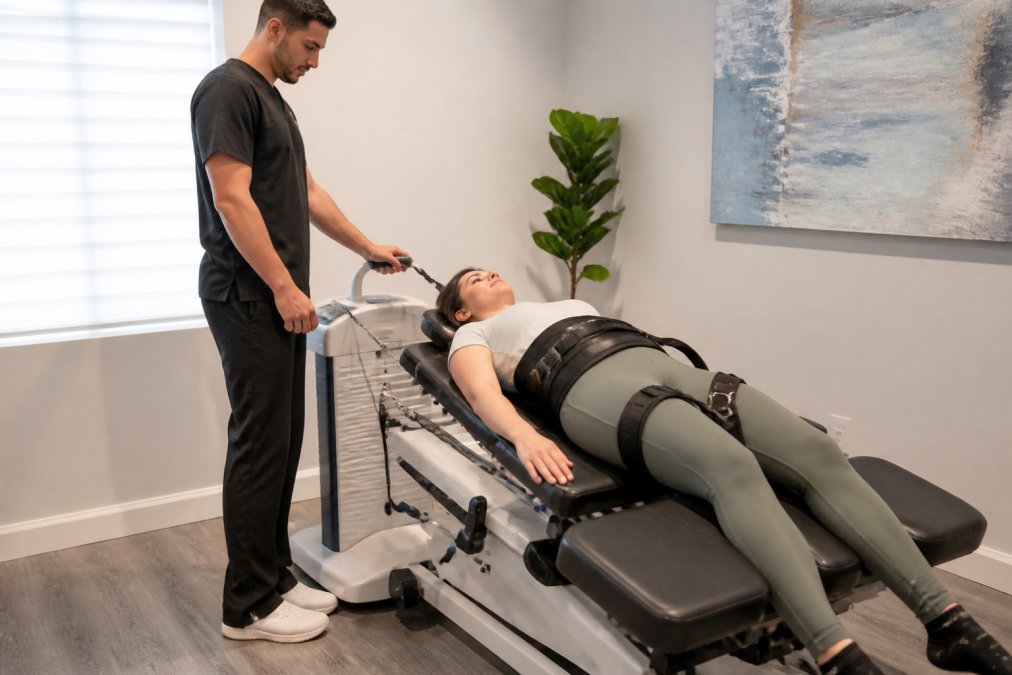
Spinal decompression therapy is a non-invasive, traction-based treatment that gently stretches the spine to reduce intradiscal pressure and promote retraction of herniated or bulging disc material away from sensitive nerve roots.
When a disc herniates, the nucleus pulposus pushes outward and presses against nearby nerves, causing radiating pain, numbness, or weakness, most commonly sciatica. Decompression creates a pressure differential that draws disc material back toward center while pulling in oxygen and nutrients the disc needs to heal. Patients with herniated discs, bulging discs, degenerative disc disease, and facet syndrome are typically the strongest candidates.
Spinal decompression is delivered on a motorized table controlled by a computer. Sessions are generally comfortable, with many patients reporting relief during treatment. A full course typically spans several weeks with multiple sessions per week initially. Patients with severe osteoporosis, spinal fractures, or certain spinal implants are not candidates. A thorough clinical assessment before starting is essential.
Interventional Pain Management: Nerve Blocks, Epidural Steroid Injections, Radiofrequency Ablation
Interventional pain management covers minimally invasive procedures performed by trained clinicians to interrupt or modulate pain signals at their source.
Epidural steroid injections deliver corticosteroids directly into the epidural space surrounding the spinal cord. They are most effective for acute flare-ups of nerve root pain, including sciatica from disc herniation where inflammation dominates. They create a pain-free window allowing patients to engage in rehabilitation more effectively, though they are not a long-term standalone solution.
Nerve blocks inject anesthetic, sometimes combined with steroid, near a specific nerve or cluster to block pain transmission. They serve both diagnostic and therapeutic purposes: if a nerve block eliminates pain, it confirms that nerve is the source.
Radiofrequency ablation uses heat from radio waves to disrupt nerve fibers transmitting pain signals from a specific joint. It is commonly used for facet joint pain and sacroiliac joint dysfunction, with relief lasting anywhere from several months to over a year in appropriate candidates.
Trigger point injections target tight muscle bands generating localized and referred pain. When combined with ultrasound guidance, the clinician can visualize the exact tissue being treated in real time, improving precision and safety.
Interventional procedures work best as part of a broader treatment plan. Using an epidural steroid injection to reduce inflammation, then immediately beginning decompression or rehabilitation, tends to produce better long-term outcomes than relying on injections alone.
Chiropractic Adjustment and Non-Force Techniques
Chiropractic adjustment focuses on vertebrae realignment to restore proper joint mechanics, reduce nerve interference, and improve mobility. High-velocity, low-amplitude adjustments are the most recognized form, but non-force techniques offer an alternative for patients uncomfortable with traditional manipulation or those with conditions making it inadvisable.
Non-force techniques use gentle, sustained pressure or instrument-assisted methods to mobilize joints without the characteristic popping sound. They are particularly well-suited for older patients, those with osteoporosis, and patients recovering from recent injuries. Both approaches address musculoskeletal and neurological dimensions of back pain.
Trigger Point Injections and Ultrasound-Guided Procedures
The biggest mistake with trigger point therapy is treating it as a simple injection rather than a precision procedure. Trigger points are hyperirritable spots within taut muscle bands causing local pain, referred pain, and restricted range of motion. Without accurate targeting, results are inconsistent.
Ultrasound guidance changes that equation. By visualizing soft tissue structures in real time, clinicians can confirm needle placement, avoid adjacent structures, and deliver treatment exactly where needed. This matters especially in complex cases involving deep paraspinal muscles or areas near vascular structures.
Regenerative Medicine for Back Pain: A Closer Look
Regenerative medicine for back pain refers to treatments designed to stimulate the body’s own healing mechanisms to repair damaged tissue rather than simply masking pain.
Many chronic pain conditions persist because damaged tissue, whether disc material, ligament, tendon, or cartilage, lacks the blood supply and cellular environment needed to heal independently. Regenerative therapies aim to change that environment by concentrating growth factors and delivering them directly to the injury site.
Regenerative therapies are not a quick fix. Most patients require a series of treatments, with full benefits developing over weeks to months as tissue remodeling progresses. However, for patients who have exhausted conventional options, they represent a meaningful alternative to surgery.
Regenerative medicine for back pain works by addressing the root cause of tissue damage, not by numbing the symptom. Patients who see the best results typically combine regenerative treatment with decompression or rehabilitation to support the healing tissue.
According to the American Academy of Pain Medicine, chronic pain affects a substantial portion of the adult population, and inadequately treated pain leads to significant functional decline over time.
Book your consultation today! →
What to Expect at a Pain Relief Consultation
A pain relief consultation is a structured clinical assessment designed to identify the precise source and nature of your pain, rule out conditions requiring urgent medical attention, and build a personalized treatment plan.
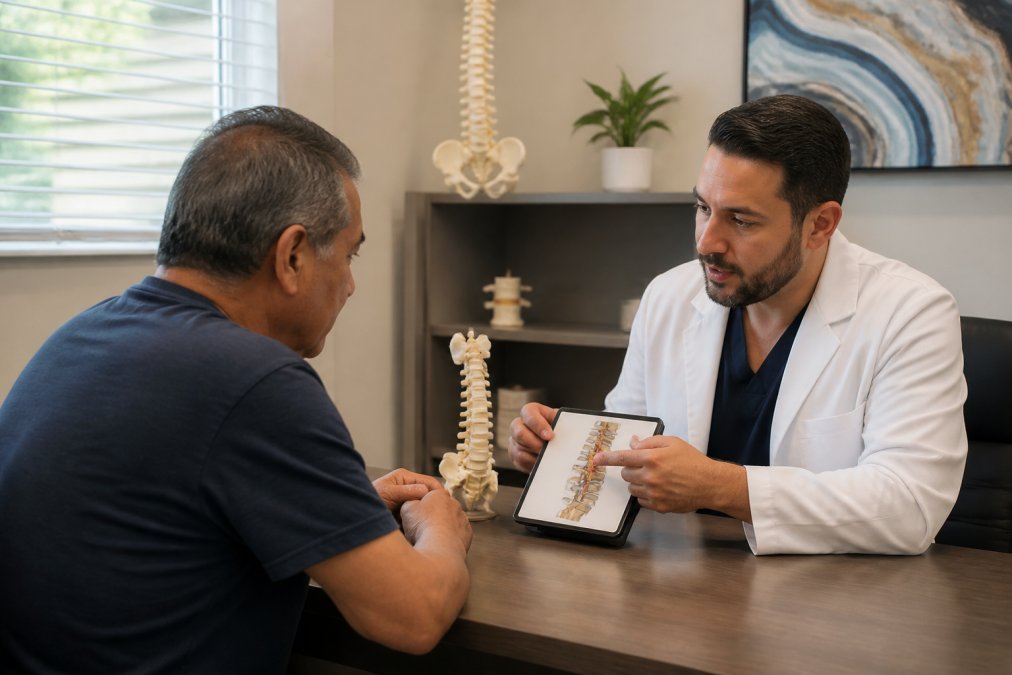
The clinician will take a detailed history of your pain, including onset, character, aggravating and relieving factors, and prior treatments. They will conduct a physical examination assessing posture, range of motion, neurological function, and muscle strength. In many cases, imaging or diagnostic nerve studies will be reviewed or ordered.
A thorough clinician explains findings clearly, outlines multiple treatment options with their rationale, and sets realistic expectations about timelines. You should leave knowing what is causing your pain, why recommended treatments address that specific cause, and what success looks like at each stage.
Bring any existing imaging (MRI, X-ray, CT scans) and reports, a list of all current medications including supplements, a written summary of prior treatments and your response to them, and notes on how pain affects your daily activities and sleep.
If a clinician cannot explain why a specific treatment is appropriate for your specific diagnosis, that is a warning sign.
How to Choose a Pain Management Clinic
The difference between a clinic that produces lasting results and one that keeps you cycling through appointments comes down to three things: diagnostic rigor, treatment range, and transparency.
Questions to Ask Before You Book
Ask these questions before committing to any pain management clinic:
- What is your diagnostic process? A clinic that recommends treatment before completing a thorough assessment is treating a guess, not a diagnosis.
- Do you offer multiple treatment modalities? Chronic back pain rarely responds to a single approach.
- What does a typical treatment course look like for my condition? Vague answers suggest the clinic lacks experience with your specific presentation.
- How do you measure progress? Look for clinics using objective functional measures, not just patient-reported pain scores.
- What happens if I don’t respond to the initial treatment plan? A good clinic has a clear process for reassessing and adjusting.
- Do you coordinate with my other providers? Particularly relevant if managing multiple conditions.
Be cautious of any clinic that pushes you toward an extensive package of treatments at the first visit before completing a full diagnostic workup. High-pressure sales tactics and chronic pain care are incompatible.
Insurance, Cost Transparency, and What to Watch For
Insurance coverage for non-surgical back pain relief varies significantly by plan, provider, and specific treatments. Many interventional procedures, including epidural steroid injections and nerve blocks, are covered by major insurance plans when medically necessary and properly documented. Spinal decompression and regenerative therapies often fall outside standard coverage.
The Centers for Medicare and Medicaid Services coverage guidelines provide a baseline framework for federally-funded plans, but individual commercial plans differ substantially. Always verify coverage directly with your insurer before beginning treatment.
Watch for clinics that are vague about pricing until after you have committed to a plan, packages priced as a single lump sum without itemized descriptions, and facilities that do not accept insurance for typically covered procedures.
| Treatment Type | Typically Covered by Insurance | Typical Coverage Notes |
|---|---|---|
| Epidural Steroid Injections | Often yes | Requires documented medical necessity |
| Nerve Blocks | Often yes | Diagnostic blocks may have separate coverage rules |
| Radiofrequency Ablation | Varies | Usually requires prior conservative treatment failure |
| Spinal Decompression | Rarely | Some plans cover; check individual policy |
| Trigger Point Injections | Sometimes | Dependent on diagnosis and provider documentation |
| Regenerative Therapies | Rarely | Considered experimental by many insurers |
Home-Based Maintenance: Keeping Non-Surgical Back Pain Relief Working
The work you do between appointments determines whether your results hold. Clinical treatment addresses structural and neurological components of your pain. Home maintenance protects those gains by keeping the spine mobile, supporting muscles strong, and the nervous system calibrated. Patients who engage seriously in home-based maintenance consistently maintain better outcomes than those relying entirely on in-office care.
Decompression and mobility work. Gentle traction-based stretches, such as hanging from a pull-up bar or performing supported lumbar flexion, extend the decompressive effects of clinical treatment. Child’s pose, cat-cow, and knee-to-chest stretches maintain disc hydration and facet joint mobility.
Core stabilization. Deep stabilizing muscles, particularly the transverse abdominis and multifidus, are consistently underfunctioning in patients with chronic low back pain. Dead bugs, bird dogs, and modified planks train these muscles without excessive spinal loading.
Posture and ergonomics. For office workers, chair-to-screen setup is often a primary driver of ongoing musculoskeletal strain. A monitor at eye level, lumbar-supported chair, and standing desk option for alternating positions meaningfully reduce cumulative spinal load during a workday.
Nervous system regulation. Diaphragmatic breathing, progressive muscle relaxation, and consistent sleep hygiene reduce neurological sensitization that amplifies chronic pain. This is a physiological intervention, not a soft add-on.
As documented in spine health resources from the American Association of Neurological Surgeons, maintaining spinal health between clinical treatments is a recognized component of long-term pain management outcomes.
| Activity | Frequency | Duration |
|---|---|---|
| Lumbar mobility stretches | Daily | 10-15 minutes |
| Core stabilization exercises | 4-5x per week | 15-20 minutes |
| Posture check and reset | Every 60 minutes at desk | 2 minutes |
| Diaphragmatic breathing practice | Daily | 5-10 minutes |
| Walking (low-impact spinal loading) | Daily | 20-30 minutes |
The goal is to maintain the environment that clinical treatment created, so each session builds on the last rather than starting over.
Chronic back pain does not resolve on its own for most people, and surgery carries risks many patients prefer to avoid. A well-designed non-surgical back pain relief plan combining the right interventional and regenerative treatments with structured home maintenance produces real, lasting results for the right candidates. Advanced Health Center brings over 40 years of experience treating complex pain cases with a multi-faceted, drug-free approach targeting root causes rather than symptoms. Book your consultation today and find out which combination of treatments is right for your specific condition.
Frequently Asked Questions
What are the most effective non-surgical treatments for chronic back pain?
The most effective non-surgical back pain treatments depend on the root cause. Spinal decompression therapy works well for herniated and bulging discs. Interventional options like epidural steroid injections, nerve blocks, and radiofrequency ablation address nerve-related pain. Regenerative therapies target tissue repair at the source. A clinical assessment is the only reliable way to match the right protocol to your specific musculoskeletal or neurological condition. Most patients benefit from a combination of modalities rather than a single treatment.
How do I know if I am a candidate for non-surgical pain management?
Most adults with chronic back pain, sciatica, herniated discs, bulging discs, or neck pain are candidates for non-surgical care. A thorough clinical assessment, including your history, imaging if needed, and a physical exam, determines which drug-free protocols fit your condition. Surgery is rarely the first or only option. If you have tried cortisone injections or physical therapy without lasting relief, a pain management consultation can identify approaches you have not yet explored.
How long does it take to see results from regenerative medicine treatments?
Timelines vary by condition severity and the specific regenerative therapy used. Some patients notice reduced pain and improved mobility within a few weeks; others see gradual progress over two to three months as tissue repair occurs. Auto accident injuries like whiplash may resolve faster than long-standing chronic conditions. Your treatment plan will include clear milestones so you and your clinician can track progress and adjust the protocol if needed. There is no single universal timeline.
Are non-surgical back pain treatments covered by insurance?
Coverage depends on your specific plan and the treatment type. Many insurance plans cover interventional procedures like epidural steroid injections and nerve blocks when medically necessary. Regenerative therapies and some chiropractic adjustment services may be partially covered or require out-of-pocket payment. Always verify benefits directly with your insurer before starting care. A reputable pain management clinic will help you understand what documentation supports a coverage claim and provide transparent pricing for any out-of-pocket costs.
This article was written using GrandRanker