

Table of Contents
- How Are Regenerative Medicine Success Rates Measured in 2026?
- FDA Approved Regenerative Medicine Treatments: What the Data Shows
- Success Rate Breakdown by Condition
- Why Outcomes Vary: Key Factors Behind Patient Success
- Regenerative Medicine Recovery Timeline: What to Expect After Treatment
- Regenerative Medicine Cost 2026: What Influences the Investment
- Best Candidates for Regenerative Therapy: Does It Fit Your Situation?
- The Future of Success Rates: Where the Field Is Headed
- Frequently Asked Questions
Last Updated: September 9, 2026
How Are Regenerative Medicine Success Rates Measured in 2026?
Regenerative medicine success rates are not a single, universal number because the field spans diverse therapies, conditions, and definitions of “success.” In 2026, the most reliable way to measure outcomes is through condition-specific clinical endpoints, such as pain reduction scores, functional mobility tests, and imaging evidence of tissue repair.
Many clinics report success differently, one might define it as a 30% pain reduction, another as a return to baseline activity. This lack of standardization makes comparing regenerative medicine success rates across providers difficult without digging into the methodology.
The Standardization Problem: Why Published Rates Vary So Widely
The wide variance stems from a fundamental lack of agreement on what constitutes a meaningful outcome. The literature reveals three primary measurement categories:
-
Patient-Reported Outcome Measures (PROMs): Validated questionnaires like the Visual Analog Scale (VAS) for pain, the Western Ontario and McMaster Universities Osteoarthritis Index (WOMAC), or the Knee Injury and Osteoarthritis Outcome Score (KOOS). A clinic reporting a 70% success rate based on a 2-point VAS reduction is not comparable to one using a 50% improvement on the WOMAC functional subscale.
-
Objective Functional Tests: Measurable physical achievements, such as the Timed Up and Go (TUG) test, range-of-motion goniometry, or return-to-work/sport timelines.
-
Imaging-Based Criteria: MRI or ultrasound findings, such as cartilage volume or signal intensity changes, are used in research settings but are poorly correlated with patient symptoms.
The MCID: The Metric That Actually Matters
In 2026, the most clinically relevant benchmark is the Minimal Clinically Important Difference (MCID), the smallest change a patient perceives as beneficial. For knee osteoarthritis, an MCID on the VAS pain scale is often cited as a 15-20 mm reduction, while for the WOMAC, it is typically a 10-15 point improvement (peer-reviewed research). When a clinic quotes a success rate, the critical question is whether that rate reflects patients who crossed the MCID threshold, not just any statistically significant change.
Always ask a clinic three questions: (1) Which validated outcome scale do you use? (2) What is your defined MCID threshold for that scale? (3) What percentage of your patients cross that threshold at 6 and 12 months? Without these specifics, a quoted “success rate” is marketing, not data.
The Problem with Clinic-Self-Reported Data
Most published success rates come from single-clinic case series, not randomized controlled trials, and are subject to selection bias and measurement bias. The most credible data in 2026 comes from independent registries, such as the American Orthopaedic Society for Sports Medicine (AOSSM) biologics registry initiatives. Ask whether a clinic’s data is internally audited or submitted to an independent registry.
In summary, the “success rate” you read on a clinic’s website is only interpretable when you know the measurement tool, the MCID threshold, and the follow-up duration. A 12-month success rate of 80% based on a functional return-to-sport metric is far more meaningful than a 90% rate based on a 1-point pain reduction at 6 weeks.
FDA Approved Regenerative Medicine Treatments: What the Data Shows
The regulatory landscape in the United States is defined by FDA oversight, which distinguishes between approved products and those offered under enforcement discretion. Currently, the only FDA approved regenerative medicine treatments using stem cells are derived from umbilical cord blood, specifically for disorders of the blood and immune system. These are classified as transplant procedures, not as treatments for orthopedic or joint pain.
This distinction matters because many marketed stem cell therapies for back, neck, or joint pain fall into a regulatory gray area. The FDA has issued guidance on human cells, tissues, and cellular and tissue-based products (HCT/Ps), clarifying that procedures must meet specific criteria to avoid being regulated as new drugs. Patients should verify whether a clinic’s offerings comply with current FDA guidance, as outlined in FDA regulatory framework for human cells and tissues.
Platelet-rich plasma (PRP) and other orthobiologics, by contrast, typically involve autologous cells and are performed under the practice of medicine, which gives clinics more flexibility but also places a greater burden on them to demonstrate clinical efficacy through their own outcome tracking.
Success Rate Breakdown by Condition
Clinical outcomes vary significantly depending on the condition being treated. For osteoarthritis of the knee, many studies report meaningful pain relief and functional improvement lasting 12 to 24 months, though the regenerative medicine success rates depend heavily on the severity of joint degeneration.
For tendon injuries, such as chronic tennis elbow or Achilles tendinopathy, orthobiologic injections show particular promise because they address the underlying degenerative process rather than just inflammation. Joint pain management for partial meniscal tears or mild cartilage damage tends to respond well, whereas advanced bone-on-bone arthritis often has more limited expectations.
The table below summarizes general expectations based on condition type:
| Condition | Typical Response | Key Consideration |
|---|---|---|
| Mild knee osteoarthritis | Good to excellent | Best when cartilage damage is minimal |
| Chronic tendon injuries | Moderate to good | Often requires activity modification |
| Advanced joint degeneration | Limited | May not delay surgical intervention |
| Diabetic neuropathy | Variable | Requires comprehensive metabolic support |
A common mistake is assuming one protocol works for all conditions. Tissue type, injury chronicity, and overall health all influence whether a biologic approach will deliver the desired outcome.
Why Outcomes Vary: Key Factors Behind Patient Success
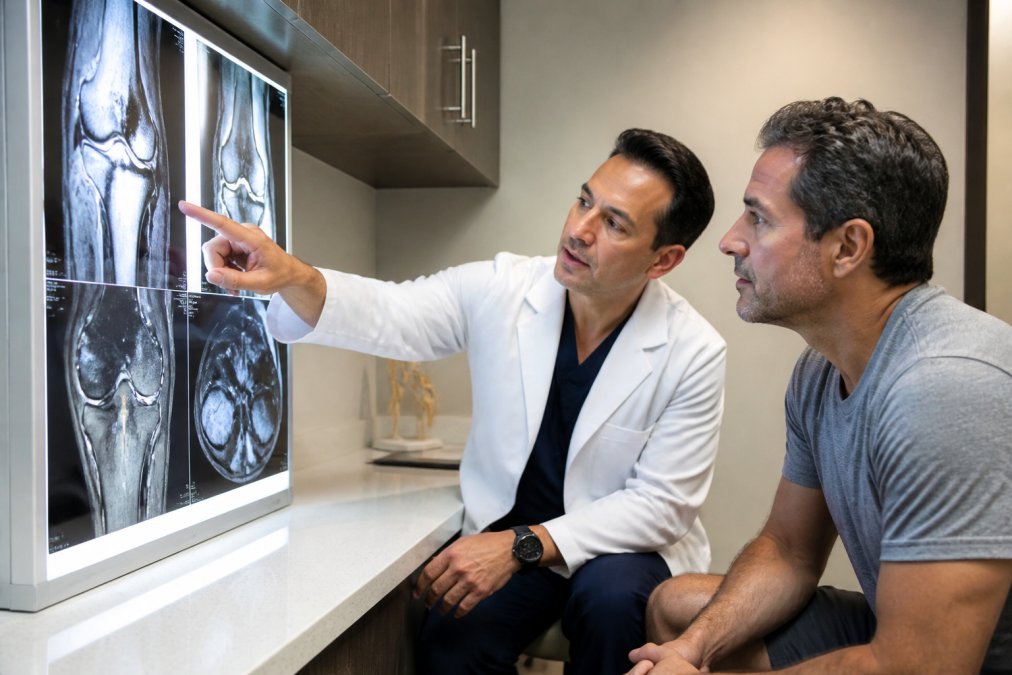
The single biggest determinant of success is patient candidacy, not the injection itself. A 45-year-old with a focal cartilage defect and good joint alignment has a far better biological response than a 70-year-old with diffuse arthritis, regardless of the product used.
Treatment protocols also play a critical role. The concentration of platelets or cells, the precise injection technique guided by imaging, and the number of treatment sessions all influence long-term survival rate of the repair tissue. Clinics that use ultrasound guidance to ensure accurate placement typically report more consistent results than those using landmark-based injections.
The Biological Rationale: Why Post-Procedure Loading Matters
The injection is only the initiation signal. The regenerative cascade, whether from platelet-derived growth factors (PDGF), transforming growth factor-beta (TGF-β), or mesenchymal stem cell paracrine signaling, requires mechanical stimulation to direct tissue remodeling. Without appropriate loading, new collagen fibers will be disorganized and weak, a process known as mechanotransduction failure.
Post-procedure rehabilitation is another frequently underestimated factor. Patients who follow a structured rehab protocol tend to see better functional gains than those who resume high-impact activity too quickly.
The Rehab Protocol Gap: What Top-Performing Clinics Do Differently
Book your consultation today! →
A common pattern among clinics with the highest published success rates is a structured, phased rehabilitation protocol written into the treatment plan before the injection is given. This typically follows a three-phase model:
-
Phase 1 (Weeks 0-2): Relative Rest and Isometric Loading. The goal is to protect the injection site while promoting blood flow. Isometric exercises (e.g., wall sits for knees, plank holds for shoulders) load the tissue without excessive shear forces. Anti-inflammatory medications (NSAIDs) are typically avoided during this window, as they may blunt the initial inflammatory response that recruits healing cells.
-
Phase 2 (Weeks 2-6): Progressive Eccentric Loading. This is where tissue remodeling is actively guided. For Achilles tendinopathy, this means heel-drop eccentrics; for knee osteoarthritis, it means stationary cycling with progressive resistance. The principle is to load the tissue to a point of mild discomfort (not sharp pain) to stimulate collagen cross-linking.
-
Phase 3 (Weeks 6-12+): Sport-Specific and Functional Training. This phase reintroduces multiplanar movements and sport-specific patterns. The transition should be driven by objective functional tests (e.g., single-leg balance, hop tests) rather than a fixed calendar date.
The Lifestyle Modifier: Metabolic Health as a Success Variable
A rarely discussed factor that heavily influences outcomes is systemic metabolic health. Patients with poorly controlled type 2 diabetes, elevated HbA1c, or a high body mass index (BMI > 30) have a blunted healing response, hyperglycemia impairs macrophage function and reduces growth factor receptor sensitivity. In contrast, patients who maintain a diet adequate in protein (1.2-1.6 g/kg/day) and vitamin D (serum levels > 30 ng/mL) provide the raw materials for tissue synthesis. wellness systems.
Ignoring post-treatment rehabilitation is the fastest way to undermine a good result. The injection starts the healing process, but your activity choices in the following weeks determine whether that healing translates into durable tissue repair. If your clinic does not provide a written rehab protocol before you schedule the injection, consider that a red flag.
The Dose-Response Reality: Single vs. Serial Injections
Another factor separating high-performing clinics from average ones is the honest discussion of dose-response. For PRP, the literature suggests a single injection may suffice for acute injuries, but chronic tendinopathies often benefit from a series of 2-3 injections spaced 4-6 weeks apart. The decision to repeat an injection should be data-driven, based on whether the patient has crossed the MCID threshold, not based on a pre-packaged pricing bundle. Clinics that push multi-injection packages without objective re-evaluation are prioritizing revenue over evidence.
Regenerative Medicine Recovery Timeline: What to Expect After Treatment
The regenerative medicine recovery timeline is not a linear path, and patients should expect a period of initial inflammation before improvement begins. In the first one to two weeks after an injection, localized soreness or a temporary increase in pain is normal, reflecting the intended biological response of recruiting healing cells.
Between weeks two and six, many patients notice a gradual reduction in baseline pain, though this phase can feel frustratingly slow. By the three-month mark, most patients can assess whether the therapy is producing meaningful change.
Maximal benefit typically appears between three and six months post-treatment, with some patients continuing to improve up to a year. This timeline is consistent with how biological response and tissue healing work, and it is why clinics emphasize patience and adherence to activity modifications during the early phases of recovery.
Regenerative Medicine Cost 2026: What Influences the Investment
Regenerative medicine cost 2026 varies widely based on the type of therapy, the number of treatment sessions, and the clinic’s diagnostic approach. Because most biologic therapies are considered elective, they are rarely covered by insurance, making out-of-pocket expense a primary consideration.
Cost is influenced by whether the clinic uses advanced imaging for diagnosis, the preparation method for the biologic product, and the expertise of the physician. Higher-cost clinics often justify their pricing with more rigorous patient selection and comprehensive follow-up care, which can improve the likelihood of a successful outcome.
Patients should be cautious of clinics offering unusually low prices, as these may cut corners on product quality or patient evaluation. A thorough consultation that includes imaging review and candid discussion of expected outcomes is worth the investment, even if the upfront regenerative medicine cost is higher.
Ask whether the quoted price includes follow-up visits and any needed second injections. Some protocols are designed as a series, and the initial quote may only cover the first session.
Best Candidates for Regenerative Therapy: Does It Fit Your Situation?
The best candidates for regenerative therapy are individuals with mild to moderate tissue degeneration who have not responded to conservative care but are not yet ready for surgery. Ideal candidates typically have good joint stability, adequate cartilage remaining, and a clear understanding that regenerative medicine is a tissue-modifying approach, not a miracle cure.
Patients with chronic lower back pain from facet joint arthritis or sacroiliac dysfunction may benefit, as may those with partial rotator cuff tears or early degenerative disc disease. Conversely, candidates with advanced structural damage, significant joint deformity, or active systemic infections are generally poor candidates.
Age alone is not a disqualifier, but overall health matters. A 68-year-old who golfs twice a week and maintains a healthy weight may be a better candidate than a sedentary 50-year-old with multiple comorbidities. The decision rests on a comprehensive evaluation of the specific pathology, not a generic age threshold.
The Future of Success Rates: Where the Field Is Headed
The future of regenerative medicine points toward greater standardization and improved outcomes as the field matures. Researchers are focusing on identifying biomarkers that predict which patients will respond to specific therapies, moving away from the one-size-fits-all approach that has limited the regenerative medicine success rates in the past.
Advances in tissue engineering and the development of more precise orthobiologic preparations are expected to enhance the consistency of results. As clinical trials continue to publish longer-term data, the medical community is building a more accurate picture of which conditions respond best and which patients derive the most durable benefit, as reflected in ongoing clinical trial registries for regenerative therapies.
Regulatory clarity will also shape the future. As the FDA refines its oversight of biologic products, patients can expect greater transparency from clinics and more reliable outcome reporting across the industry. This evolution toward evidence-based practice is the most promising development for anyone considering regenerative medicine.
Regenerative medicine offers a compelling path for those seeking to avoid surgery and long-term medication, but its success depends heavily on candidacy, protocol quality, and honest expectations. Advanced Health Center provides specialized, non-surgical regenerative medicine and pain relief treatments designed to help patients escape chronic pain without the need for drugs or surgery. By focusing on the root cause of conditions like low back pain, shoulder injuries, and neuropathy, our clinic offers a natural, multi-faceted approach to restoring mobility and improving quality of life. With over 40 years of experience in managing complex cases, we empower our patients to regain their health through proven, holistic therapies. Book your consultation today to discover how our personalized care can help you live a more active, pain-free life.
Frequently Asked Questions
Is regenerative medicine considered successful for chronic pain?
For many patients, yes. Clinical studies report that a significant portion of people with knee osteoarthritis or tendon injuries see measurable improvement in pain and function after treatment. However, success depends heavily on your specific condition, the severity of the damage, and your overall health. A thorough evaluation is the only way to determine if you’re likely to benefit.
What is the average cost of regenerative therapy in 2026?
Costs vary widely based on the type of treatment, the number of injection sites, and the clinic’s protocols. Because regenerative medicine is often considered elective, most insurance plans do not cover it. Pricing depends on your specific treatment plan and the technology used. Pricing depends on your specific treatment plan and the technology used. Visit our website for current prices or to request a quote.
How do FDA regulations impact regenerative medicine success rates?
The FDA regulates regenerative medicine products to ensure they are safe and effective. Treatments using your own cells, processed minimally and for the same use, are regulated under the same rules as human cells and tissues. This oversight helps ensure that clinical claims are backed by evidence, which gives you more confidence in the reported success rates of approved or compliant therapies.
What is the most successful type of regenerative therapy?
There is no single ‘most successful’ therapy for everyone. Success depends on matching the right treatment to the right condition. For example, bone marrow concentrate is often used for orthopedic issues like osteoarthritis, while platelet-rich plasma (PRP) is frequently used for tendon injuries. Your physician should recommend a therapy based on your specific diagnosis, not a one-size-fits-all approach.