

Table of Contents
- Non-Invasive Back Pain Solutions Reviews: What Actually Works
- Why Conservative Care Comes First
- The Treatments Most Reviewed by Patients
- Chiropractic Care, Acupuncture, and Physical Therapy: How They Compare
- Regenerative Medicine for Back Pain: What the Reviews Show
- Recovery Time for Non-Invasive Back Treatments
- How to Choose a Back Pain Specialist
- Costs, Insurance, and Home-Based Alternatives
- Red Flags: When Non-Invasive Back Pain Solutions Aren’t Enough
- Conclusion
- Frequently Asked Questions
Last Updated: October 3, 2026
Non-Invasive Back Pain Solutions Reviews: What Actually Works
Most people searching for non-invasive back pain solutions reviews want to know which treatments actually help before spending time and money.
Non-invasive back pain solutions are treatments that relieve pain without surgery or injections, including chiropractic adjustment, acupuncture, physical therapy, and regenerative medicine.
Below, we break down what patients report about each option, what recovery looks like, and how to choose a specialist, plus the red flags that tell you when conservative care is the wrong path.
Why Conservative Care Comes First
The biggest mistake we see is patients jumping to injections or surgery before trying conservative care. Most clinical guidance, including resources from the National Institute of Arthritis and Musculoskeletal and Skin Diseases, recommends non-surgical treatment as the first line for most back pain.
That advice exists for good reason: conservative care carries lower risk, costs less, and preserves your options if you need something more advanced later. A plan built around musculoskeletal health and functional mobility usually outperforms a quick fix that only quiets the symptom.
The Treatments Most Reviewed by Patients
The most-reviewed non-invasive back pain solutions fall into four categories: chiropractic care, acupuncture, physical therapy, and regenerative medicine. Each works differently and suits a different type of pain.
Here is how patients typically describe them:
- Chiropractic adjustment for alignment and joint mobility
- Acupuncture for pain intensity and inflammation reduction
- Physical therapy for strength, stability, and spinal stabilization
The right choice depends on your diagnosis, not on which treatment has the loudest reviews.
Chiropractic Care, Acupuncture, and Physical Therapy: How They Compare
These three treatments are the backbone of conservative care, and most patients try more than one.
| Treatment | Best For | Typical Session | Main Goal | Typical Course |
|---|---|---|---|---|
| Chiropractic adjustment | Misalignment, stiffness, restricted motion | 20-40 minutes | Restore vertebral and joint mobility | 6-12 visits, then as needed |
| Acupuncture | Chronic pain, inflammation, pain signaling | 30-45 minutes | Modulate pain perception and reduce inflammation | 6-12 sessions, often weekly |
| Physical therapy | Weakness, instability, movement dysfunction | 45-60 minutes | Build strength, stability, and functional mobility | 6-12 weeks with home program |
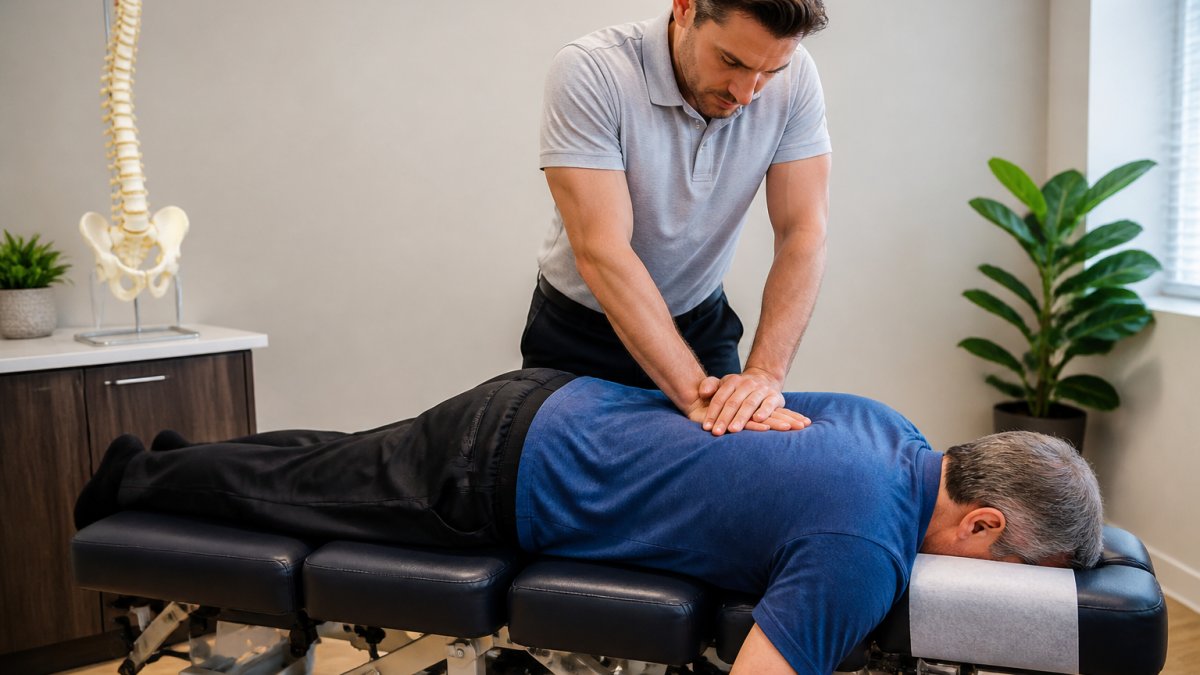
Chiropractic Adjustment and Vertebral Alignment
Chiropractic care focuses on vertebral alignment and joint mobility. A chiropractor uses controlled, hands-on adjustments, often a high-velocity, low-amplitude thrust, to restore motion in stiff segments and reduce irritation of the surrounding nerves and soft tissue.
The mechanism matters when you read reviews.
A neutral way to read chiropractic reviews: look for a specific diagnosis, a measurable change (range of motion, ability to sit through a workday), and a maintenance plan.
Acupuncture and Holistic Pain Management
Acupuncture is a drug-free therapy that uses fine needles at specific points to influence pain signaling (Acupuncture: Effectiveness and Safety). Proposed mechanisms involve modulation of the nervous system’s pain processing and a local anti-inflammatory response, which is why it is grouped with holistic pain management rather than treated as a stand-alone cure.
Many patients with chronic back pain use acupuncture alongside other treatments rather than on its own; it works best as part of a broader plan.
Physical Therapy and Rehabilitation Exercises
Physical therapy builds the strength and stability that keep your spine protected. A therapist guides you through rehabilitation exercises that improve functional mobility and reduce re-injury risk: stronger supporting musculature and better movement patterns reduce the load irritated structures must absorb.
This is the treatment most likely to deliver long-term relief because it changes how your body supports itself. The catch is consistency: patients who do their home exercises recover faster, and reviews that praise physical therapy almost always cite the home program.
A Neutral Framework for Reading Reviews of Any of the Three
Most reviews online are anecdotal, not a reason to ignore them, but a reason to read them with a filter. A useful review includes:
- A diagnosis or at least a description of the cause of pain
- The specific treatment and how many sessions were completed
- A measurable outcome (return to work, sleep, walking distance)
Reviews missing most of these are closer to testimonials than evidence, not necessarily false, just hard to generalize from. Ask a provider how they measure progress on your specific diagnosis, and compare that answer to what reviewers describe.
Regenerative Medicine for Back Pain: What the Reviews Show
Regenerative medicine for back pain is a non-surgical approach that uses the body’s own healing capacity to address damaged tissue.
Reviews of regenerative medicine tend to focus on two things: whether it helped them avoid surgery, and how long relief lasted.
What most guides miss is that regenerative medicine works best when combined with physical therapy and lifestyle changes. It is not a single-shot fix.
Book your consultation today! →
Recovery Time for Non-Invasive Back Treatments
Recovery time for non-invasive back treatments is usually measured in days, not months, though full results build over weeks, one of the clearest advantages over surgery.
- Chiropractic adjustment: Most patients return to normal activity the same day
- Acupuncture: No downtime; some feel relaxed or drowsy briefly
- Physical therapy: No downtime, but soreness after sessions is common
Compare that to surgical recovery, which often involves weeks of limited activity. The trade-off is that non-invasive care usually requires multiple therapeutic sessions rather than one procedure.
How to Choose a Back Pain Specialist
Choosing a back pain specialist comes down to three things: a proper diagnostic assessment, a treatment plan tailored to your cause of pain, and honest communication about what will and will not help.
Use this checklist when you evaluate any provider:
- Do they perform a full diagnostic assessment before recommending treatment?
- Do they explain the root cause, not just the symptom?
- Do they offer more than one type of therapy, or push a single option?
A provider who only offers one treatment will usually recommend that treatment. A good specialist matches the approach to your spine health and goals.
Costs, Insurance, and Home-Based Alternatives
Cost is the question patients ask most, and it deserves a straight answer. Pricing depends on the number of visits, the treatment type, and your insurance coverage, so ask any provider for a written estimate before you start and confirm what your plan will actually pay.
What Non-Invasive Care Typically Costs
Exact prices vary by market and provider, but the general shape of out-of-pocket cost is consistent enough to plan around:
- Chiropractic adjustment: Usually the lowest per-visit cost of the three core therapies; a course of care is typically priced as a package.
- Acupuncture: Often priced per session, with a discount for a prepaid series.
- Physical therapy: Frequently billed per visit, and often the most likely of the three to be covered by insurance when medically necessary.
Because prices change and vary by region, treat any number you see online, including ours, as a starting point and confirm in writing.
What Insurance Typically Covers
Coverage varies widely by plan, but a few patterns hold often enough to be useful when you call your insurer:
- Chiropractic care is covered by many plans, often with a visit cap per year and a copay per visit.
- Physical therapy is commonly covered when a physician refers you and documents medical necessity, and is usually subject to a visit limit.
- Acupuncture is covered by some plans for specific diagnoses, and excluded by others; it is one of the most plan-dependent items on this list.
- Regenerative medicine is frequently excluded as investigational or not medically necessary, so plan on paying out of pocket unless your plan says otherwise in writing.
When you call your insurer, ask four questions: Is the treatment covered for my diagnosis? Is a referral required? How many visits per year? What is my copay or coinsurance, and does my deductible apply? Getting those answers in writing before you start care prevents most billing surprises.
Drug-Free Therapy You Can Do at Home
Home-based care supports whatever you do in a clinic and is the part of the plan you control. These habits reduce pain intensity and protect your spine between visits:
- Gentle stretching and core exercises daily, guided by your provider
- Ergonomic support at your desk, with screens at eye level and feet flat
- Short walking breaks every hour if you sit for work
- Good sleep posture with a supportive mattress and a pillow that keeps your neck neutral
These steps will not replace professional care, but they make every treatment work better and are the cheapest part of any plan.
The patients who recover fastest are the ones who treat home exercises as part of their treatment plan, not an optional extra. Ten focused minutes a day beats one long session on the weekend.
How to Decide What to Spend On
If cost is the deciding factor, start with the lowest-cost, best-covered option that matches your diagnosis (often physical therapy or chiropractic), add acupuncture if your plan covers it or you respond well, and reserve regenerative medicine for cases where lower-cost options have not held. Ask each provider how they will measure whether treatment is working, and set a review point, often four to six weeks, to decide whether to continue, switch, or escalate.
Red Flags: When Non-Invasive Back Pain Solutions Aren’t Enough
Non-invasive back pain solutions are not right for every case. Certain symptoms mean you need medical evaluation right away, not a conservative treatment plan.
Seek urgent care if you notice:
- Loss of bladder or bowel control
- Progressive weakness or numbness in your legs
- Severe pain after a fall or accident
- Unexplained weight loss alongside back pain
These are potential neurological symptoms that need prompt medical attention. For everyone else, conservative care is usually the sensible first step. If several non-invasive treatments have not helped, revisit your diagnosis rather than repeat the same approach.
Do not keep repeating a treatment that has not helped after several weeks. Continuing the same plan without a fresh diagnostic assessment delays the care you actually need.
Conclusion
Chronic back pain wears down your quality of life, and finding relief should not mean choosing between drugs, surgery, and endless appointments. Advanced Health Center offers a non-surgical, drug-free path built on regenerative medicine, chiropractic care, and personalized treatment plans that target the root cause of your pain. With over 40 years of experience and more than 10,000 patients helped, our team can build a plan around your goals.
Frequently Asked Questions
What is the most effective non-invasive treatment for lower back pain?
No single treatment wins for everyone. Clinical reviews generally rank physical therapy and exercise-based rehabilitation highest for long-term relief, followed by chiropractic adjustment and acupuncture for short-term pain intensity reduction. Regenerative medicine for back pain shows strong patient outcomes for disc-related and soft tissue conditions. The right choice depends on your diagnostic assessment, the root cause of your pain, and how your body responds to conservative care over the first few weeks.
Can chronic back pain be cured without surgery?
Many cases improve substantially without surgery. Conservative care, including physical therapy, chiropractic adjustment, soft tissue mobilization, and drug-free therapy, resolves or manages a large share of chronic back pain cases. The key is a treatment plan that addresses the root cause rather than just masking pain intensity. Patients with neurological symptoms, progressive weakness, or structural damage may still need surgical evaluation. A thorough diagnostic assessment is the only way to know which category you fall into.
How long does it take to see results from non-surgical back pain solutions?
Recovery time for non-invasive back treatments varies by method. Chiropractic adjustment and acupuncture often bring noticeable relief within one to three therapeutic sessions. Physical therapy and spinal stabilization programs typically show functional mobility gains in four to six weeks. Regenerative medicine for back pain may take six to twelve weeks as tissue heals. Patients with long-standing chronic back pain should expect a gradual improvement curve rather than instant relief, and post-treatment care matters as much as the sessions themselves.
Are non-invasive back pain treatments covered by insurance?
Coverage varies widely. Physical therapy, chiropractic care, and diagnostic assessment are commonly covered by most major insurance plans when deemed medically necessary. Acupuncture coverage has expanded but still varies by state and plan. Regenerative medicine for back pain and other holistic approach treatments are frequently not covered and are typically paid out of pocket. Before booking, call your insurer and ask specifically about the procedure codes your provider uses, then ask the clinic for a written estimate so there are no surprises.