

Table of Contents
- Non Opiate Analgesia: How the Body’s Own Pain-Inhibitory System Works
- Non-Opioid Pain Medications: Classes, Uses, and Limits
- Safety, Interactions, and When Non-Opioid Medications Are Not Enough
- Non-Drug Pain Management: Physical Therapy and Coordinated Care
- Psychological Pain Management Techniques That Change the Pain Response
- Building a Pain Management Plan for Acute, Post-Surgical, and Chronic Pain
- Conclusion
- Frequently Asked Questions
Last Updated: October 6, 2026
Non Opiate Analgesia: How the Body’s Own Pain-Inhibitory System Works
Non opiate analgesia refers to pain relief achieved without opioid drugs, either through the body’s intrinsic pain-inhibitory system or through non-opioid medications and therapies.
The body does not merely register pain; it actively suppresses it. That distinction matters because it explains why two people with similar injuries report very different pain levels, and why non opiate analgesia works better than skeptics expect.
Opiate Versus Non-Opiate Analgesia: Two Different Pathways
Opiate analgesia works by binding opioid receptors, primarily in the brain and spinal cord, to blunt the pain signal. Non-opiate analgesia achieves relief through entirely different routes: reducing inflammation, altering nerve excitability, or recruiting the body’s descending inhibitory control. The distinction is not just pharmacological. It shapes tolerance, dependency risk, and how long relief lasts.
Opiate and non-opiate analgesia are not competing versions of the same mechanism. They act on separate pathways, which is why combining them often works better than escalating either one alone.
Stress-Induced and Conditioned Analgesia
Stress-induced analgesia is a built-in survival response: acute stress can activate descending pathways from the brainstem that suppress pain transmission in the spinal cord. Conditioned analgesia works differently, pairing a repeated cue with a pain-relieving context so the nervous system learns to reduce the pain response on its own.
That is the theory. In practice, it means psychological and behavioral approaches are not soft add-ons. They change the physiology.
Non-Opioid Pain Medications: Classes, Uses, and Limits
Non-opioid pain medications fall into two broad groups: primary analgesics like acetaminophen and NSAIDs, and adjuvant medications originally developed for other conditions that also reduce pain. Choosing among them depends on the pain type, the underlying cause, and what else the patient takes.
| Medication Class | Examples | Best For | Key Limitation |
|---|---|---|---|
| Analgesic / antipyretic | Acetaminophen | Mild pain, fever | Liver risk at high doses |
| NSAIDs | Ibuprofen, naproxen | Inflammatory and musculoskeletal pain | GI and kidney effects with long use |
| Anticonvulsant adjuvants | Pregabalin | Nerve-related pain | Sedation, dependency potential |
| Muscle relaxants | Cyclobenzaprine | Spasm-driven pain | Drowsiness |
| Corticosteroids | Prednisone | Acute inflammatory flare | Short-term use only |
Acetaminophen and NSAIDs
Acetaminophen is the workhorse of mild pain and fever management, well tolerated at labeled doses but carrying real liver risk when exceeded or combined with alcohol. NSAIDs reduce inflammation and are especially useful for musculoskeletal and post-surgical pain, though long-term use raises concerns for the stomach and kidneys.
Adjuvant Medications: Pregabalin, Cyclobenzaprine, and Prednisone
Adjuvants are prescribed for pain even though they were not designed as analgesics. Pregabalin calms overactive nerve signaling in neuropathic pain (Pregabalin in Neuropathic Pain: Evidences and Possible Mechanisms). Cyclobenzaprine relaxes skeletal muscle to break spasm cycles. Prednisone suppresses acute inflammation in a short, controlled course. Each has a specific role, and each has limits a clinician must weigh.
Safety, Interactions, and When Non-Opioid Medications Are Not Enough
Safety is where self-directed pain management fails most often.
The FDA guidance on safe analgesic use is clear that exceeding labeled dosing is the main avoidable risk. NSAIDs interact with blood thinners and blood pressure medications.
Non-opioid medications are not enough when pain is severe, escalating, or accompanied by red-flag symptoms such as weakness, numbness, or loss of bowel or bladder control.
Doubling up on combination cold, flu, or sleep products is one of the most common causes of accidental acetaminophen overdose. Check every label for the same active ingredient before adding anything.
Non-Drug Pain Management: Physical Therapy and Coordinated Care
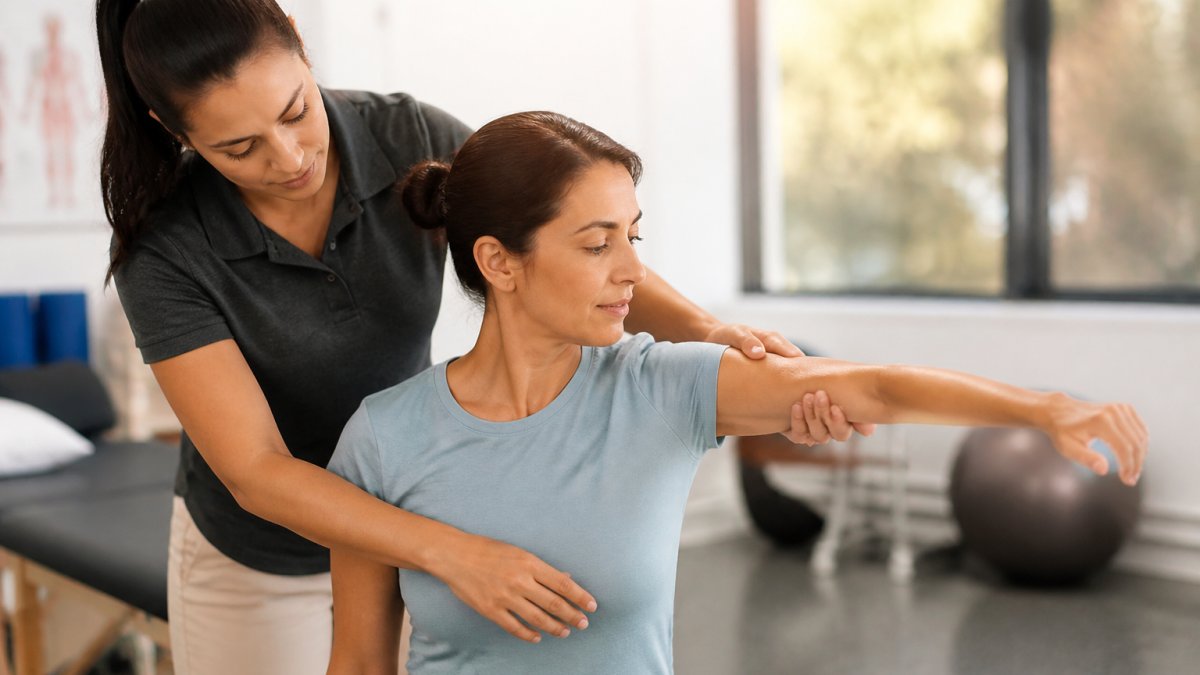
Non-drug pain management treats pain by changing the tissue, the movement pattern, or the nervous system’s sensitivity rather than by masking the signal. Most practitioners find that these approaches work best when they are started alongside medication, not held in reserve until medication fails. The categories below are the ones most often built into a coordinated plan. Integrating these modalities requires a nuanced understanding of how drug-free pain management can be tailored to address the specific physiological drivers of chronic discomfort.
Rehabilitative and Movement-Based Therapies
- Physical therapy. Graded strengthening and mobility work so joints, tendons, and muscles tolerate load again. The goal is capacity, not just comfort.
- Graded exposure and pacing. Deliberately increasing activity in controlled increments to reduce fear of movement and rebuild tolerance.
- Aquatic therapy. Water-supported movement for patients who cannot tolerate full weight-bearing on land.
Hands-On and Modality-Based Options
- Manual therapy. Hands-on mobilization and soft-tissue work to restore motion and reduce guarding.
- Dry needling and acupuncture. Fine-needle techniques used for trigger points and some chronic pain patterns.
- TENS. Low-voltage electrical stimulation that can modulate pain signaling for some patients, though response varies widely.
Behavioral and Psychological Therapies
- Cognitive behavioral therapy for pain. Targets the thoughts and behaviors that amplify suffering and disability.
- Pain reprocessing and mindfulness-based stress reduction. Aimed at reducing central sensitization and the threat response.
- Biofeedback and paced breathing. Gives patients real-time control over muscle tension and arousal.
Interventional and Regenerative Options
For selected patients, clinicians may add injections, nerve blocks, or regenerative approaches. These are not first-line for everyone, and candidacy depends on the diagnosis, the pain generator, and prior response to conservative care.
Why Coordination Matters More Than Any Single Technique
Pain rarely has a single cause. A patient with diabetic neuropathy, a desk-job strain, and poor sleep needs three things addressed, not one. Coordinated care means a clinician oversees the combination, tracks response, and adjusts rather than stacking therapies indefinitely. This is the model we use at Advanced Health Center: find the root cause, then combine drug-free therapies around it.
No single non-drug therapy outperforms the others across all pain types. The advantage comes from matching the right combination to the diagnosis and reassessing on a schedule.
Psychological Pain Management Techniques That Change the Pain Response
Psychological pain management techniques are not a substitute for treating tissue. They change how the nervous system processes and amplifies pain signals.
Book your consultation today! →
The evidence base for these methods is strongest when they are combined with physical treatment rather than used alone. A patient who fears movement guards the injured area, which weakens it further. Breaking that loop is a clinical intervention, not a mindset trick.
Building a Pain Management Plan for Acute, Post-Surgical, and Chronic Pain
A workable pain management plan matches the treatment to the timeline and the pain type. The three settings below call for different priorities, different medication choices, and different expectations for how fast relief should arrive.
Acute Pain: Fast, Short-Term Control
Acute pain from injury, infection, or a flare usually has an identifiable cause and a predictable course. First-line non-opioid options are acetaminophen and NSAIDs, chosen based on whether inflammation is driving the pain and whether the patient has stomach, kidney, or cardiovascular risk factors. Topical agents such as lidocaine or diclofenac gel can be added for localized pain with fewer systemic effects.
Post-Surgical Pain: Scheduled Coverage and a Taper Plan
Post-surgical pain is best managed with scheduled, multimodal coverage rather than as-needed dosing that lets pain break through. A typical non-opioid backbone combines acetaminophen and an NSAID on a fixed schedule, with adjuvants added for nerve-related or spasm-driven components. The plan should specify a taper timeline from the start, so coverage steps down as healing progresses rather than drifting. Patients should know what relief to expect in the first 48 to 72 hours, what normal soreness versus warning signs look like, and who to call if pain is not controlled.
Chronic Pain: Function Over Elimination
Chronic pain rarely resolves completely, and chasing zero pain often leads to escalating treatment without better outcomes. The goal shifts to function: sleep, work, and activity.
A Practical Checklist
Use this checklist when building or reviewing a plan:
- Identify the pain type: inflammatory, nerve-related, spasm-driven, or mixed
- List every medication and supplement currently taken, to catch overlaps
- Set a realistic function goal, such as walking a set distance or returning to a hobby
- Schedule non-drug therapies alongside medication, not after it fails
When Inadequate Pain Control Needs Medical Attention
Some situations should not wait for a scheduled review. Seek prompt evaluation for pain that is severe or escalating despite treatment, new weakness or numbness, loss of bowel or bladder control, fever with worsening pain, or pain after surgery that suddenly changes character. These can signal a problem that a stronger analgesic will not fix.
A plan that only lists medications is incomplete. If it does not name the non-drug components, the function goal, and the review date, it is a prescription, not a plan.
Conclusion
Pain that has resisted every previous attempt is frustrating, and we understand why patients arrive skeptical. Advanced Health Center has helped more than 10,000 patients pursue drug-free relief through non-surgical treatments, root-cause diagnosis, and a multi-faceted natural approach built on over 40 years of managing complex cases. If you are ready to move beyond medication alone, book your consultation today and find out what a plan built around your pain, not just your prescription, can do.
Frequently Asked Questions
What is non-opioid analgesia?
Non-opioid analgesia is pain relief achieved without opioid drugs. It includes non-opioid pain medications such as acetaminophen, NSAIDs, and adjuvants like pregabalin, plus non-drug approaches such as physical therapy and psychological pain management techniques. Research into non-opiate mechanisms also examines the body’s own pain-inhibitory system, including spinally mediated and stress-induced analgesia, where the spinal cord and brainstem dampen pain signals without any drug at all.
Which non-opioid medications are used for chronic pain?
Common options include acetaminophen for mild to moderate pain, NSAIDs for inflammatory pain, and adjuvants such as pregabalin for nerve-related pain, cyclobenzaprine for muscle spasm, and prednisone for inflammatory flares. Which one fits depends on the pain source, your other conditions, and your current medications. Many patients combine two or more agents with different mechanisms of action, an approach called multimodal analgesia, to get consistent pain relief at lower doses of each drug.
Can chronic pain be managed without medication?
For some people, yes. Non-drug pain management includes physical therapy, graded exercise, and psychological pain management techniques such as cognitive behavioral therapy and relaxation training. These approaches can raise your pain threshold and improve function over time. Severe chronic pain often responds best to a combined plan: non-opioid medications where appropriate, non-drug treatment, and coordinated care. A clinician can help you decide what belongs in your plan.
How do I discuss non-opioid pain relief options with my clinician?
Bring a written record of when the pain started, what makes it worse, and what you have already tried. Ask directly which non-opioid pain medications are suitable for your condition and whether any interact with what you already take. It also helps to ask about non-drug pain management and psychological pain management techniques you could add. If your clinician prescribes an opioid, ask how it fits an opioid-sparing plan and what the exit strategy looks like.
What is the difference between opiate and non-opiate analgesia?
Opiate analgesia works mainly by activating opioid receptors in the brain and spinal cord, which reduces pain perception but carries risks of tolerance, dependency, and cross-tolerance between drugs. Non-opiate analgesia uses different routes: acetaminophen and NSAIDs act on prostaglandin pathways, adjuvants calm nerve firing, and intrinsic pain inhibition engages the body’s own descending control from the brainstem to the spinal cord. Because the mechanisms differ, combining both types can produce relief neither achieves alone.
How is pain measured when testing non-opioid treatments?
Clinicians and researchers use standardized tools. In clinical settings, that means numeric rating scales and functional questionnaires. In laboratory research, pain measurement has historically used tests such as the tail flick test and hind paw or front paw shock models in animals, which reveal analgesic effect, analgesic duration, and whether a treatment produces sub-maximal analgesia. These models help explain why some drugs give prolonged analgesia and others only short-lived relief.
Are there non-drug treatments that work alongside non-opioid medications?
Yes. Physical therapy builds strength and mobility around an injured area, which reduces load on painful structures. An interdisciplinary approach adds psychological pain management techniques, sleep support, and activity pacing. For post-surgical pain, early movement and a structured recovery plan reduce the chance of chronic pain developing. These methods do not replace medical care, but they often lower how much medication a person needs and improve day-to-day function.