

Table of Contents
- Step 1: Build Your Daily Foot Care for Neuropathy Routine
- Step 2: Try Home Remedies for Neuropathy Pain That Are Backed by Evidence
- Step 3: Start Gentle Exercises for Peripheral Neuropathy
- Step 4: Manage Blood Sugar and Daily Habits That Affect Nerve Pain
- Step 5: Personalize Your Plan by Symptom and Cause
- Step 6: Track Symptoms and Set Realistic Expectations
- Step 7: Know When to Seek Medical Care for Neuropathy
- Frequently Asked Questions
Last Updated: October 9, 2026
Step 1: Build Your Daily Foot Care for Neuropathy Routine
Learning how to manage neuropathy pain at home starts with one habit: checking your feet every single day.
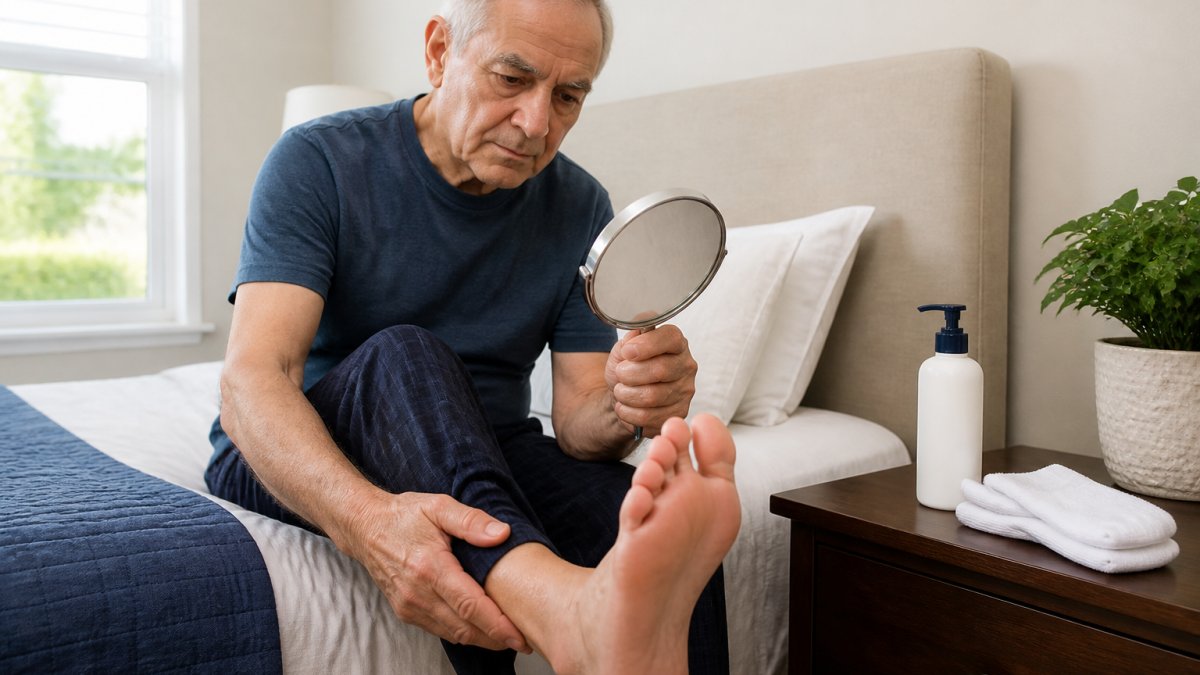
Daily Foot Checks That Catch Problems Early
Daily foot checks are the single most important home habit for anyone with diabetic neuropathy or numbness in the feet. Numbness hides cuts, blisters, and swelling until they get worse.
- Look at the tops, bottoms, and between each toe
- Feel for hot spots, bumps, and new calluses
- Check for redness, swelling, or changes in skin color
- Use a mirror or ask someone to help if you cannot see the soles
Skin Protection, Supportive Shoes, and Compression Socks
Dry, cracked skin opens the door to infection, so moisturize your feet daily, but skip the space between the toes. Wear supportive shoes with a wide toe box and a firm sole, and never walk barefoot, even indoors.
Compression socks can help with swelling and circulation, but ask your doctor first if you have poor blood flow.
Never use a heating pad or hot water bottle on numb feet. You may not feel a burn until the skin is already damaged.
Step 2: Try Home Remedies for Neuropathy Pain That Are Backed by Evidence
Home remedies for neuropathy pain work best as comfort measures, not cures. They can calm burning and tingling, but they will not repair nerve damage. That distinction matters, because unrealistic expectations lead people to skip care that actually helps. Before you try anything below, understand the safety rule that governs all of it: when sensation is reduced, your skin cannot warn you before it is injured.
Warm Soaks, Cold Packs, and Contrast Therapy Done Safely
A foot soak in warm water, never hot, can calm burning pain. Add Epsom salts if you like, though the evidence for pain relief is limited, the warmth and the soak itself do most of the work.
- Warm water: test it with your elbow or a thermometer, not your foot. Keep it comfortably warm, not hot, and cap soaks at about 10 minutes.
- Cold packs: wrap them in a towel, never place them directly on skin, and limit to 10 to 15 minutes at a time.
- Contrast therapy: alternate warm and cool water, but only if your doctor approves.
- Dry your feet completely afterward, especially between the toes, and inspect the skin for any new redness or blisters.
Never use a heating pad, hot water bottle, or electric blanket on numb feet, and never soak in water you have not tested with a part of your body that still feels temperature normally. You may not feel a burn until the skin is already damaged. The same caution applies to ice: prolonged direct cold can injure skin you cannot feel.
Massage, Topical Pain Relievers, and What to Avoid
A gentle foot massage can improve circulation and calm irritated nerves. Move slowly, use light pressure, and stop if anything hurts. Avoid deep-tissue work or aggressive rubbing on feet with reduced sensation, because you cannot feel when pressure becomes damaging.
Topical pain relievers like lidocaine or capsaicin creams are common options. Test a small patch first, since burning skin is a real risk with sensitivity from nerve damage. Capsaicin in particular can cause a strong burning sensation that builds over the first few applications; wash your hands thoroughly after applying, and never apply it to broken skin.
What to avoid:
- Sharp tools for calluses, and over-the-counter corn removers, which contain acids that can burn skin you cannot feel
- Any product that numbs the whole foot, which hides injuries and makes falls more likely
- Compression garments used without a clinician’s OK if you have poor blood flow
What the Evidence Actually Supports
It helps to sort these measures into two buckets. Cause-directed care, blood sugar control, treating an underlying condition, and prescribed medication, is what can slow or stop nerve damage. Comfort measures, soaks, cold, massage, topicals, ease symptoms without changing the underlying nerve problem. Most practitioners find that people get the most relief from combining both, and that no single home remedy reverses nerve damage on its own.
Personalize by Cause
The right home remedy depends on why you have neuropathy. If diabetes is the cause, blood sugar control comes first and everything else is secondary. If chemotherapy caused it, heat and cold sensitivity may be worse, so test carefully. If a medication is the trigger, your clinician may adjust it rather than add remedies. If poor circulation is involved, skip compression and heat until a clinician clears them. Gentle applications of infrared heat therapy can sometimes soothe nerve endings when circulation is stable and inflammation is the primary source of discomfort.
Step 3: Start Gentle Exercises for Peripheral Neuropathy
Exercises for peripheral neuropathy improve strength, balance, and circulation, and they are safe for most people when done gently. Start small and build up.
Low-Impact Activity, Stretching, and Balance Work
Low-impact activity is the goal. Walking, swimming, and stationary cycling all work well.
- Walk 10 to 15 minutes most days, and build from there
- Stretch your calves and ankles daily to keep muscle strength and range
- Practice balance by standing on one foot near a counter
Do balance work barefoot on a firm surface when it is safe. It trains the small muscles in your feet that shoes hide, and it sharpens the feedback your nerves send to your brain.
Step 4: Manage Blood Sugar and Daily Habits That Affect Nerve Pain
Blood sugar control is the most powerful lever you have, especially with diabetic neuropathy. Steady glucose management slows nerve damage and often reduces pain over time.
- Build meals around vegetables, lean protein, and whole grains
- Limit alcohol, which can worsen nerve pain
- Stop smoking, since it narrows blood vessels and starves nerves of oxygen
- Take medication exactly as prescribed
CDC guidance on managing diabetes
Book your consultation today! →
Step 5: Personalize Your Plan by Symptom and Cause
Neuropathy is not one condition, so your plan should match your symptoms and the reason your nerves are affected. Treating it as a single problem is the most common mistake people make at home. Two people with the same burning feet may need very different routines.
Match the Measure to the Sensation
Different sensations respond to different approaches. Use this as a starting point, not a prescription.
| Symptom or Area | What Helps Most | Watch For |
|---|---|---|
| Burning in feet | Warm (not hot) soaks, topical creams, cooling at night | Burns from heat; capsaicin irritation |
| Tingling in hands | Stretching, gentle massage, wrist and hand mobility work | Dropping objects; grip weakness |
| Numb feet | Daily checks, supportive shoes, mirrors for the soles | Hidden injuries, blisters, calluses |
| Sharp, shooting pain in legs | Pacing activity, rest breaks, prescribed medication | Pain that spikes without a clear cause |
| Balance problems | Balance work near a counter, walking, good lighting | Falls, especially at night |
| Cold or heavy legs | Gentle movement, elevation, clinician-approved compression | Poor blood flow; skin changes |
Let the Cause Drive the Plan
- Diabetic neuropathy: Blood sugar control comes first. Steady glucose management is the only home lever that can slow the underlying nerve damage, so meals, medication, and monitoring outrank every comfort measure.
- Chemotherapy-induced neuropathy: Temperature sensitivity can be pronounced, so test heat and cold carefully and tell your oncology team about new numbness or weakness, since it can affect dosing decisions.
- Medication-related neuropathy: Some drugs can cause or worsen nerve symptoms. Do not stop anything on your own, ask your prescriber whether an adjustment is possible.
- Poor circulation or peripheral artery disease: Skip compression and heat until a clinician clears them. Reduced blood flow changes how safely your feet heal.
- Injury or compression: If a nerve is pinched or compressed, positioning, activity changes, and physical therapy may matter more than any home remedy.
Build a Weekly Rhythm
Personalization only works if it becomes a routine. A simple weekly pattern:
- Every day: foot check, moisturize (not between the toes), supportive shoes indoors and out
- Most days: 10 to 15 minutes of low-impact movement, plus calf and ankle stretches
- Several times a week: balance practice near a counter, gentle massage
- Weekly: review your symptom notes, check your shoes for wear, restock supplies
- Ongoing: bring your notes to every appointment and adjust with your clinician
Keep a small foot-care kit where you sit most often, a mirror, lotion, clean socks, and a notebook. Convenience is what makes a daily habit survive a bad week.
Set Realistic Expectations
Home care manages neuropathic pain; it rarely erases it. Improvement usually comes in weeks, not days, and progress is often measured in better sleep and fewer bad days rather than zero pain. If a measure is not helping after a few weeks, that is useful information to bring to your clinician, not a reason to push harder on your own.
Step 6: Track Symptoms and Set Realistic Expectations
Symptom tracking turns guesswork into a plan. Write down what you feel, when, and what you did that day.
- Rate pain from 0 to 10 each evening
- Note sleep quality and any new numbness
- Bring your notes to every appointment
Set realistic expectations. Home care manages neuropathic pain; it rarely erases it. Improvement usually comes in weeks, not days.
Step 7: Know When to Seek Medical Care for Neuropathy
Knowing when to seek medical care for neuropathy can save a foot, or a life. Get help right away for any of these:
- A wound, blister, or sore that is not healing
- Redness, warmth, or foul smell, which can signal infection
- Sudden weakness, or pain that spikes without a clear cause
- Numbness that spreads quickly
Home care handles daily comfort. It cannot diagnose or reverse nerve damage. That is a job for a clinician.
National Institute of Neurological Disorders and Stroke on peripheral neuropathy
For persistent or worsening neuropathy pain, Advanced Health Center offers non-surgical, drug-free care. Our team has specialized in natural diabetic condition improvement.
Frequently Asked Questions
How can I relieve neuropathy pain at home?
Start with a daily routine: check your feet each morning, wear supportive shoes and compression socks, and try a 10-minute warm water soak followed by a gentle foot massage. Low-impact activity like walking or stationary cycling helps circulation. Managing blood sugar and avoiding smoking and excess alcohol also reduce neuropathy pain over time. If burning, tingling, or numbness worsens or you notice a wound, contact a clinician.
Can heat or ice help neuropathy pain?
Both can help, but safety matters. Warm water soaks (test with your elbow, not your feet) ease stiffness and improve circulation. Cold packs numb sharp, burning pain. Because neuropathy reduces sensation, never use high heat, heating pads on bare skin, or ice directly on the skin. Limit soaks to 10 minutes and wrap cold packs in a thin towel. Stop if skin turns red, white, or you feel no sensation.
What exercises are safe for people with neuropathy?
Low-impact options are safest: walking on level ground, stationary cycling, swimming, seated leg lifts, and gentle ankle circles. Balance work like standing on one foot near a counter helps prevent falls. Aim for 20 to 30 minutes most days, but start with 5 to 10 minutes if you are deconditioned. Stop if you feel dizzy, sharp pain, or new numbness. Check your feet after every session for blisters or redness.
When should I contact a doctor about neuropathy pain?
Call a clinician if you notice a new wound, blister, or ulcer on your feet, sudden weakness, loss of balance, or pain that wakes you at night. Also seek care if symptoms spread quickly, you develop a fever with a hot swollen foot, or home measures stop working after two to three weeks. Early evaluation prevents falls, infections, and permanent nerve damage.
Conclusion: A Safer, Step-by-Step Path to Less Neuropathy Pain
Living with nerve pain is exhausting, and no single home remedy fixes it alone. At Advanced Health Center, we combine more than 40 years of experience with a natural, multi-faceted approach that targets the root cause of pain, not just the symptoms. If daily foot care and home remedies are not enough, book your consultation today and take the next step toward lasting relief.