

Table of Contents
- 1. Start with Low-Impact Exercise to Reduce Joint Stress
- 2. Try Targeted Exercises for Joint Pain Relief
- 3. Use Joint Pain Home Remedies for Daily Relief
- 4. Consider Physical Therapy for Joint Pain
- 5. Manage Your Weight to Reduce Joint Strain
- 6. Eat an Anti-Inflammatory Diet to Support Pain Management
- 7. Know When to See a Doctor for Joint Pain
- 8. Manage Flares with Personalized Pacing
- Frequently Asked Questions
Last Updated: October 15, 2026
1. Start with Low-Impact Exercise to Reduce Joint Stress
Managing chronic joint pain starts with movement, not rest. Low-impact exercise keeps your joints lubricated and your muscles strong without pounding your body. A common mistake is stopping all activity when pain flares. That backfires. Stillness stiffens joints and weakens the muscles that support them.
The best options are easy on the joints:
- Walking on flat ground
- Swimming and water exercise
- Stationary cycling
- Gentle yoga
Water exercise is a favorite for people with arthritis. The water supports your weight, so your knees and hips take less stress. The CDC guidance on physical activity for arthritis recommends low-impact movement for adults with joint conditions.
At Advanced Health Center, we tell patients the same thing: daily movement beats occasional hard workouts. Consistency protects your joints far better than intensity.
If walking hurts, try it in a warm pool first. The warmth relaxes muscles and the water removes most of the load on your joints, so you can move without the ache.
2. Try Targeted Exercises for Joint Pain Relief
Targeted exercises for joint pain build the muscles around your affected joints. Strong muscles act like shock absorbers. They take pressure off the joint itself and improve how it moves.
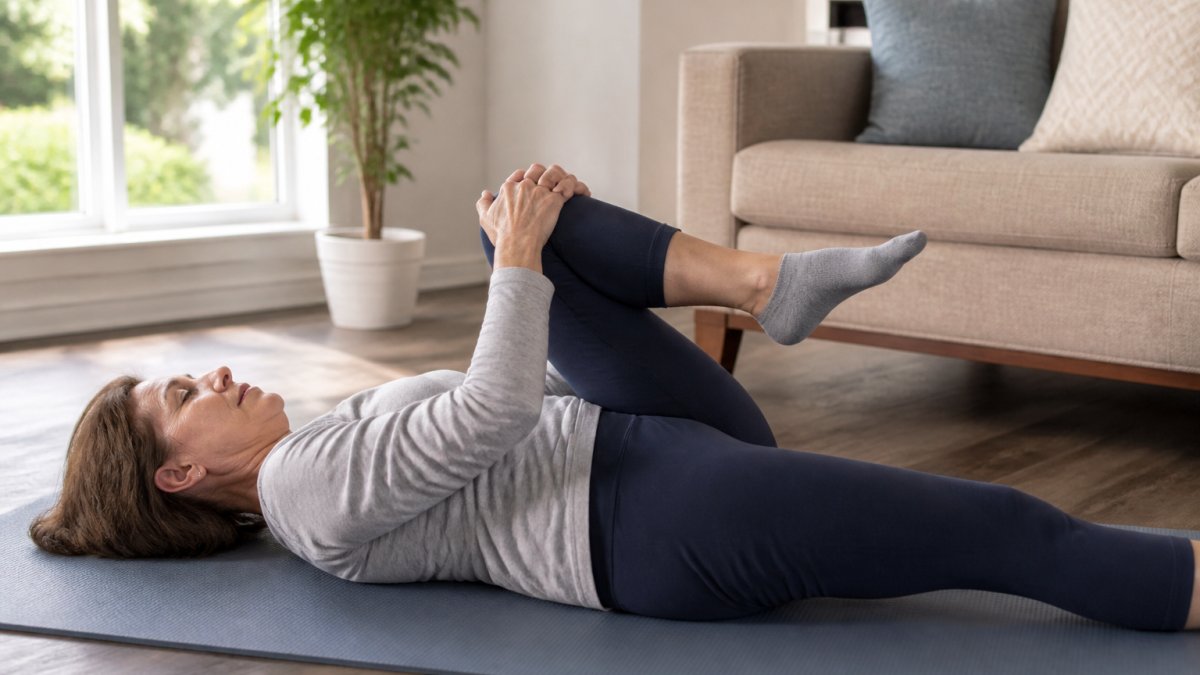
Strengthening Exercises That Support Joint Function
Strengthening exercises protect joint function. You do not need heavy weights. Light resistance and your own body weight work well.
- Wall sits for knee support
- Straight leg raises for hip strength
- Resistance band rows for shoulders
- Calf raises for ankle stability
Do these two to three times a week. Keep the range of motion small at first. Pain during exercise is a signal to stop, not push through.
Gentle Stretching for Stiffness and Range of Motion
Gentle stretching fights stiffness and protects your range of motion. Stiff joints lose flexibility over time, which makes pain worse. Stretching keeps them loose.
Hold each stretch for 15 to 30 seconds. Never bounce. Move slowly into the stretch and breathe. A physical therapist can show you the right stretches for your specific joints.
3. Use Joint Pain Home Remedies for Daily Relief
Joint pain home remedies handle the day-to-day ache between bigger treatments. Ice and heat are the two workhorses. Most people use one and forget the other. Both have a place.
Ice Compress vs. Heat Therapy: When to Use Each
Use ice for fresh swelling and sharp pain. Use heat for stiffness and old, dull aches.
| Remedy | Best For | How Long |
|---|---|---|
| Ice compress | Swelling, sharp pain, after activity | 15-20 minutes |
| Heat therapy | Stiffness, morning aches, before activity | 15-20 minutes |
| Warm bath | Full-body stiffness, relaxation | 20-30 minutes |
Wrap ice in a cloth. Never put it directly on skin. For heat, a warm shower or heating pad works well.
Warm Baths and Epsom Salts for Stiffness
A warm bath relaxes tight muscles and eases stiffness. Many people add Epsom salts to the water. The evidence for Epsom salts is mixed, but the warm soak itself clearly helps. The heat boosts blood flow and loosens joints.
Do not use heat on a joint that is hot, red, or newly swollen. Heat can make fresh inflammation worse. Use ice instead, and call your doctor if swelling does not improve.
4. Consider Physical Therapy for Joint Pain
Physical therapy for joint pain is one of the most effective steps you can take. A therapist builds a plan around your specific joints and goals. They teach you the right way to move, so you do not make pain worse.
What physical therapy offers:
- A personal exercise plan
- Hands-on treatment for stiff joints
- Training to fix bad movement habits
- Tools to manage flares at home
Many people try to go it alone with random videos online. That often makes things worse. A therapist sees how you move and corrects the problems a video cannot. If your pain limits daily tasks, this is worth the time.
5. Manage Your Weight to Reduce Joint Strain
Extra weight adds stress to every step, and the effect is larger than most people expect. During walking, the force through your knees and hips is roughly three to four times your body weight. That means losing even a modest amount of weight can meaningfully reduce the load those joints carry with every stride.
Why Weight Matters More for Some Joints
Weight-bearing joints feel it most. Knees and hips carry the full load of walking, stairs, and standing. For each pound lost, the knee may see several pounds less force per step, multiplied across thousands of steps a day. Hands and shoulders are less directly affected by body weight, but excess weight still contributes to systemic inflammation that can worsen pain anywhere.
This is why weight management shows up in nearly every joint pain guide. It is one of the few levers that changes the mechanical load on the joint itself, not just the perception of pain.
Realistic Targets and Trade-Offs
You do not need to reach an ideal weight to feel a difference. A common pattern is that losing about 5 to 10 percent of body weight improves knee pain and function for many people. For someone at 200 pounds, that is 10 to 20 pounds, a goal that is reachable with steady changes rather than a drastic diet.
The trade-off is real. Losing weight while your joints hurt is hard, because the exercise that burns calories can also cause pain. The workaround is to lean on low-impact options first: water exercise, stationary cycling, and short walks. Pair that with small food changes:
Book your consultation today! →
- Cut sugary drinks, which are often the easiest calories to remove
- Fill half your plate with vegetables
- Choose lean protein to stay full
- Walk a little more each week, even in short blocks
Weight loss and joint health go hand in hand. Many people find that as the pounds come off, moving gets easier, which helps them stay active, and the cycle starts working in your favor instead of against you.
Rapid weight loss or extreme diets can cost you muscle, which is the tissue that protects your joints. Aim for steady changes and talk to your doctor before starting any aggressive plan, especially if you take medication for diabetes or blood pressure.
6. Eat an Anti-Inflammatory Diet to Support Pain Management
An anti-inflammatory diet supports pain management from the inside, but it helps to understand why food matters at all. Chronic joint pain often involves low-grade, ongoing inflammation. Certain fats and plant compounds can nudge that process down, while others can keep it simmering. The goal is not a cure. It is a shift in the baseline that makes other steps, like exercise and sleep, work better.
How Food Affects Joint Inflammation
Two mechanisms do most of the work. First, the balance of fats you eat influences the compounds your body builds from them. Omega-3 fats, found in fatty fish, walnuts, and flaxseed, feed pathways that are less inflammatory than the omega-6 fats that dominate processed snacks and fried food.
That is the theory. In practice, the effect is modest and slow. Most practitioners find that diet changes take several weeks to months to show up in how joints feel, and they work best alongside movement and weight management, not instead of them.
A Practical Anti-Inflammatory Eating Pattern
You do not need a strict plan. Build meals around a simple pattern:
- Half your plate: vegetables and fruit, aiming for color variety
- A quarter: lean or plant protein, including fatty fish two to three times a week
- A quarter: whole grains or starchy vegetables
- Fats: olive oil, nuts, and seeds instead of butter and fried oils
Foods that tend to work against you:
- Sugary drinks and added sugar
- Processed meats and refined grains
- Fried foods and heavy trans fats
- Excess alcohol
The Arthritis Foundation diet guidance points to an anti-inflammatory eating pattern as a key lifestyle change for joint pain. You do not have to be perfect. Cutting back on sugary drinks and processed snacks is a strong, sustainable start.
Setting Realistic Expectations
Diet is one lever, not a switch. Some people notice less morning stiffness within a few weeks. Others notice nothing obvious and still benefit over the long run through better weight and heart health, which both take load off joints. If a diet claim promises to reverse arthritis, treat it with skepticism. The well-supported version is a whole-food pattern that lowers inflammation over time, not a single miracle food.
Start with one swap, not a full overhaul. Replacing one sugary drink a day with water is easier to sustain than a total diet reset, and small changes are the ones that stick.
7. Know When to See a Doctor for Joint Pain
Knowing when to see a doctor for joint pain matters more than any single home remedy. Some symptoms mean you need care now, not later. Ignoring them can let a treatable problem get worse.
See a doctor if you notice:
- Joint swelling that will not go down
- Redness or warmth around a joint
- Pain that wakes you at night
- Fever along with joint pain
- Sudden inability to move a joint
These signs can point to infection, injury, or another condition that needs treatment. Do not wait it out. A MedlinePlus overview of joint pain notes that ongoing joint pain deserves a medical evaluation, especially when it changes your daily life.
Medication safety is part of this too. Over-the-counter pain relievers help, but long-term use has trade-offs. Talk to your doctor before relying on them daily.
Home care handles everyday aches. Warning signs like swelling, redness, or night pain mean it is time to call a professional, not push through.
8. Manage Flares with Personalized Pacing
Personalized pacing is how you stay in control when a pain flare hits. A flare is a period when pain suddenly gets worse.
How to pace yourself:
- Break tasks into short blocks
- Rest before you feel exhausted
- Alternate heavy and light activity
- Track what triggers your flares
Sleep and stress play a big role here. Poor sleep and high stress both make pain feel worse.
This is where Advanced Health Center helps.
Chronic joint pain can shrink your world, but it does not have to. The tips above, from low-impact exercise to pacing and diet, give you real tools to protect your joints every day.
Frequently Asked Questions
Should you keep moving when your joints hurt?
Yes, in most cases. Rest is helpful during a severe flare, but prolonged inactivity weakens the muscles that support your joints and can make chronic joint pain worse. Low-impact physical activity like walking, swimming, or cycling keeps synovial fluid moving through the joint, which reduces stiffness. The key is to match the intensity to how you feel that day. On good days, do more; on bad days, scale back but avoid total bed rest unless a doctor advises it.
What exercises are safe for chronic joint pain?
Water exercise, walking on flat surfaces, stationary cycling, and gentle stretching are generally safe for most people with chronic joint pain. Strengthening exercises that target the muscles around the affected joint, like quad sets for knee pain or wall slides for shoulder pain, help stabilize the joint without heavy loading. Avoid high-impact activity such as running on pavement or jumping until a doctor or physical therapist clears you. Start with 10 to 15 minutes and build gradually.
When should you see a doctor for persistent joint pain?
See a doctor if joint pain lasts more than two weeks without improvement, if you notice swelling, redness, or warmth around the joint, or if the pain interferes with sleep or daily tasks. Seek urgent care if you cannot bear weight on the joint, have a fever along with joint pain, or experience sudden severe swelling. These signs can indicate infection, gout, or another condition that needs prompt treatment rather than home remedies alone.
What can you do at home to ease joint pain?
An ice compress for 15 to 20 minutes reduces swelling after activity, while heat therapy from a warm bath, heating pad, or Epsom salt soak eases stiffness before movement. Over-the-counter topical creams with menthol or capsaicin can provide short-term pain relief. Keeping a daily movement routine, even just a short walk, helps maintain joint function. If home remedies stop working or pain worsens, it is time to talk to a doctor about other options.