

Table of Contents
- Regenerative Medicine vs Surgery for Joints: Side-by-Side Comparison
- How Regenerative Medicine Works for Joint Damage
- Are Regenerative Medicine Injections Worth It?
- Regenerative Medicine Recovery Time vs Surgery
- Cost of Regenerative Medicine vs Joint Replacement
- Candidates for Regenerative Treatment vs Surgery
- Risk Factors, Complications, and Long-Term Outcomes
- Conclusion: Choosing the Right Path for Your Joints
Last Updated: August 24, 2026
Regenerative Medicine vs Surgery for Joints: Side-by-Side Comparison
When chronic joint pain stops you from living the life you want, you face a critical decision: regenerative medicine or surgery. These aren’t just different treatments, they represent fundamentally different approaches to healing. One works with your body’s natural repair systems. The other replaces damaged structures entirely.
At Advanced Health Center, we’ve spent over 40 years helping patients navigate this exact choice. The decision hinges on your specific condition, timeline, and goals. This guide breaks down how regenerative medicine vs surgery actually work, what each costs, and which path makes sense for your situation.
Regenerative medicine treats the root cause through tissue repair and biological healing. Surgery replaces damaged joints with artificial components. The best choice depends on your condition severity, age, activity level, and risk tolerance.
How Regenerative Medicine Works for Joint Damage
Regenerative medicine harnesses your body’s natural healing capacity to repair damaged cartilage, tendons, and ligaments without surgical intervention. Rather than replacing tissue, these treatments stimulate your own cells to regenerate and restore function.
The process works through concentrated growth factors and cellular material that trigger biological repair. Your body recognizes these signals and activates its own healing mechanisms. This addresses the underlying damage rather than masking symptoms with medication or removing the damaged joint entirely.
Stem Cell Therapy and Cartilage Regeneration
Stem cell therapy uses your body’s own stem cells, harvested from bone marrow or fat tissue, to regenerate damaged cartilage and joint structures (peer-reviewed research). These cells have the remarkable ability to differentiate into specialized tissue types and reduce inflammation simultaneously.
The procedure involves extracting stem cells, concentrating them, and injecting them directly into the damaged joint. Once in place, these cells work to rebuild cartilage matrix, reduce chronic inflammation, and restore joint lubrication. Many patients report improved mobility and reduced pain within weeks, though full tissue regeneration takes several months.
Stem cell therapy works best for early-to-moderate cartilage damage, degenerative joint disease, and tendon injuries. It’s particularly effective for patients who want to preserve their natural joint structure and avoid the permanent commitment of surgery.
Stem cell therapy from bone marrow (BMAC, bone marrow aspirate concentrate) often produces faster results than fat-derived cells because bone marrow contains a higher concentration of regenerative cells. The trade-off: bone marrow extraction is slightly more invasive than fat harvesting.
Platelet-Rich Plasma and Tissue Repair
Platelet-rich plasma (PRP) concentrates platelets from your own blood and injects them into damaged tissue. Platelets contain growth factors that accelerate healing, reduce inflammation, and stimulate tissue repair at the cellular level.
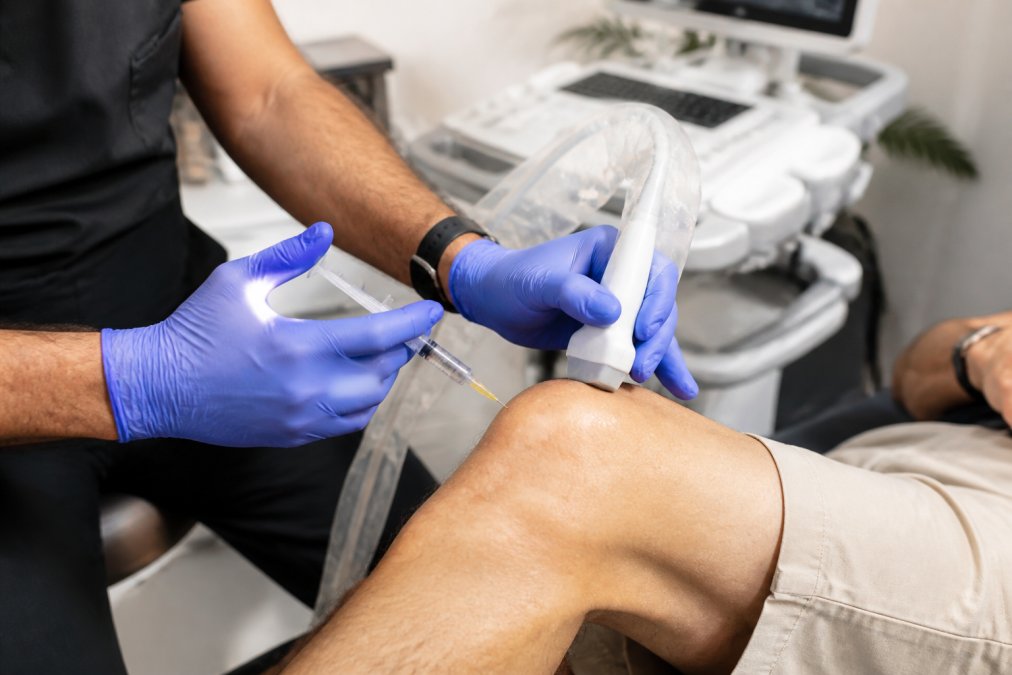
The PRP process is straightforward: blood is drawn, processed to concentrate platelets, and injected into the damaged joint under ultrasound guidance. The entire procedure takes 30-60 minutes as an outpatient treatment. Most patients experience minimal downtime, you can return to light activity immediately.
PRP works particularly well for tendonitis, ligament sprains, arthritis pain, and early cartilage damage. It’s less invasive than stem cell therapy and typically requires fewer injections to see results. Many athletes and active patients choose PRP because it preserves joint structure while accelerating natural healing.
The research on PRP continues to evolve, with ongoing clinical trials examining its effectiveness across different joint conditions. Results vary based on the quality of the PRP preparation, the severity of the damage, and individual healing capacity.
Are Regenerative Medicine Injections Worth It?
The value of regenerative medicine depends on your specific situation, timeline, and what you’re trying to achieve. For some patients, these treatments deliver life-changing results. For others, they’re a stepping stone before eventual surgery. The key is understanding realistic expectations.
Regenerative medicine injections are worth considering if you want to avoid surgery, preserve your natural joint, and address the root cause of pain rather than masking symptoms. They work best in early-to-moderate stages of joint damage when your body still has significant healing capacity.
However, they’re not a magic solution. Advanced arthritis with severe cartilage loss, complete ligament tears, or structural joint damage may require surgery regardless. Regenerative treatments can delay surgery or improve outcomes after surgery, but they can’t rebuild a joint that’s completely deteriorated.
The realistic timeline matters too. Regenerative medicine typically takes 3-6 months to show full effects as your body rebuilds tissue. Surgery offers more immediate pain relief but comes with surgical risks and longer recovery. If you need quick results and can tolerate surgical recovery, joint replacement might be the faster path.
Insurance typically doesn’t cover regenerative medicine injections, treating them as experimental or elective. This is changing as more clinical evidence accumulates, but you should budget for out-of-pocket costs and verify your specific plan before committing to treatment.
Regenerative Medicine Recovery Time vs Surgery
This is where regenerative medicine shows a major advantage: minimal downtime compared to surgery.
With regenerative injections, you return home the same day. Most patients resume light activities within a few days and normal activity within 1-2 weeks. There’s no surgical wound to heal, no anesthesia recovery period, and no post-operative complications like infection or blood clots.
Joint replacement surgery, by contrast, requires hospitalization and 6-12 weeks of recovery before returning to normal activity. The first 2-3 weeks involve significant pain management, physical therapy, and mobility restrictions. You’ll need help with daily tasks and cannot drive while taking pain medication. Return to work depends on your job, desk work in 4-6 weeks, physical labor in 3-6 months.
The extended recovery from surgery isn’t just inconvenient; it impacts your quality of life during healing. Regenerative medicine lets you maintain independence and continue modified activity throughout the healing process.
However, regenerative treatment requires patience. You won’t feel dramatically better immediately. Gradual improvement over weeks and months is the typical pattern. If you’re in severe pain and need immediate relief, surgery delivers that faster, despite the longer overall recovery.
| Treatment Type | Procedure Time | Return Home | Light Activity | Full Activity | Total Recovery |
|---|---|---|---|---|---|
| PRP Injection | 30-60 minutes | Same day | 3-5 days | 1-2 weeks | 4-6 weeks |
| Stem Cell Therapy | 45-90 minutes | Same day | 1 week | 2-3 weeks | 3-6 months |
| Joint Replacement | 1-3 hours | 1-2 days | 2-3 weeks | 6-12 weeks | 6-12 months |
Cost of Regenerative Medicine vs Joint Replacement
Cost is often the deciding factor, but the comparison is more nuanced than simple price tags.
Regenerative medicine injections can range from $250 to $2,500 per PRP injection and from $1,300 to $50,000 for stem cell therapy, depending on the treatment type and complexity. Most patients require multiple injections for optimal results. A complete regenerative treatment course typically costs between $2,000-$12,000 out of pocket.
Joint replacement surgery averages $20,000 to $32,570 for a total knee replacement, though costs vary based on hospital, surgeon, implant type, and complexity (cms.gov). Most insurance plans cover 70-90% of this cost after deductibles and out-of-pocket maximums are met. Your actual cost depends entirely on your specific insurance plan.
Here’s the financial reality: regenerative medicine is cheaper upfront but comes entirely out of pocket. Surgery is more expensive but insurance typically covers most of it. If you have good insurance, surgery might actually cost you less in total out-of-pocket expense.
But cost isn’t just about the procedure itself. Consider lost work time, physical therapy, and potential complications. Regenerative medicine means minimal work disruption. Surgery means weeks or months of reduced productivity. If you can’t afford extended time off work, regenerative medicine’s minimal downtime saves money beyond the procedure cost.
For patients without insurance coverage for regenerative treatments, pricing depends on the specific clinic and treatment protocol. Advanced Health Center can discuss personalized options during your consultation to help you understand the full financial picture and explore what’s realistic for your situation.
Book your consultation today! →
Regenerative medicine is most cost-effective for patients who: (1) want to avoid surgery, (2) can’t afford extended downtime, (3) have insurance that won’t cover regenerative treatments, and (4) have early-to-moderate joint damage. Surgery makes more financial sense if insurance covers most of the cost and you have severe, irreversible joint damage.
Candidates for Regenerative Treatment vs Surgery
Not everyone is a candidate for regenerative medicine, and not everyone needs surgery. The right choice depends on your specific condition, age, and goals.

Regenerative medicine candidates typically have:
- Early-to-moderate joint damage or cartilage loss
- Chronic pain that hasn’t responded to conservative treatment
- Strong desire to preserve their natural joint
- Willingness to wait 3-6 months for gradual improvement
- No severe structural deformities or complete cartilage loss
- Good overall health and realistic expectations
Regenerative treatments work best in younger to middle-aged patients whose bodies still have strong healing capacity. However, Advanced Health Center has successfully treated patients well into their 70s and 80s who wanted to avoid surgery and maintain their activity level.
Joint replacement candidates typically have:
- Severe, advanced arthritis with significant cartilage loss
- Structural joint damage visible on imaging
- Pain that significantly limits daily function despite conservative treatment
- Failed regenerative medicine treatment (though this is less common)
- Realistic expectations about implant lifespan and potential revision surgery
- Ability to tolerate surgical recovery and commit to post-operative physical therapy
Age alone doesn’t determine candidacy. A 65-year-old golfer might be an excellent candidate for regenerative medicine if they have moderate damage and want to preserve their joint. A 45-year-old with severe structural damage might need surgery regardless of age.
The critical factor is matching treatment to your condition severity. Mild-to-moderate damage responds well to regenerative approaches. Severe, irreversible damage typically requires surgery. The middle ground, moderate damage with significant symptoms, is where the decision becomes genuinely complex.
Risk Factors, Complications, and Long-Term Outcomes
Both approaches carry risks, but they’re fundamentally different risks.
Regenerative medicine complications are typically minor. Injection site pain, temporary swelling, and mild inflammation lasting a few days are common. Serious complications like infection are rare because there’s no surgical wound. The main risk isn’t complications, it’s treatment failure. Some patients don’t respond to regenerative therapy, and their pain continues unchanged.
Long-term outcomes from regenerative medicine are still being studied, but early evidence is encouraging. Many patients maintain pain relief and improved function for years. However, regenerative treatments don’t guarantee permanent results. Some patients need repeat injections every 12-24 months to maintain benefits.
Joint replacement surgery carries more significant risks: infection, blood clots, implant loosening, and nerve damage are all possible, though uncommon. The implant itself has a lifespan, most knee replacements last 15-20 years before requiring revision surgery. This matters if you’re young; a replacement at 50 might need revision at 65-70.
Post-operative complications from surgery can be serious. Deep vein thrombosis (blood clots), pulmonary embolism, and surgical site infections require additional treatment (the CDC). Recovery is longer and more demanding. Physical therapy is mandatory and often painful.
However, successful joint replacement delivers reliable, long-term pain relief. Once healed, most patients report excellent function and minimal ongoing pain. The trade-off is permanent joint alteration and potential future revision surgery.
Revision surgery after joint replacement is more complex and carries higher complication rates than primary surgery. If your implant fails or loosens, the second surgery is more difficult. This is a critical consideration for younger patients who might need multiple surgeries over their lifetime.
The evidence on long-term outcomes shows regenerative medicine works best for early intervention. Treating cartilage damage before it progresses to severe arthritis produces better results. Waiting until you have advanced arthritis and then trying regenerative medicine is less likely to succeed.
Conclusion: Choosing the Right Path for Your Joints
The choice between regenerative medicine vs surgery isn’t about which is objectively "better", it’s about which matches your condition, timeline, and priorities. Regenerative medicine preserves your joint, requires minimal downtime, and addresses root causes. Surgery delivers reliable pain relief but requires significant recovery and permanent joint alteration.
Advanced Health Center specializes in helping patients make this decision with clarity. Our team evaluates your specific condition, imaging results, and health history to recommend the approach most likely to succeed for you. We’ve guided thousands of patients through this decision over our 40+ years of experience managing complex joint conditions.
The next step is understanding your specific situation. A consultation with our team includes imaging review, functional assessment, and honest discussion about realistic outcomes for your condition. We’ll explain whether regenerative medicine is likely to help, what timeline to expect, and what the alternatives look like if regenerative treatment isn’t appropriate for your damage severity.
Book your consultation today to discover which path, regenerative medicine or surgery, makes sense for your joints and your life.
=== FAQ ANSWERS (audit these too, same rules) ===
[1] Q: Does regenerative medicine actually work for joint arthritis?
A: Regenerative medicine approaches like stem cell therapy and platelet-rich plasma show promise for managing arthritis by promoting cartilage regeneration and reducing inflammation. Results vary based on arthritis severity, patient age, and overall health. Patients often experience pain reduction and improved mobility, though outcomes depend on the specific treatment and individual healing response. Many patients report functional improvement within 3-6 months.
[2] Q: Are regenerative medicine injections worth it compared to surgery?
A: Regenerative medicine injections offer significant advantages: no surgical risks, minimal downtime, and preservation of natural joint tissue. They work best for early to moderate joint damage. However, they typically cost between $250 and $50,000 depending on the treatment type, and results take time. Surgery provides immediate structural repair for severe damage but carries surgical risks and longer recovery. The choice depends on damage severity, timeline, and your willingness to pursue conservative treatment first.
[3] Q: How long does regenerative medicine recovery take compared to surgery?
A: Regenerative medicine recovery is dramatically faster. Most procedures take 30-60 minutes with patients returning to light activity within days. Full results emerge over 3-6 months as tissue regenerates. Joint replacement surgery requires 4-6 weeks of restricted activity and 3-6 months for full recovery, with physical therapy mandatory. If you need to maintain your schedule, regenerative medicine’s minimal downtime offers a clear advantage over surgical recovery demands.
[4] Q: What happens if regenerative medicine treatment fails to help my joint pain?
A: If regenerative medicine doesn’t produce the desired results, surgery remains available as a next step. Some patients require multiple treatment sessions before seeing improvement. Your healthcare provider can assess whether additional regenerative treatments or surgical intervention is appropriate. This staged approach allows you to exhaust conservative options before pursuing irreversible surgical procedures, preserving your natural joint structure longer.
Frequently Asked Questions
Q: Does regenerative medicine actually work for joint arthritis?
A: Regenerative medicine approaches like stem cell therapy and platelet-rich plasma show promise for managing arthritis by promoting cartilage regeneration and reducing inflammation. Results vary based on arthritis severity, patient age, and overall health. Patients often experience pain reduction and improved mobility, though outcomes depend on the specific treatment and individual healing response. Many patients report functional improvement within 3-6 months.
Q: Are regenerative medicine injections worth it compared to surgery?
A: Regenerative medicine injections offer significant advantages: no surgical risks, minimal downtime, and preservation of natural joint tissue. They work best for early to moderate joint damage. However, they typically cost between $250 and $50,000 depending on the treatment type, and results take time. Surgery provides immediate structural repair for severe damage but carries surgical risks and longer recovery. The choice depends on damage severity, timeline, and your willingness to pursue conservative treatment first.
Q: How long does regenerative medicine recovery take compared to surgery?
A: Regenerative medicine recovery is dramatically faster. Most procedures take 30-60 minutes with patients returning to light activity within days. Full results emerge over 3-6 months as tissue regenerates. Joint replacement surgery requires 4-6 weeks of restricted activity and 3-6 months for full recovery, with physical therapy mandatory. If you need to maintain your schedule, regenerative medicine's minimal downtime offers a clear advantage over surgical recovery demands.
Q: What happens if regenerative medicine treatment fails to help my joint pain?
A: If regenerative medicine doesn't produce the desired results, surgery remains available as a next step. Some patients require multiple treatment sessions before seeing improvement. Your healthcare provider can assess whether additional regenerative treatments or surgical intervention is appropriate. This staged approach allows you to exhaust conservative options before pursuing irreversible surgical procedures, preserving your natural joint structure longer.
This article was written using GrandRanker