

Table of Contents
- Verify Board Certification and Specialized Credentials
- Assess Treatment Options for Your Condition
- What to Expect at a Pain Clinic Consultation
- Questions to Ask a Pain Management Doctor
- Evaluate Clinical Experience and Patient Outcomes
- Check Insurance Coverage and Billing Transparency
- Red Flags to Avoid When Selecting a Non-Surgical Pain Clinic
- Frequently Asked Questions
Last Updated: September 19, 2026
Verify Board Certification and Specialized Credentials
At Advanced Health Center, our practitioners bring specialized training in regenerative medicine and non-surgical pain relief, focusing on treating the root cause rather than masking symptoms.
Assess Treatment Options for Your Condition
A quality non-surgical pain clinic should offer multiple evidence-based treatment options tailored to your condition, not one standard protocol for everyone.
Common non-surgical treatments include regenerative medicine approaches.
Advanced Health Center specializes in treating conditions like low back pain, shoulder injuries, diabetic neuropathy, and auto accident injuries with a multi-faceted approach. We design treatment plans around your specific condition and recovery goals, not a one-size-fits-all model.
Ask: “What treatment options do you recommend for my specific diagnosis, and why?” Listen for a thoughtful explanation, not a sales pitch.
The best non-surgical pain clinic offers multiple evidence-based treatment options tailored to your condition, not a single standard protocol for everyone.
What to Expect at a Pain Clinic Consultation
A quality consultation takes time to understand your pain history, what you’ve tried, and your goals. It should establish how the non-surgical pain clinic will work with your primary care doctor, not in isolation.
What a comprehensive consultation includes:
- Detailed pain history: When did the pain start? What makes it better or worse? Have you had imaging or previous treatments?
- Physical examination: The doctor should perform hands-on assessment, not just review your chart. They should reproduce your pain to understand its source.
- Review of imaging and past test results: Bring any MRI, X-ray, or CT scan reports. The doctor should explain what these show in plain language.
- Clear diagnosis explanation: You should understand what’s causing your pain and why the recommended treatment targets that cause.
- Multiple treatment options: The doctor should present 2-3 evidence-based options with pros and cons for each, not just one standard protocol.
- Realistic outcomes and timeline: How much improvement can you expect? How long until you notice results? When can you return to normal activities?
- Discussion of risks and side effects: All treatments carry some risk. A good doctor explains these honestly.
- Plan for follow-up and long-term care: What happens after your initial treatment? Will you need ongoing visits? How will progress be monitored?
The consultation should establish coordination with your primary care doctor. A pain specialist should not operate in a vacuum. Ask:
-
“Will you communicate with my primary care doctor about my treatment?” A quality clinic sends a summary of diagnosis, treatment, and progress to your primary care physician, preventing conflicting medications and fragmented care.
-
“How will you share my treatment plan with my other doctors?” Written documentation is better than verbal updates because it creates a clear record.
-
“What if my primary care doctor has concerns about the treatment plan?” Good clinics welcome input from your main healthcare provider. If the specialist dismisses your primary care doctor’s concerns, that’s a red flag.
-
“Will you coordinate physical therapy with my primary care doctor’s recommendations?” The pain clinic should build on existing recommendations, not contradict them.
The doctor’s communication style matters: Do they listen more than talk? Use plain language? Give you time for questions? Welcome your concerns? Your comfort level is important, you should feel respected and heard.
After the consultation, you should have: a written treatment plan with specific recommendations, a timeline for the first treatment and follow-up visits, clear pre-treatment instructions, contact information, and documents to share with your primary care doctor. If the clinic doesn’t provide written information, ask for it.
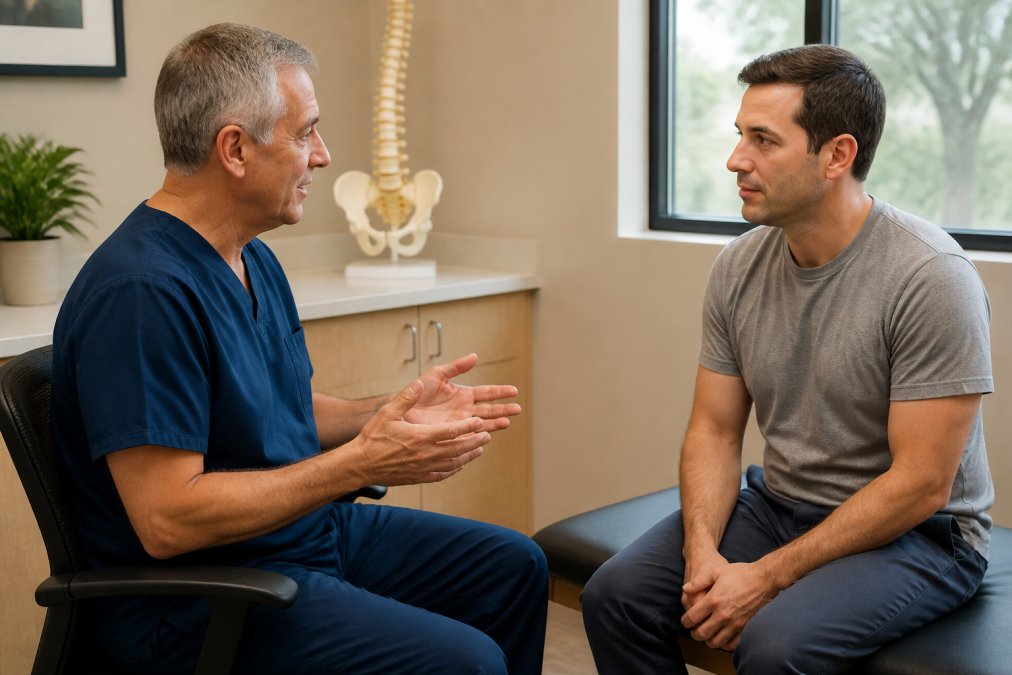
Avoid clinics that pressure you to start treatment immediately, that don’t explain what they’re doing, or that won’t discuss how they’ll coordinate with your primary care doctor. A reputable clinic gives you time to ask questions, think about your options, and consult with your main healthcare provider.
Questions to Ask a Pain Management Doctor
- Will I need ongoing treatment, or is this a one-time fix? Honest clinics explain whether your condition needs maintenance visits or if you can expect lasting relief after the initial treatment plan.
Evaluate Clinical Experience and Patient Outcomes
Look for clinics that specialize in your condition and track and share outcome data.
Book your consultation today! →
Advanced Health Center has helped over 10,000 patients through non-surgical approaches, with over 40 years specializing in auto injury cases and diabetic conditions.
Check Insurance Coverage and Billing Transparency
A clinic transparent about billing builds trust and prevents financial surprises. This is one of the most common sources of patient frustration.
Before booking treatment, verify coverage directly by calling your insurance company to ask: Is pain management covered? Do I need a referral? What’s the prior authorization process? What’s my deductible status? Are there visit limits? What’s my coinsurance? Write down the representative’s name, date, and confirmation number for documentation.
Understand common coverage gaps:
Many non-surgical treatments fall into gray areas with insurance. Regenerative medicine treatments may have limited coverage.
Request a written estimate before treatment:
Red flags in billing:
- Clinic staff can’t answer basic insurance questions and tell you to “call your insurance.”
- They pressure you to pay upfront before insurance processes the claim.
- They won’t provide a written estimate.
- Multiple online reviews mention unexpected bills or billing disputes.
- They recommend expensive out-of-pocket treatments without discussing covered alternatives first.
Red Flags to Avoid When Selecting a Non-Surgical Pain Clinic
Trust your instincts when something feels off. Red flags include:
- Pressure to start treatment immediately suggests focus on revenue over care.
- One-size-fits-all protocols ignore your unique pain and needs.
- Unwillingness to discuss risks means they’re not being transparent.
- No integration with your primary care doctor suggests fragmented care.
- Promises of complete pain elimination are unrealistic and dishonest.
- Staff who can’t answer basic questions about credentials or approach reflects poorly on the operation.
- No clear follow-up plan suggests they haven’t thought through your path forward.
- Multiple negative reviews about billing or lack of results indicate systemic issues.
- No outcome tracking means they either don’t track results or won’t share them.
- Unprofessional or poorly maintained facility reflects poor attention to detail.
Trust your gut. If something doesn’t feel right during your consultation, keep looking. You have options, and you deserve a clinic where you feel confident and respected.
Choosing the right non-surgical pain clinic is one of the most important decisions in your pain management journey. The clinic you select shapes whether you get lasting relief or temporary fixes. Look for board-certified doctors with specialized credentials, multiple evidence-based treatment options, and genuine commitment to understanding your specific condition. At Advanced Health Center, we combine over 40 years of clinical experience with a patient-centered approach to non-surgical pain relief. We treat the root cause of your pain, not just the symptoms. Book your consultation today to discover how our personalized care can help you regain mobility and live the active life you deserve.
Frequently Asked Questions
How do I know if a non-surgical pain clinic is legitimate and credible?
Verify that the clinic’s providers have relevant credentials. Ask for evidence of their clinical experience with your specific condition. A credible clinic will provide transparent information about provider credentials and treatment success rates without hesitation.
What should I expect during my first consultation at a pain clinic?
Your initial visit should include a thorough medical history review, physical examination, and discussion of your pain symptoms and how they affect daily activities. The provider should ask detailed questions about previous treatments you’ve tried and explain their diagnostic approach. Expect discussion of potential non-surgical treatment options for chronic pain. A good consultation ends with a clear treatment plan timeline and realistic expectations about recovery and functionality improvements.
What questions should I ask a pain management doctor before starting treatment?
Ask about their experience treating your specific condition and success rates with similar patients. Inquire about all non-surgical treatment options available and why they recommend a particular approach. Ask about potential risks, side effects, and how long before you’ll see results. Request information about follow-up care. Understanding the full treatment plan upfront helps you make an informed decision.
Are non-surgical pain treatments typically covered by insurance?
Coverage varies significantly by insurance plan and the specific treatment. Many plans cover evidence-based interventions when medically necessary. However, some regenerative medicine treatments may have limited coverage. Before choosing a clinic, contact your insurance provider to understand what’s covered and ask the clinic about billing transparency, payment options, and whether they can work with your plan to minimize out-of-pocket costs.