

Table of Contents
- Why Your Back Hurts When Sitting All Day
- Lower Back Pain From Sitting: Causes and Risk Factors
- Best Sitting Position for Lower Back Pain
- How to Relieve Back Pain From Sitting
- Stretches for Lower Back Pain From Sitting
- When to Seek Professional Help
- Frequently Asked Questions
Last Updated: October 13, 2026
Why Your Back Hurts When Sitting All Day
If you spend eight hours a day at a desk, your back hurt sitting all day is probably a familiar complaint by day’s end. That pain isn’t random. It’s the direct result of how your body responds to prolonged sitting. Understanding why your back hurts when you sit all day is the first step toward fixing it.
Sitting all day puts constant stress on your spine. Your back muscles work to hold you upright. Your discs absorb pressure. Your joints compress. Over time, this adds up to real pain.
How Prolonged Sitting Stresses Your Spine
When you sit for hours, your spine bears weight it wasn’t designed to hold for that long. The lumbar spine, your lower back, takes the biggest hit. Each vertebra rests on a cushioning disc. These discs compress under pressure.
Prolonged sitting also changes how your muscles work. Your back muscles fatigue from constant tension. They can’t relax fully while you’re upright in a chair. Meanwhile, your front muscles tighten. This imbalance pulls your spine out of alignment.
The pressure on spinal discs increases when you sit. Sitting actually puts more load on your discs than standing does (Comparison of In Vivo Intradiscal Pressure between Sitting and Standing in Human Lumbar…). A disc that’s compressed for eight hours straight can develop micro-tears.
Most people don’t realize that slouching makes disc pressure worse. Sitting upright reduces pressure on your discs by 25% compared to slouching. The difference is visible on imaging studies.
Posture, Disc Pressure, and Muscle Fatigue
Your posture determines how much stress your spine experiences. Poor posture rounds your shoulders forward. It collapses your natural spinal curves. This positioning forces your discs to absorb pressure unevenly.
When you slouch, the front of your discs bears more load than the back. Over months and years, this uneven pressure can cause disc bulges. A bulging disc can irritate nearby nerves.
Muscle fatigue happens faster than most people think. Your back muscles are designed for movement, not static holding. Sitting still for hours exhausts them. Fatigued muscles can’t support your spine properly.
The longer you sit without moving, the more your muscles fatigue. By hour six or seven of a workday, your muscles are depleted. They can barely hold you upright.
Lower Back Pain From Sitting: Causes and Risk Factors
Back hurt from sitting all day stems from multiple causes working together. Understanding each one helps you address the real problem, not just the symptom.
Weak Core and Glute Support
Your core muscles act as a corset for your spine. They stabilize your vertebrae during movement and sitting. Weak core muscles can’t do this job. Your spine lacks support. Your lower back compensates by tensing up.
Glute muscles matter just as much. Your glutes attach to your pelvis. Strong glutes keep your pelvis stable. Weak glutes let your pelvis tilt forward or backward. This tilting misaligns your entire spine.
Office workers often have weak glutes. Sitting all day actually weakens these muscles. The more you sit, the weaker they become. This creates a vicious cycle. Weak glutes cause poor posture. Poor posture leads to more sitting pain. Pain discourages movement. Lack of movement weakens glutes further.
If your glutes are weak, your lower back muscles work overtime to compensate. This overwork is a major source of sitting-related pain. Strengthening your glutes is one of the fastest ways to reduce back pain.
Hip Flexor Tightness and Reduced Mobility
Your hip flexors are muscles on the front of your hips. Sitting shortens these muscles. Hour after hour of sitting tightens them. Tight hip flexors pull your pelvis forward.
The excessive curve strains your lower back. It pinches nerves. It compresses joints. It all traces back to tight hip flexors.
Reduced mobility compounds the problem. When your hips can’t move freely, your lower back compensates. Every movement puts extra stress on your lumbar spine. Walking becomes uncomfortable. Bending becomes painful. Even sitting becomes worse because your spine is already strained.
Hip flexor tightness develops silently. You don’t notice it until pain appears. By then, the tightness is usually severe. Stretching your hip flexors regularly prevents this problem.
Inactivity and Blood Flow Restriction
Movement pumps blood through your muscles. Blood carries oxygen and nutrients. It removes waste products. Sitting still cuts off this blood flow.
Inactivity starves your back muscles of oxygen. Oxygen-deprived muscles produce lactic acid. Lactic acid buildup causes pain and stiffness. This is why your back feels stiff after sitting all day.
Inactivity also weakens your muscles. Muscles atrophy without use. Atrophied muscles can’t support your spine. This weakness develops gradually. After weeks of sitting all day, your muscles have lost measurable strength.
The longer you sit without movement, the more blood flow decreases. Poor blood flow means slower healing. If you already have a back injury, inactivity prevents recovery. Movement is actually medicine for your back.
Best Sitting Position for Lower Back Pain
Your sitting position determines how much stress your spine endures. The right position reduces pain. The wrong position guarantees it.
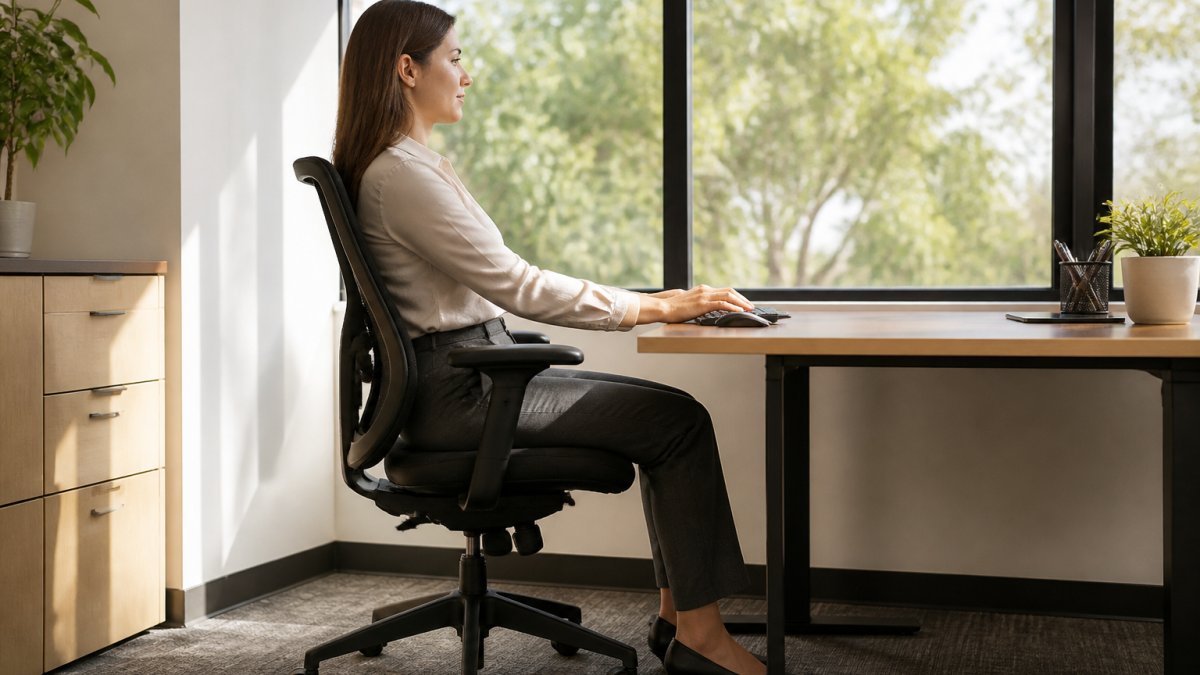
Neutral Spine Alignment and Lumbar Support
A neutral spine means your vertebrae stack in their natural curves. Your head sits directly over your shoulders. Your shoulders sit over your hips. Your lower back maintains its natural inward curve.
Lumbar support is critical. Your lower back needs support to maintain neutral alignment. Without it, your discs compress. Your muscles tense. Pain develops.
A good chair provides lumbar support. The support should match your lower back’s curve. It should contact your spine at the level where your pants pocket sits. Too high or too low, and it won’t help.
Your feet matter too. Both feet should rest flat on the floor. Your knees should bend at 90 degrees. This position distributes weight evenly. It prevents your pelvis from tilting.
The single most important sitting position rule: your ears, shoulders, and hips should form a straight vertical line. This alignment minimizes stress on every part of your spine.
Workstation Setup and Chair Selection
Your desk height affects your posture. Your desk should be high enough that your elbows bend at 90 degrees when your arms rest on it. Too low, and you slouch.
Your monitor height matters equally. The top of your monitor should be at eye level. This prevents you from looking down. Looking down rounds your shoulders and collapses your spine.
Your chair is your foundation. A good chair supports your lumbar spine. It adjusts for your height. It allows your feet to touch the floor.
Book your consultation today! →
Many office chairs don’t provide adequate support. They’re designed for appearance, not function. A chair that looks modern might actually harm your back. Test any chair before buying. Sit in it for 20 minutes.
How to Relieve Back Pain From Sitting
Relief requires movement and habit changes. Rest alone won’t fix the problem when your back hurt sitting all day. You need to interrupt sitting and strengthen your supporting muscles.
Movement Breaks and Standing Intervals
Movement breaks are non-negotiable. Every 30 minutes, stand up. Walk for two minutes. This breaks the compression cycle. It restores blood flow. It resets your posture.
A practical workday plan looks like this:
- 9:00 AM: Work sitting
- 9:30 AM: Stand and walk for 2 minutes
- 9:32 AM: Return to desk
- 10:02 AM: Stand and walk for 2 minutes
- 10:04 AM: Return to desk
- Continue this pattern all day
Standing intervals reduce disc pressure. They allow your muscles to relax. They prevent the fatigue that causes pain.
Alternate between sitting and standing throughout the day. A standing desk helps. You can raise and lower it. Spend 20 minutes sitting, then 10 minutes standing. This variation keeps your muscles engaged without overloading them.
Walking is the best movement break. It engages your core. It strengthens your glutes. It restores blood flow. A two-minute walk every 30 minutes adds up to 16 minutes of walking per eight-hour workday. This small amount of movement significantly reduces pain.
When Sitting Soreness Becomes a Warning Sign
Not all sitting pain is the same. Some pain is muscular soreness. Some pain signals a more serious problem. Knowing the difference matters.
Muscular soreness from sitting feels like a dull ache. It improves with movement. It worsens with continued sitting. This is normal sitting-related pain.
Warning signs require professional evaluation. Sharp pain that shoots down your leg suggests nerve irritation. Numbness or tingling indicates nerve compression.
Pain location matters too. Pain centered in your lower back usually comes from muscles or discs. Pain on one side of your back might indicate muscle strain.
If your pain has lasted more than two weeks despite movement breaks and stretching, see a professional.
Stretches for Lower Back Pain From Sitting
Stretching reverses the tightness that sitting creates. These stretches target the muscles most affected by prolonged sitting.
Hip Flexor and Glute Activation Routine
Hip flexor stretches counteract the shortening that sitting causes. Here’s an effective stretch:
- Kneel on one knee on a padded surface
- Place your other foot forward with knee bent
- Lean forward gently until you feel a stretch in the front of your hip
- Hold for 30 seconds
- Repeat three times on each side
- Do this twice daily
Glute activation exercises strengthen the muscles that sitting weakens. These exercises take five minutes:
- Lie on your back with knees bent
- Squeeze your glute muscles as hard as you can
- Hold for three seconds
- Release and rest for one second
- Repeat 15 times
- Rest one minute
- Complete three sets
Perform glute activation exercises daily. They rebuild strength quickly. Most people notice improvement within two weeks.
Core Strengthening for Long-Term Relief
Your core muscles need consistent strengthening. A strong core supports your spine during all activities. Here’s a simple core routine:
- Lie on your back with knees bent
- Tighten your abdominal muscles
- Lift your hips off the ground until your body forms a straight line
- Hold for 10 seconds
- Lower and rest
- Repeat 10 times
- Complete three sets
This exercise, called a bridge, activates your core and glutes simultaneously. It’s one of the most effective exercises for sitting-related back pain.
Perform these stretches and exercises daily. Consistency matters more than intensity. Five minutes of daily stretching beats 30 minutes once a week. Your muscles respond to regular stimulus.
When to Seek Professional Help
Some back pain requires professional evaluation. You can’t fix everything with stretching and movement breaks alone.
Seek professional help if your pain persists beyond two weeks. If pain interferes with sleep or daily activities, don’t wait. If you experience numbness, tingling, or weakness, see a professional immediately.
Advanced Health Center specializes in identifying the root cause of your back pain. Our non-surgical approach addresses the underlying problem.
Our team evaluates your specific situation. This diagnosis guides your personalized treatment plan. We focus on fixing the cause, not just masking symptoms.
Back hurt from sitting all day doesn’t have to be permanent. The right posture, movement breaks, and strengthening exercises eliminate most sitting-related pain.
Frequently Asked Questions
Why does my lower back hurt when I sit for a long time?
Prolonged sitting compresses your spinal discs, strains soft tissues and ligaments, and weakens core muscles that support your lumbar spine. Poor posture during sitting increases pressure on the lower back, while inactivity reduces blood flow and allows muscles to fatigue. Hip flexor tightness from sitting also pulls on your pelvis, creating additional strain on the lower back.
What is the best sitting position for lower back pain?
Maintain a neutral posture with your spine’s natural curves intact. Keep your feet flat on the floor, knees at 90 degrees, and your back against an ergonomic chair with lumbar support. Your monitor should be at eye level, and your elbows at 90 degrees. Avoid slouching or leaning forward, which increases disc compression and soft-tissue stress.
How often should I get up and move if I sit all day?
Stand and move for 2-3 minutes every 30 minutes. Walk around the office, do light stretching, or perform simple movements like hip circles and shoulder rolls. This breaks up inactivity, restores blood flow, relieves muscle fatigue, and prevents stiffness. Even short movement breaks significantly reduce back pain from prolonged sitting.
How can I tell if my sitting-related back pain needs professional attention?
Ordinary sitting-related soreness typically improves with movement breaks, stretching, and posture adjustments. Seek professional help if pain radiates down your leg, persists despite lifestyle changes, worsens at night, or is accompanied by numbness or weakness. These may indicate nerve irritation or disc compression requiring specialist evaluation.