

Table of Contents
- What Makes a Non-Surgical Pain Relief Clinic Worth Your Time
- How Regenerative Medicine Works for Chronic Pain
- Top Pain Relief Alternatives to Consider
- Benefits of Regenerative Medicine for Chronic Pain
- What to Ask During a Pain Clinic Consultation
- Comparing Cost, Recovery Time, and Outcomes
- Which Alternative Is Right for Your Situation
- Conclusion
Last Updated: August 25, 2026
What Makes a Non-Surgical Pain Relief Clinic Worth Your Time
Chronic pain steals your life. Five years of lower back pain. Three years of shoulder stiffness. Neuropathy that makes walking painful. Most people have tried physical therapy, cortisone shots, maybe surgery recommendations. When those fail, the search for a QC Kinetix alternative for pain relief becomes urgent.
Not every clinic offering non-surgical pain management is the same. Some focus on temporary relief through injections and medication. Others dig deeper, looking for root causes and building treatment plans around actual healing. This distinction matters enormously when considering regenerative medicine.
According to the American Academy of Orthopaedic Surgeons, regenerative medicine approaches like stem cell therapy and platelet-rich plasma have shown measurable outcomes for conditions that previously seemed stuck. Advanced Health Center has built its reputation over 40 years on this approach: understanding that your pain is unique, and your treatment should be too.
Below, we’ll walk you through how regenerative medicine works, compare leading non-surgical pain relief alternatives, and help you ask the right questions when booking a consultation.
How Regenerative Medicine Works for Chronic Pain
Regenerative medicine isn’t magic. It’s a systematic approach to healing that works with your body’s natural repair mechanisms.
When you have chronic pain from a joint, tendon, or ligament issue, the underlying tissue is often damaged in ways standard treatments don’t address. Regenerative medicine targets that tissue directly, using your body’s own cellular resources to stimulate healing.
The most common regenerative approaches include:
- Platelet-rich plasma (PRP): Your blood is processed to concentrate platelets, which contain growth factors that reduce inflammation and promote tissue repair. This works particularly well for tendon and ligament injuries.
- Stem cell therapy: Cells harvested from your bone marrow or fat tissue are injected into the damaged area, where they can differentiate into needed tissue and reduce inflammation.
- Orthobiologics: Biological materials, some from your own body, others from carefully sourced donors, designed to stimulate your body’s natural healing response.
Recovery typically involves initial injections followed by structured rehabilitation where you gradually increase activity as tissue heals. This isn’t passive recovery, you actively participate through guided movement and targeted exercises.
What makes this different from surgery is the minimally invasive nature. There’s no cutting, no general anesthesia, no weeks of immobilization. Most people return to light activity within days and resume normal routines within weeks (the FDA). Tissue repair continues for months, meaning improvement often increases over time.
Top Pain Relief Alternatives to Consider
When looking for a QC Kinetix alternative for pain relief, you have several legitimate options. The right choice depends on your specific condition, timeline, and treatment philosophy.
Advanced Health Center: Root-Cause Regenerative Medicine
Advanced Health Center treats pain as a signal pointing to underlying damage that needs repair, not just a symptom to mask.
With over 40 years of experience managing complex cases, the clinic identifies exactly what’s driving your pain, then builds a multi-faceted treatment plan to address it. Whether you’re dealing with low back pain, shoulder injuries, or neuropathy, the team approaches each case with the same principle: fix the root cause, and the pain resolves.
The clinic specializes in natural, drug-free solutions. This matters if you’ve been managing pain with medication and want to reduce dependency, or if you’re concerned about long-term effects of repeated cortisone injections. Their approach to diabetic condition improvement has been refined since 1996, making them particularly strong for patients with neuropathy. For auto injury cases, they’ve developed protocols specifically designed around the unique healing timeline these injuries require.
Pros:
- Non-surgical treatments designed to avoid medication dependency
- Deep expertise in auto injury recovery and diabetic neuropathy
- Multi-faceted approach addressing root cause, not just symptoms
- Personalized treatment plans based on your specific injury history
Cons:
- Pricing requires a consultation
- Insurance coverage varies widely for regenerative treatments
Resilience Orthopedics: Precision Stem Cell Therapy
Resilience Orthopedics brings clinical precision to stem cell therapy, appealing to patients who want to understand exactly what’s being injected and why.
The clinic offers multiple stem cell options, autologous (from your own body) and allogeneic (from carefully vetted donors), including Lipogems®, Clarix FLO®, and Amniofix®. They also offer BMAC therapy (bone marrow aspirate concentrate), particularly effective for cartilage and bone healing.
Led by board-certified orthopedic surgeon Dr. Pamela Mehta, the clinic combines orthopedic expertise with regenerative medicine knowledge. Treatment plans are grounded in orthopedic principles while using biological healing mechanisms. Recovery protocols are personalized around your lifestyle, goals, and recovery history, designed to help you return to specific activities like golf, running, or weightlifting.
Pros:
- Multiple stem cell options tailored to your specific injury
- Board-certified orthopedic surgeon leading clinical decisions
- Personalized recovery protocols aligned with your lifestyle
- Clinical evidence-based approach to treatment selection
Cons:
- Stem cell therapy pricing ranges from $4,500 to $10,000 per treatment (peer-reviewed research)
- Insurance coverage for stem cell therapy is inconsistent
Allied Pain & Spine Institute: Comprehensive Pain Management
Allied Pain & Spine Institute takes a broader approach, offering multiple treatment modalities under one roof.
Rather than specializing in a single regenerative approach, the clinic combines innovative pain management techniques with spinal care expertise. If you come in with chronic back pain, they might recommend a combination of treatments: regenerative injections, targeted physical therapy, and other interventions depending on your presentation.
The multidisciplinary team includes doctors, chiropractors, and other medical professionals. This can be valuable if your pain involves multiple systems or if you’re not responding to a single treatment approach. Their strength is personalized treatment planning based on your condition, response to initial treatments, and specific goals.
Pros:
- Multidisciplinary team offers multiple treatment options
- Personalized pain management plans
- Experienced practitioners in chronic pain and spine conditions
- Can address complex cases involving multiple pain generators
Cons:
- Specific pricing requires consultation
- May require multiple visits, extending overall treatment timeline
Box Acupuncture: Traditional Chinese Medicine Approach
Box Acupuncture brings a fundamentally different philosophy: working with your body’s energy systems and natural healing capacity rather than introducing foreign substances.
The clinic offers acupuncture, electro-acupuncture, dry needling, Chinese herbal medicine, and cupping therapy. This combination can be particularly effective for musculoskeletal pain and inflammation where conventional approaches have plateaued.
Acupuncture influences pain signaling, reduces inflammation through systemic effects, and promotes natural healing. For patients with needle sensitivity or those seeking a non-injection approach, this represents a meaningful alternative. Pricing is more accessible, with sessions starting at $130, making it feasible as ongoing maintenance therapy.
Pros:
- Non-injection, drug-free approach to pain management
- More accessible pricing than regenerative medicine clinics
- Holistic approach addressing underlying imbalances
- Can be used alongside other treatments
Cons:
Book your consultation today! →
- Initial evaluation can be more expensive than subsequent sessions
- Insurance coverage varies; many providers are out-of-network
- Results depend heavily on practitioner skill and your individual response
Benefits of Regenerative Medicine for Chronic Pain
Regenerative medicine delivers long-term pain relief without surgery complications or medication dependency.
When you choose a regenerative approach, you’re choosing a treatment that works with your body’s healing capacity. Results tend to improve over time. Unlike cortisone injections, which provide temporary relief, regenerative treatments stimulate actual tissue repair. You might feel improvement within weeks, but healing continues for months. Many patients report continued pain decrease three to six months after treatment.
Regenerative approaches address root causes. If your knee pain comes from cartilage damage, treatment targets that cartilage. If shoulder pain stems from rotator cuff degeneration, treatment promotes healing in that specific tissue. This differs fundamentally from masking pain with medication.
The minimally invasive nature avoids surgical complications: no infection risk from open wounds, no months of immobilization, no scar tissue formation. Your tissue heals in place, maintaining natural anatomy and function.
For patients managing chronic conditions, diabetic neuropathy, osteoarthritis, repetitive strain injuries, regenerative medicine addresses the underlying problem rather than managing symptoms indefinitely. This can mean reducing medication dependency, restoring lost mobility, and returning to activities you thought were off-limits.
What to Ask During a Pain Clinic Consultation
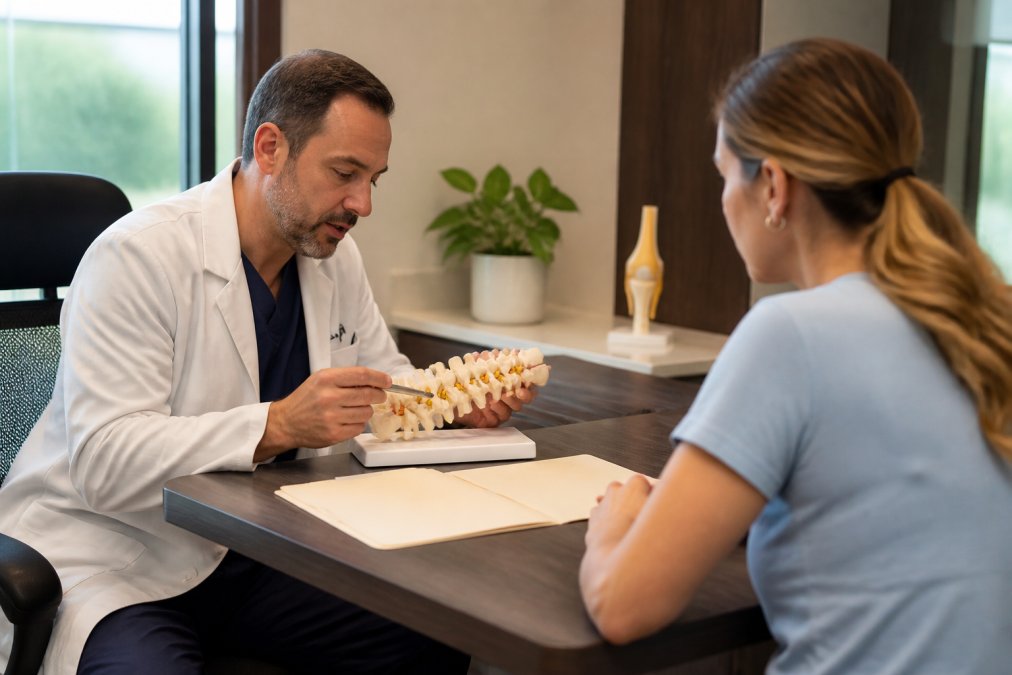
Your consultation evaluates whether a clinic understands your situation and has a credible plan to address it.
Ask the provider to explain exactly what tissue is damaged, what imaging shows, and why regenerative medicine will help your specific problem. A good clinic will reference your imaging, ask detailed questions about your injury history, and explain how their treatment targets your particular issue.
Ask about the specific treatment recommended. What biological material will they use? If stem cells, are they autologous or allogeneic? How many injections does the protocol involve? What’s the timeline for results?
Recovery expectations matter enormously. Ask how quickly you can return to light activity, normal activity, and your specific goals. Ask about the rehabilitation protocol: what exercises, how often, for how long? A clinic providing a detailed, written recovery plan takes your healing seriously.
Insurance and cost require direct conversation. Ask whether they bill insurance, what percentage they typically see covered, and your likely out-of-pocket cost. Ask about payment plans or financing options. A transparent clinic provides these numbers before you commit.
Finally, ask about outcomes. What percentage of patients see meaningful improvement? What’s their follow-up if you’re not progressing as expected? Do they have a guarantee or refund policy? These questions reveal whether the clinic is confident in its outcomes.
Comparing Cost, Recovery Time, and Outcomes
| Clinic | Treatment Type | Recovery Timeline | Typical Sessions | Best For |
|---|---|---|---|---|
| Advanced Health Center | Regenerative medicine (multi-faceted) | Days to weeks | 1-3 injections | Root-cause healing, chronic conditions |
| Resilience Orthopedics | Stem cell therapy | Weeks to months | 1-2 injections | Cartilage/tissue damage, active patients |
| Allied Pain & Spine Institute | Multi-modality pain management | Varies by treatment | Multiple visits | Complex cases, multiple pain sources |
| Box Acupuncture | Acupuncture/herbal medicine | Immediate to weeks | 6-12 sessions | Ongoing maintenance, non-injection preference |
Regenerative medicine clinics typically charge $5,000 to $50,000 per treatment. Advanced Health Center and Allied Pain & Spine Institute require consultations for pricing. Box Acupuncture is more accessible at $130 per session, though you may need multiple sessions for lasting results.
Regenerative medicine allows return to light activity within days and normal routines within weeks. Acupuncture offers immediate symptom relief but typically requires ongoing sessions. Multi-modality approaches may extend your treatment timeline but address more complex presentations.
Which Alternative Is Right for Your Situation

Choose Advanced Health Center if: You’ve dealt with chronic pain for years, tried standard approaches without lasting results, and want a clinic that digs into root causes. Their 40 years of experience with complex cases, combined with specialized expertise in auto injuries and diabetic neuropathy, makes them particularly strong if either applies to you. If you’re looking for a drug-free, multi-faceted approach that actually fixes the underlying problem, this is your best option.
Choose Resilience Orthopedics if: You have a specific tissue injury and want a clinically precise stem cell approach. The multiple stem cell options and board-certified orthopedic leadership appeal to patients who want to understand exactly what’s being injected. If you’re active and want to return to specific physical activities, their personalized recovery protocols are a significant advantage.
Choose Allied Pain & Spine Institute if: Your pain involves multiple systems or you haven’t responded well to single-modality treatments. The multidisciplinary team and comprehensive approach work well for complex cases. If you need flexibility in treatment options and prefer a clinic that adjusts your protocol based on your response, this clinic’s strength is its adaptability.
Choose Box Acupuncture if: You prefer a non-injection approach, want ongoing maintenance therapy, or need more accessible pricing. Traditional Chinese medicine works through different mechanisms than regenerative medicine and delivers better results for some patients. This is also a good choice if you want to try a less invasive approach first.
Conclusion
Chronic pain doesn’t have to be permanent. The shift from masking symptoms to actually healing underlying tissue changes everything: your pain trajectory, medication dependency, and ability to return to activities that matter.
Advanced Health Center’s 40 years of experience managing complex pain cases, combined with their multi-faceted regenerative approach and specialized expertise in diabetic neuropathy and auto injuries, positions them as the premier choice for patients seeking root-cause healing. Their proven track record of helping over 10,000 patients regain mobility and long-term pain relief without drugs or surgery demonstrates their commitment to sustainable healing.
Book your consultation today to discover how Advanced Health Center’s personalized regenerative medicine approach can help you escape chronic pain and reclaim your quality of life.
=== FAQ ANSWERS (audit these too, same rules) ===
[1] Q: How do I know which pain relief alternative will actually work for my condition?
A: The best approach depends on your specific diagnosis, pain duration, and lifestyle goals. During a consultation, ask the clinic about their success rates for your particular condition and request patient testimonials or case studies. Regenerative medicine clinics should explain how their treatment targets the root cause of your pain, whether through orthobiologics, stem cell therapy, or other modalities. Start with a thorough evaluation to understand your options before committing to treatment.
[2] Q: What is the difference between regenerative medicine alternatives for chronic pain relief?
A: Regenerative medicine encompasses several approaches: stem cell therapy uses autologous or allogeneic cells to promote tissue repair, platelet-rich plasma (PRP) concentrates growth factors from your own blood, and bone marrow aspirate concentrate (BMAC) extracts regenerative cells from bone marrow. Traditional approaches like acupuncture work through different mechanisms to reduce inflammation and manage pain. Each clinic may specialize in different techniques, so comparing their specific modalities and clinical evidence helps you choose the best fit.
[3] Q: How long does it typically take to see results from non-surgical pain relief treatment?
A: Recovery timelines vary significantly by treatment type and individual factors. Some patients report improvement within weeks, while others may need several months for full benefits. Regenerative medicine treatments often require a recovery protocol that includes activity modification and rehabilitation. During your consultation, ask the clinic for realistic timeframes based on your condition and their clinical experience. Understand that tissue repair is a gradual biological process, not an overnight fix.
[4] Q: What questions should I ask to evaluate a non-surgical pain clinic before booking?
A: Ask about the physician’s credentials and board certifications, their experience with your specific condition, what treatment modalities they offer, success rates and patient outcomes data, whether they accept your insurance, the total cost of your treatment plan, expected recovery timeline, and what happens if treatment doesn’t provide relief. Request to speak with past patients or review testimonials. Also ask about their post-procedure rehabilitation protocol and how they monitor your progress over time.
Frequently Asked Questions
Q: How do I know which pain relief alternative will actually work for my condition?
A: The best approach depends on your specific diagnosis, pain duration, and lifestyle goals. During a consultation, ask the clinic about their success rates for your particular condition and request patient testimonials or case studies. Regenerative medicine clinics should explain how their treatment targets the root cause of your pain, whether through orthobiologics, stem cell therapy, or other modalities. Start with a thorough evaluation to understand your options before committing to treatment.
Q: What is the difference between regenerative medicine alternatives for chronic pain relief?
A: Regenerative medicine encompasses several approaches: stem cell therapy uses autologous or allogeneic cells to promote tissue repair, platelet-rich plasma (PRP) concentrates growth factors from your own blood, and bone marrow aspirate concentrate (BMAC) extracts regenerative cells from bone marrow. Traditional approaches like acupuncture work through different mechanisms to reduce inflammation and manage pain. Each clinic may specialize in different techniques, so comparing their specific modalities and clinical evidence helps you choose the best fit.
Q: How long does it typically take to see results from non-surgical pain relief treatment?
A: Recovery timelines vary significantly by treatment type and individual factors. Some patients report improvement within weeks, while others may need several months for full benefits. Regenerative medicine treatments often require a recovery protocol that includes activity modification and rehabilitation. During your consultation, ask the clinic for realistic timeframes based on your condition and their clinical experience. Understand that tissue repair is a gradual biological process, not an overnight fix.
Q: What questions should I ask to evaluate a non-surgical pain clinic before booking?
A: Ask about the physician's credentials and board certifications, their experience with your specific condition, what treatment modalities they offer, success rates and patient outcomes data, whether they accept your insurance, the total cost of your treatment plan, expected recovery timeline, and what happens if treatment doesn't provide relief. Request to speak with past patients or review testimonials. Also ask about their post-procedure rehabilitation protocol and how they monitor your progress over time.
This article was written using GrandRanker