

Table of Contents
- What Is Regenerative Medicine for Joint Repair
- How Your Body’s Repair Mechanisms Support Tissue Healing
- Stem Cell Therapy for Joint Pain and Damaged Tissue
- PRP Injections for Osteoarthritis and Joint Degeneration
- Knee Cartilage Regeneration Success Rate and Realistic Outcomes
- Regenerative Therapy Cost and Insurance Coverage
- Regenerative Medicine vs. Standard Care and Surgery
- What to Expect: Treatment Timeline, Recovery, and Durability
- Frequently Asked Questions
Last Updated: October 12, 2026
What Is Regenerative Medicine for Joint Repair
Regenerative medicine for joint repair is a treatment approach that uses the body’s own biological materials and repair mechanisms to restore damaged joint tissue, reduce pain, and improve function without surgery.
At Advanced Health Center, we focus on regenerative medicine joint repair as a non-surgical alternative for patients dealing with chronic joint pain, arthritis, and tissue damage.
The main regenerative medicine techniques include stem cell therapy, platelet-rich plasma (PRP) injections, and other biologic treatments that use growth factors and bioactive substances naturally present in your body.
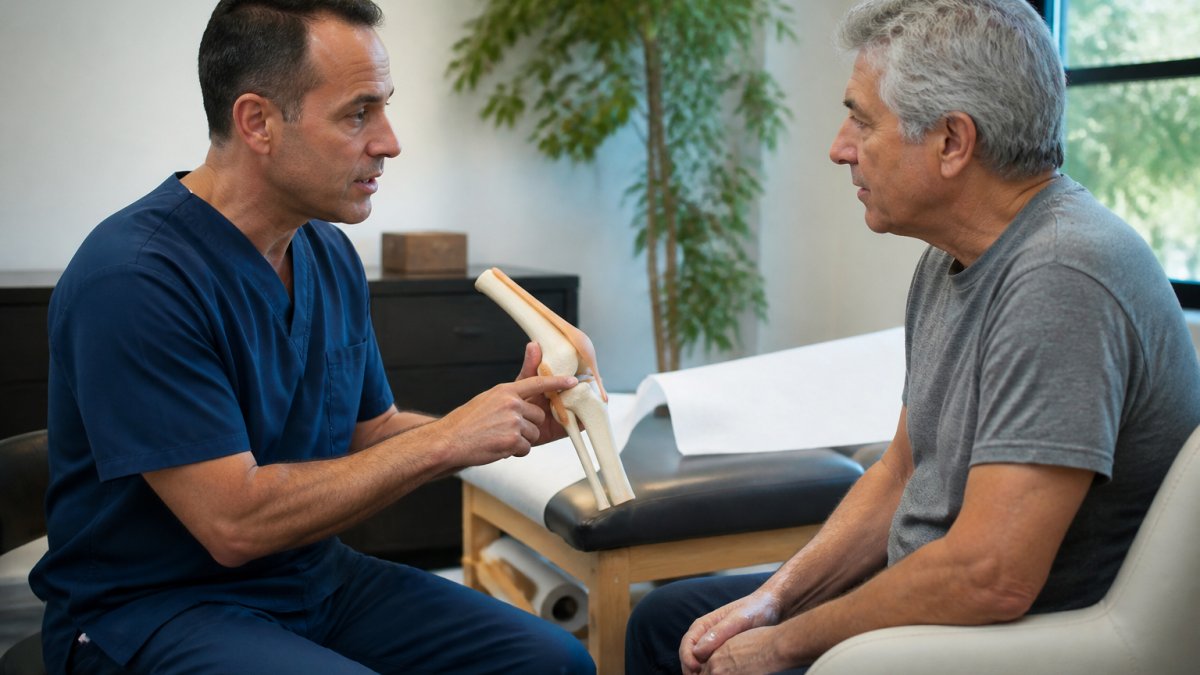
This method appeals to active individuals, athletes, and people who want to avoid surgery or long-term medication dependence. The treatment timeline is typically shorter than surgical recovery, and many patients return to normal activities within weeks rather than months.
How Your Body’s Repair Mechanisms Support Tissue Healing
Your body is constantly working to repair damaged tissue through a biological process that involves inflammation, cell migration, growth factor signaling, and tissue remodeling. Understanding this process explains why regenerative medicine approaches can be effective for joint repair.
When tissue is injured, your body initiates a healing cascade. Initially, inflammatory cells move into the damaged area and release signaling molecules that recruit stem cells and other repair-promoting cells.
The challenge with many chronic joint injuries is that this natural healing process stalls or becomes incomplete. Cartilage has limited blood supply, which means it heals slowly or not at all on its own.
Mesenchymal stem cells, which are found in bone marrow and fatty tissue, play a central role in this process. These cells can differentiate into multiple tissue types and release anti-inflammatory substances that reduce pain and swelling. Platelet-rich plasma contains growth factors that stimulate cell proliferation and tissue formation.
Stem Cell Therapy for Joint Pain and Damaged Tissue
Stem cell therapy involves extracting stem cells from your own bone marrow or adipose tissue, processing them to increase their concentration, and then injecting them directly into the damaged joint. The goal is to provide your body with a concentrated population of cells capable of differentiating into the specific tissue types needed for repair.
Most stem cell therapy for joint repair uses mesenchymal stem cells (MSCs), which are multipotent cells found in bone marrow and fat tissue. These cells have several advantages: they can become bone, cartilage, tendon, or ligament cells depending on the local environment; they release anti-inflammatory and pain-reducing substances; and they stimulate other cells in the damaged area to participate in healing.
Mesenchymal Stem Cells and Their Role in Repair
Mesenchymal stem cells are the workhorses of regenerative medicine joint repair. When injected into a damaged joint, MSCs begin releasing growth factors like TGF-beta, FGF, and VEGF, which promote cell proliferation, reduce inflammation, and stimulate angiogenesis (new blood vessel formation). This creates an environment conducive to healing.
The cells themselves can differentiate into chondrocytes (cartilage cells) or osteocytes (bone cells) depending on the signals they receive from the damaged tissue. This capacity to become the exact cell type needed makes MSCs particularly valuable for cartilage repair and bone regeneration.
The source of MSCs matters. Bone marrow-derived MSCs and adipose-derived MSCs both show therapeutic potential, though they may have slightly different properties. Bone marrow contains more primitive stem cells, while fat tissue contains more abundant MSCs overall. At Advanced Health Center, we assess which source is most appropriate for your specific condition.
PRP Injections for Osteoarthritis and Joint Degeneration
Platelet-rich plasma (PRP) is a concentration of your own blood platelets suspended in plasma. Platelets are small cell fragments rich in growth factors and bioactive proteins that promote tissue repair and reduce inflammation.
PRP works through a different mechanism than stem cell therapy, though the end goal is the same: stimulate tissue repair and reduce pain.
PRP is particularly effective for osteoarthritis and joint degeneration because it addresses both the structural damage (cartilage loss) and the inflammatory environment that perpetuates pain. Many patients experience pain relief within weeks, and the effects can last several months.
The concentration of platelets in the PRP preparation matters significantly. Higher platelet concentrations generally deliver more growth factors, but research suggests there’s an optimal range, too much platelet activation can paradoxically increase inflammation. This is why the processing method and timing of the injection are important technical details.
Knee Cartilage Regeneration Success Rate and Realistic Outcomes
When discussing regenerative medicine for joint repair, particularly for knee cartilage, it’s important to set realistic expectations about what these treatments can and cannot accomplish.
Cartilage regeneration is challenging because cartilage has no blood supply and heals very slowly. Regenerative medicine approaches can stimulate some cartilage repair and regrowth, but they do not typically regenerate full-thickness cartilage defects completely.
Success depends on several factors: the size and depth of the cartilage defect, the degree of osteoarthritis present, your age and overall health, and the specific regenerative approach used.
Many patients report significant pain reduction and improved mobility within 4-8 weeks of treatment. Some experience continued improvement over several months as the healing process unfolds.
The realistic expectation is that regenerative medicine for joint repair can substantially improve your symptoms and function, potentially avoiding surgery or delaying it significantly.
Regenerative Therapy Cost and Insurance Coverage
The cost of regenerative medicine treatments varies based on the specific procedure, the joint being treated, and the number of injections required. Because these treatments are often considered experimental or elective by insurance companies, many are not covered by standard health plans.
Book your consultation today! →
Insurance coverage depends on your specific policy and the diagnosis. Some plans cover stem cell therapy or PRP for certain conditions like osteoarthritis, while others do not. Workers’ compensation and auto insurance sometimes cover regenerative treatments for work-related or accident-related injuries, particularly if surgery has been recommended and declined.
For personalized information about costs and your insurance coverage, contact Advanced Health Center directly. We can discuss payment options and what to expect for your specific condition.
Regenerative Medicine vs. Standard Care and Surgery
Regenerative medicine represents a different approach to joint problems compared to the standard care pathway most patients follow.
Standard care typically begins with conservative treatments: rest, anti-inflammatory medications like ibuprofen or naproxen, physical therapy, and sometimes cortisone injections.
Regenerative medicine fits between conservative care and surgery. It’s more aggressive than rest and medication but far less invasive than surgery. It requires no cutting, no general anesthesia, and no extended recovery period.
Compared to cortisone injections, which provide temporary anti-inflammatory relief but don’t address the underlying damage, regenerative medicine aims to actually repair tissue.
Surgery is more definitive for severe damage but carries risks: infection, blood clots, anesthesia complications, and extended recovery.
Many patients find regenerative medicine valuable as a first step before committing to surgery. If it works well, you’ve avoided surgery entirely. If it provides partial relief, you’ve gained time and function.
What to Expect: Treatment Timeline, Recovery, and Durability
Understanding the treatment process helps set realistic expectations and allows you to plan your schedule and activities accordingly.
Before Treatment: You’ll have a consultation where we evaluate your condition, review imaging if available, and determine whether regenerative medicine is appropriate for you.
During Treatment: The procedure itself typically takes 30-60 minutes.
Immediately After: You may experience mild soreness or swelling at the injection site for a few days. Most patients can resume light activities immediately.
Recovery Timeline: Many patients notice improvement within 2-4 weeks. Continued improvement often occurs over 8-12 weeks as tissue repair progresses. Some patients experience gradual improvement over several months.
Durability: The effects of regenerative medicine treatments often last 1-2 years or longer. Some patients maintain improvements for years. Others may benefit from periodic maintenance injections if symptoms gradually return.
The key advantage of regenerative medicine for joint repair is that you’re not trading one problem for another.
Chronic joint pain doesn’t have to limit your life. Our team has over 40 years of experience managing complex cases, empowering our patients to regain their health through proven, holistic therapies. Learn more about our regenerative medicine approach.
Frequently Asked Questions
What is the success rate of knee cartilage regeneration?
Success rates for knee cartilage regeneration vary significantly by treatment type and study design. Stem cell therapy studies report outcomes ranging from 50-80% improvement in pain and function, though true cartilage regrowth remains inconsistent. PRP therapy shows more modest results, with 40-60% of patients experiencing meaningful pain reduction. These figures depend heavily on cartilage damage severity, patient age, and underlying arthritis stage. Clinical evidence is still developing, and long-term durability beyond 2-3 years remains understudied. Your specific candidacy depends on your condition’s extent and your body’s healing capacity.
Does insurance cover regenerative medicine for joint repair?
Most insurance plans do not cover regenerative medicine treatments like stem cell therapy or PRP injections because the FDA classifies many of these therapies as experimental or investigational. Some patients find coverage through workers’ compensation for work-related injuries or auto insurance for accident-related joint damage, but this varies by policy. Medicare and Medicaid generally do not cover these treatments. Coverage depends on your specific plan, the treatment type, and how the injury occurred. Contact your insurance provider directly to understand your plan’s stance on regenerative therapy before committing to treatment.
How long does regenerative joint treatment take to show results?
Most patients begin noticing improvement within 2-4 weeks, though full therapeutic benefit typically develops over 8-12 weeks as growth factors and stem cells work to reduce inflammation and support tissue repair. Some patients experience pain relief within days due to reduced inflammation, while tissue regeneration itself progresses more slowly. Recovery varies based on the joint treated, the severity of damage, and your overall healing capacity. Multiple injections spaced 4-6 weeks apart are often recommended for optimal results. Patience is essential; regenerative medicine works gradually, unlike surgery, which produces immediate structural changes.
What is the difference between stem cell therapy and PRP injections for joints?
Stem cell therapy introduces living cells capable of differentiating into cartilage, bone, or other tissue types, offering potential for structural repair. PRP (platelet-rich plasma) concentrates your own blood’s growth factors and bioactive substances to reduce inflammation and support healing, but does not introduce new cells. Stem cell therapy is generally more expensive and carries higher regulatory scrutiny, while PRP is less invasive and more widely available. PRP works primarily through inflammation reduction and pain relief, whereas stem cells aim for tissue regeneration. Your candidacy for each depends on your condition’s severity, your age, and your healing capacity.
Can regenerative medicine repair damaged joints without surgery?
Regenerative medicine can support tissue repair and reduce pain in damaged joints, but it does not always restore joints to their original state or reverse severe cartilage loss. It works best for early-to-moderate joint damage, inflammation, and pain relief. Severely damaged joints with bone-on-bone arthritis may not respond adequately to regenerative treatments alone. The approach targets the root cause of pain and supports your body’s natural repair mechanisms, avoiding surgical complications and recovery time. Success depends on damage extent, your age, and your body’s healing response. A consultation can clarify whether your specific joint damage is a candidate for regenerative therapy or whether surgery remains necessary.
Is regenerative medicine worth the cost if insurance won’t cover it?
Whether regenerative medicine justifies out-of-pocket cost depends on your pain severity, how long you’ve suffered, and your goals. If you’ve exhausted physical therapy, injections, and medications without relief, regenerative therapy offers a non-surgical option that avoids surgery’s risks and recovery time. Costs vary widely depending on treatment type and the number of injections needed, so request a detailed quote before deciding. Consider the long-term value: avoiding surgery can prevent future complications and preserve joint function for years. However, results are not guaranteed, and you should understand the evidence for your specific condition before committing financially. A consultation can help you weigh cost against realistic outcomes for your situation.
Can regenerative medicine reverse osteoarthritis?
Regenerative medicine can slow osteoarthritis progression, reduce inflammation, and relieve pain, but it does not fully reverse established cartilage loss in most cases. It works best when cartilage damage is mild-to-moderate and inflammation is driving pain. In advanced osteoarthritis where cartilage is severely worn, regenerative treatments may offer pain relief and improved mobility without reversing the underlying degeneration. Growth factors and stem cells support healing and reduce inflammatory responses, which can improve function and quality of life. The goal is typically to restore mobility and reduce pain rather than achieve complete cartilage regeneration. Your specific prognosis depends on your arthritis stage, age, and the extent of joint damage.