

Table of Contents
- What Regenerative Knee Therapy Actually Does
- How Regenerative Therapy Works for Knee Pain
- Non-Surgical Knee Pain Relief vs. Orthopedic Surgery
- Regenerative Medicine Recovery Time and Expectations
- Medicare Coverage for Stem Cell Therapy and Costs
- Who Benefits Most From Regenerative Knee Therapy
- Post-Procedure Rehabilitation and Long-Term Joint Health
- Why Regenerative Therapy Is Worth Considering
- Frequently Asked Questions
Last Updated: August 31, 2026
What Regenerative Knee Therapy Actually Does
Regenerative knee therapy for seniors is a non-surgical approach that uses the body’s own healing mechanisms to repair damaged cartilage, reduce joint inflammation, and restore mobility without the risks associated with orthopedic surgery. Rather than replacing or removing damaged tissue, these treatments stimulate the body’s natural repair processes at the cellular level, addressing the root cause of knee pain instead of masking symptoms with pain medications or invasive procedures.
For seniors dealing with chronic knee pain from osteoarthritis or degenerative joint disease, regenerative medicine takes a different path than traditional approaches: it attempts to restore function by encouraging tissue regeneration. This means seniors can potentially regain the mobility needed for daily activities, walking without discomfort, climbing stairs, or returning to hobbies like golf, without the lengthy recovery periods that come with knee replacement surgery.
The science behind regenerative knee therapy relies on biologic therapies that harness cellular healing capacity. When injected into the damaged joint, these treatments create an environment where cartilage restoration becomes possible. At Advanced Health Center, we’ve worked with seniors for over 40 years to develop personalized treatment plans that address each patient’s specific condition, whether they’re dealing with early-stage cartilage loss or more advanced degenerative joint disease.
How Regenerative Therapy Works for Knee Pain
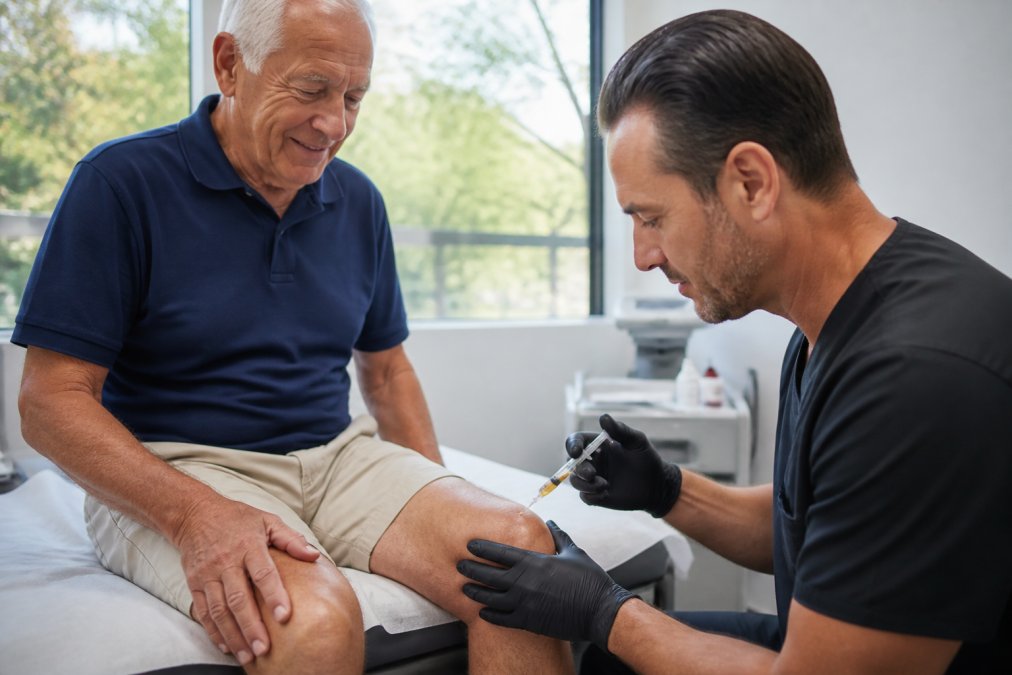
Regenerative knee therapy works by introducing biologic materials directly into the damaged joint, where they trigger the body’s own healing response. The process begins with a consultation to assess your knee condition, often using imaging to determine the extent of cartilage damage. Once a treatment plan is established, the procedure takes place in an outpatient setting with no hospitalization required.
During the injection, a healthcare provider uses ultrasound or fluoroscopy guidance to ensure precise placement of the therapeutic material into the affected joint space. The entire procedure typically takes 15 to 30 minutes. After injection, the therapeutic material reduces joint inflammation, provides cushioning to the synovial fluid, and stimulates mesenchymal stem cells and other healing mechanisms to promote tissue regeneration, fundamentally different from surgery, which removes or replaces tissue.
Platelet-Rich Plasma (PRP) for Knee Degeneration
Platelet-rich plasma is created by drawing a small amount of your own blood, processing it to concentrate the platelets, and injecting the concentrate back into your knee joint. Platelets contain growth factors that naturally promote healing and reduce inflammation (peer-reviewed research). For seniors with mild to moderate cartilage loss, PRP can be an effective first-line treatment because it uses your body’s own healing resources.
The advantage of PRP is that it’s derived from your own blood, eliminating rejection concerns. Many seniors tolerate PRP well and can return to light activity within a few days. However, PRP is most effective for early-stage joint degeneration where some cartilage remains intact. For more advanced cartilage loss, PRP alone may not provide sufficient regenerative stimulus, and some patients require multiple injections spaced weeks apart.
Mesenchymal Stem Cells and Cartilage Restoration
Mesenchymal stem cells (MSCs), typically harvested from bone marrow or adipose tissue, have the remarkable ability to differentiate into cartilage cells and reduce inflammation simultaneously. For seniors with moderate to severe cartilage degeneration, MSC therapy often delivers stronger tissue regeneration than PRP alone.
When MSCs are injected into the knee joint, they migrate to areas of damage and begin cartilage restoration while secreting anti-inflammatory compounds that reduce joint inflammation driving pain. This dual action makes MSC therapy particularly valuable for seniors whose knees have suffered years of degenerative changes. The challenge is that MSC therapy requires more sophisticated processing and a longer preparation timeline, and the cost is higher than PRP. But for seniors seeking meaningful cartilage restoration rather than temporary pain relief, the investment often proves worthwhile.
Non-Surgical Knee Pain Relief vs. Orthopedic Surgery
The fundamental choice many seniors face is whether to pursue non-surgical regenerative approaches or accept orthopedic surgery. Surgery carries real risks: infection, blood clots, anesthesia complications, and extended recovery times that can stretch months or even years for older patients. Knee replacement surgery requires 6 to 12 months of rehabilitation (the NIH).
Regenerative knee therapy offers a different risk profile. Because it’s minimally invasive and uses your body’s own healing mechanisms, the risk of serious complications is substantially lower. You avoid surgical incision, general anesthesia, and months-long recovery. Many seniors can return to normal activities within days or weeks, not months.
That said, regenerative therapy isn’t a guaranteed cure. It works best when cartilage damage is moderate rather than severe, and when the underlying joint structure is still largely intact. If your knee has progressed to bone-on-bone contact or severe structural damage, surgery may ultimately be necessary. The key is timing: catching degenerative joint disease early and pursuing regenerative treatment before damage becomes irreversible gives you the best chance of avoiding surgery altogether.
Advanced Health Center specializes in this assessment. Our team evaluates your specific condition to determine whether regenerative therapy is likely to succeed or whether you’re already at a stage where surgical intervention is more appropriate.
Regenerative Medicine Recovery Time and Expectations
One of the biggest advantages of regenerative knee therapy for seniors is the rapid recovery compared to surgery. Most patients experience minimal downtime immediately after the injection and can walk out of the clinic the same day, though you should avoid strenuous activity for the first 24 to 48 hours.
The actual healing process unfolds over weeks and months. Most patients notice gradual reduction in pain and increasing mobility over 4 to 12 weeks as the regenerative process takes hold. Your knee may feel slightly sore or stiff for a few days post-injection, which is normal inflammation as the healing cascade begins. Ice and gentle movement typically manage this discomfort. Avoid high-impact activities like running or jumping for at least 4 to 6 weeks, but light walking and gentle range-of-motion exercises support the healing process.
The timeline depends on which treatment you receive. PRP injections may require multiple sessions spaced 4 to 6 weeks apart, extending the total treatment period to 3 to 4 months. MSC therapy, because it delivers more potent regenerative stimulus in a single injection, often shows results within 6 to 8 weeks. Your specific condition, age, and overall health all influence how quickly your body responds.
Medicare Coverage for Stem Cell Therapy and Costs
Medicare coverage for regenerative treatments remains limited and inconsistent. As of 2026, Medicare generally does not cover stem cell therapy for knee osteoarthritis, classifying most regenerative procedures as experimental or investigational. PRP therapy coverage varies by Medicare Advantage plan, but original Medicare typically does not reimburse for these treatments.
Most seniors must pay out-of-pocket for regenerative knee therapy. Costs vary based on the specific treatment, the clinic’s location, and the complexity of your condition. We recommend contacting Advanced Health Center directly to discuss your treatment options and associated costs. Our team can provide a detailed breakdown for your particular situation and discuss any payment plans or financing options that might be available.
This financial barrier is real. Some seniors choose to delay treatment or pursue less expensive PRP therapy first, then consider MSC therapy if initial results are insufficient. Others prioritize regenerative therapy because they want to avoid surgery and its associated costs, which often exceed $30,000 to $50,000 when you factor in hospitalization, anesthesia, and extended rehabilitation. improving cellular repair.
Book your consultation today! →
Who Benefits Most From Regenerative Knee Therapy
The best candidates for regenerative therapy typically have moderate cartilage damage with intact joint structure, chronic pain that hasn’t responded adequately to conservative treatments like physical therapy or injections, and a strong desire to avoid surgery if possible.
Age alone isn’t a barrier. Seniors in their 60s, 70s, and even 80s can benefit if their overall health is reasonable and their knee damage is at an appropriate stage. What matters more is the degree of cartilage loss and joint degeneration. Imaging studies help determine this, specifically the Kellgren-Lawrence grade, which ranges from 0 (no arthritis) to 4 (severe arthritis with bone-on-bone contact) (peer-reviewed research). Regenerative therapy works best for grades 1 to 3; grade 4 typically requires surgical intervention.
Ideal candidates are also those who want to preserve their natural knee and maintain an active lifestyle. If you’re determined to return to golf, hiking, or regular exercise, regenerative therapy aligns with that goal better than pain medication alone. Conversely, seniors with severe bone-on-bone arthritis, significant joint instability, or other structural damage may not benefit from regenerative therapy alone. Additionally, those with active infections, severe diabetes, or certain autoimmune conditions may not be suitable candidates.
Advanced Health Center conducts comprehensive assessments to determine candidacy. We review your imaging, discuss your symptoms and functional goals, and honestly evaluate whether regenerative therapy is likely to help or whether you’d be better served by other interventions.
Post-Procedure Rehabilitation and Long-Term Joint Health
The period after your regenerative injection is critical for maximizing results. While you don’t need intensive physical therapy like you would after surgery, targeted rehabilitation supports the healing process and helps restore functional mobility.
In the first week post-injection, focus on gentle range-of-motion exercises. Walking is encouraged, as it promotes blood flow and gentle joint movement without excessive stress. Avoid anything that causes sharp pain; mild discomfort is normal, but pain that increases with activity suggests you’re doing too much.

By week two, you can gradually increase activity. Light strengthening exercises for the muscles around your knee, particularly the quadriceps and hamstrings, become important. Strong supporting muscles reduce stress on the joint and protect your cartilage restoration. Physical therapy during this phase focuses on functional movements: rising from a chair, climbing stairs, walking on varied terrain.
Long-term joint health requires sustained effort. Even after successful regenerative therapy, your knee remains susceptible to future degeneration if you don’t maintain muscle strength and manage load appropriately. This means continuing with regular, low-impact exercise and weight management. Many seniors find that the improved mobility and reduced pain from regenerative therapy motivates them to stay active, which in turn supports long-term joint health.
Advanced Health Center emphasizes this long-term perspective. We provide guidance on exercises, activity modification, and lifestyle factors that maximize the longevity of your treatment results. For many seniors, this integrated approach extends the time before any future intervention becomes necessary.
Why Regenerative Therapy Is Worth Considering
For seniors facing chronic knee pain and the prospect of surgery or a lifetime of pain medication, regenerative knee therapy for seniors represents a meaningful alternative. It addresses the underlying problem, cartilage damage and joint degeneration, rather than just masking symptoms. The recovery is rapid, the risks are substantially lower than surgery, and the potential to restore genuine functional mobility is significant.
The evidence supporting regenerative therapies continues to grow. Clinical studies demonstrate that both PRP and MSC therapies can reduce pain, improve function, and slow or halt cartilage degeneration. These aren’t miracle cures, but they’re legitimate medical interventions that work for many patients, particularly when applied at the right stage of joint disease.
The timing question is crucial. Pursuing regenerative therapy early, before cartilage damage becomes severe, gives you the best chance of success and potentially avoids surgery altogether. Waiting until your knee is bone-on-bone eliminates the option; at that point, surgery becomes necessary.
At Advanced Health Center, we’ve guided thousands of seniors through this decision. Our 40 years of experience managing complex cases means we understand what works for different patients and what doesn’t. If you’re considering regenerative knee therapy, we encourage you to schedule a consultation to discuss your specific situation, assess your candidacy, and explore whether this approach aligns with your health goals. Book your consultation today to discover how regenerative medicine might help you reclaim the mobility and quality of life you’re seeking.
Chronic knee pain doesn’t have to dictate your future. Advanced Health Center specializes in regenerative medicine approaches designed specifically for seniors who want to avoid surgery and restore genuine mobility. With over 40 years of experience managing complex cases, our team provides personalized regenerative knee therapy for seniors tailored to your condition and goals. We focus on non-surgical treatments that address the root cause of your pain, not just the symptoms. Book your consultation today and learn whether regenerative therapy can help you return to the activities you love.
Frequently Asked Questions
Does regenerative therapy actually work for knee pain in seniors?
Regenerative knee therapy addresses the root cause by promoting tissue growth and cartilage restoration rather than just masking symptoms. Clinical outcomes show functional recovery and pain reduction, particularly for seniors with early-to-moderate joint degeneration. Results vary based on your specific condition, age, and overall health. A consultation can determine if you’re a candidate and what realistic outcomes look like for your situation.
Does Medicare pay for regenerative stem cell therapy?
Medicare coverage for stem cell therapy remains limited. Most regenerative treatments are considered experimental or investigational by Medicare and are not covered. However, some PRP treatments may have partial coverage depending on the procedure code and your specific plan. Contact your Medicare provider directly or speak with our team about your coverage options and out-of-pocket costs before treatment.
How long does regenerative knee therapy recovery take?
Regenerative medicine recovery time typically ranges from 2 to 6 weeks before you notice significant improvement, though full tissue regeneration can take 3 to 6 months. Most patients return to light activities within days and gradually increase intensity. Post-procedure rehabilitation protocols are essential for optimal results. Your specific recovery depends on the treatment type, your age, and how well you follow rehabilitation guidance.
What are the risks of regenerative knee injections for seniors?
Regenerative knee injections are minimally invasive with low complication rates. Potential risks include temporary swelling, bruising, or infection at the injection site. Unlike orthopedic surgery, there’s no risk of surgical complications like blood clots or prolonged immobilization. Seniors generally tolerate these treatments well. Discuss your medical history and current medications during your consultation to ensure this approach is safe for your specific health profile.
This article was written using GrandRanker