

Table of Contents
- What Regenerative Medicine Actually Does
- Regenerative Medicine vs. Medication: Key Differences
- How Regenerative Medicine Works at the Cellular Level
- Benefits of Non-Surgical Pain Relief
- Is Regenerative Medicine Covered by Insurance
- Regenerative Medicine Recovery Timeline: What to Expect
- Realistic Expectations: When Regenerative Medicine Works Best
- Conclusion: Making the Right Choice for Your Pain
- Supporting Resources
- Frequently Asked Questions
Last Updated: September 1, 2026
What Regenerative Medicine Actually Does
Regenerative medicine uses the body’s own healing mechanisms to repair or replace damaged tissues and organs without pharmaceutical intervention. Unlike traditional medication that manages symptoms, regenerative medicine targets the root cause of pain by stimulating cellular repair and biological healing. At Advanced Health Center, we’ve worked with thousands of patients who discovered that regenerative medicine can replace medication for many chronic pain conditions, particularly when conventional treatments have plateaued.
The field encompasses stem cell therapies, platelet-rich plasma injections, and tissue engineering techniques that harness your body’s natural regenerative capacity. These are now mainstream clinical practices with documented success in treating orthopedic conditions, soft tissue injuries, and degenerative joint disease. The key difference is that regenerative medicine addresses disease modification rather than just managing symptoms.
A patient taking daily medication experiences symptom relief only while taking it. A patient undergoing regenerative medicine experiences progressive improvement as tissues heal, often leading to reduced or eliminated medication dependence over time.
Regenerative Medicine vs. Medication: Key Differences
The distinction between regenerative medicine and medication comes down to mechanism and duration. Medication works systemically, reducing pain signals throughout your body. Regenerative medicine works locally, delivering cellular therapies directly to damaged tissue.
| Factor | Medication | Regenerative Medicine |
|---|---|---|
| How it works | Manages symptoms systemically | Stimulates tissue repair locally |
| Onset | Hours to days | Weeks to months |
| Duration | Only while taking the drug | Progressive, often permanent |
| Side effects | Common with long-term use | Minimal; uses your own cells |
| Root cause | Addresses symptoms | Addresses underlying damage |
| Dependency | Ongoing requirement | Goal is independence |
Medication masks pain while tissue damage continues. A person taking anti-inflammatory drugs for knee arthritis still has cartilage loss progressing. Regenerative medicine uses autologous cells (your own harvested cells) or allogeneic cells (donor-derived) to stimulate biological healing. The tissue actually regenerates rather than deteriorates further.
For chronic degenerative conditions like lower back pain, shoulder impingement, and knee degeneration, regenerative medicine replaces medication because it addresses what medication cannot: actual tissue restoration. Medication provides immediate relief; regenerative medicine requires patience, typically 6 to 12 weeks before noticeable improvement, with continued progress over months.
How Regenerative Medicine Works at the Cellular Level
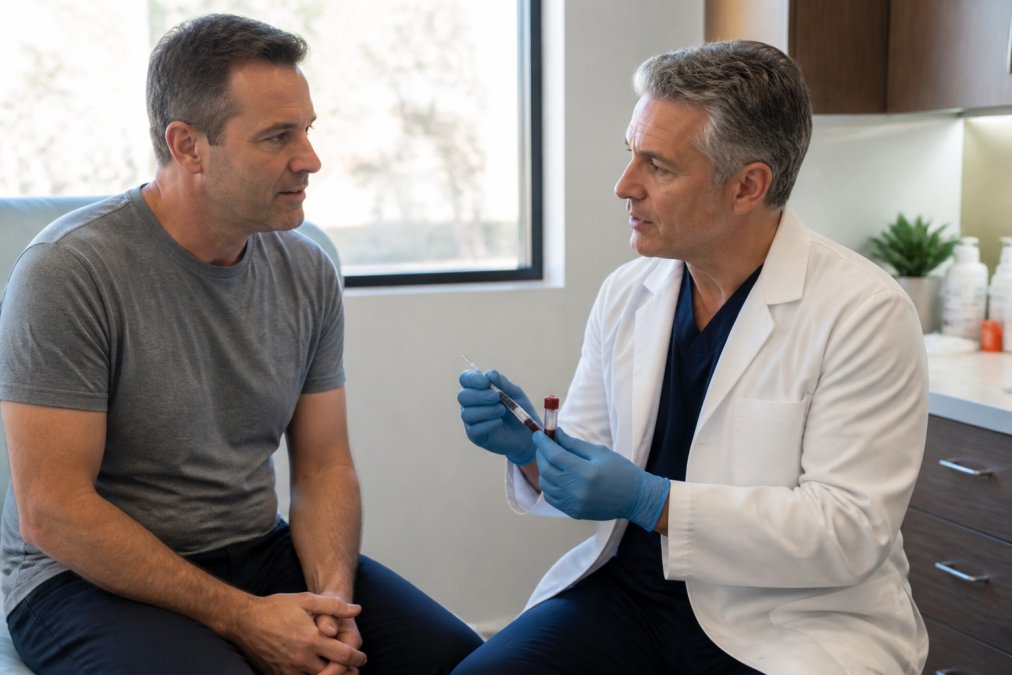
Regenerative medicine triggers healing through cellular signaling and tissue regeneration. When you receive a regenerative injection, you’re introducing cells and growth factors that communicate with damaged tissue, telling it to repair itself.
For autologous treatments, cells are extracted from your own body, typically from bone marrow or adipose tissue, and contain mesenchymal stem cells with remarkable regenerative properties. Once delivered to the injury site, stem cells reduce inflammation, secrete growth factors that stimulate tissue repair, and differentiate into specialized cells that replace damaged tissue.
Biomaterials and bio-scaffolds often accompany cell therapies, providing structural support for new tissue growth. The molecular signaling cascade that follows creates lasting change. Unlike a painkiller that wears off, this cellular communication continues for weeks and months, progressively restoring function as the underlying tissue actually heals.
Benefits of Non-Surgical Pain Relief
Non-surgical pain relief through regenerative medicine offers advantages that traditional medication and surgery cannot match. You’re restoring the tissue causing pain rather than just managing it, which changes everything about long-term quality of life.
Surgery carries infection risk, anesthesia complications, and recovery downtime. Regenerative injections are minimally invasive, typically performed in an office setting with local anesthesia, allowing you to return to normal activities within days.
Long-term pain relief is significant. Medication provides temporary relief that ends when you stop taking it. Regenerative medicine, once successful, often provides permanent relief because the tissue has actually healed. Many patients report eliminating their medication regimen entirely after 12 to 18 months of successful treatment.
Chronic pain medication often causes drowsiness, digestive issues, or dependency concerns. Regenerative medicine has minimal systemic side effects because it works locally. Patients report clearer thinking, better sleep, and improved mood, benefits extending beyond pain reduction.
Pain relief from regenerative injections typically takes 4-8 weeks to become noticeable, with continued improvement over 3-6 months. Patients who understand this timeline and remain compliant with prescribed physical therapy see significantly better outcomes.
Is Regenerative Medicine Covered by Insurance
Insurance coverage for regenerative medicine varies significantly depending on your plan and specific treatment. Most traditional insurance plans classify regenerative medicine as experimental or elective, limiting coverage. Some plans cover specific regenerative therapies, particularly platelet-rich plasma injections for orthopedic conditions, if deemed medically necessary.
The best approach is direct communication with your insurance provider before pursuing treatment. Ask specifically about coverage for the treatment your physician recommends. Some insurers require prior authorization or documentation that you’ve exhausted conservative treatments first.
While insurance may not cover regenerative medicine, the out-of-pocket cost is often comparable to what patients spend on years of medication, physical therapy, and specialist visits. When calculating total cost of managing chronic pain through traditional routes versus investing in one regenerative treatment, the numbers often favor regenerative medicine, especially when it eliminates ongoing medication costs. remedies for chronic pain.
At Advanced Health Center, we work with patients to understand coverage options and provide transparent pricing information so you can make an informed decision.
Do not assume your insurance won’t cover regenerative medicine without asking directly. Coverage policies vary by plan, state, and treatment type. Some plans cover specific regenerative therapies under certain conditions.
Regenerative Medicine Recovery Timeline: What to Expect
The recovery timeline for regenerative medicine is progressive and gradual. The immediate post-treatment phase lasts about 48 hours with soreness at the injection site similar to a blood draw. You can return to light activities immediately; most people return to desk work the next day.
The first 2-4 weeks are the “quiet healing” phase. Your injected cells establish themselves and begin communicating with damaged tissue. Avoid strenuous activity and heavy lifting during this period.
Weeks 4-8 mark when most patients notice tangible improvement. Pain typically decreases noticeably and mobility increases. Many patients report significant improvement by week 6.
Book your consultation today! →
Months 2-6 show continued progressive improvement. While medication provides the same relief month after month, regenerative medicine patients often report additional functional improvement each month as tissue continues healing.

By 6 months, most patients reach their plateau of improvement. Full tissue remodeling can continue for 12-18 months, with some patients experiencing subtle continued improvement even after obvious gains plateau.
Realistic Expectations: When Regenerative Medicine Works Best
Not every patient benefits from regenerative medicine. It works best for specific orthopedic and degenerative conditions where tissue damage is localized and addressable.
Regenerative medicine works exceptionally well for early to moderate joint degeneration, soft tissue injuries, chronic lower back pain from disc degeneration, shoulder impingement, rotator cuff issues, plantar fasciitis, and neuropathic pain from localized nerve irritation.
Success rates are highest when there’s clear structural damage visible on imaging and the damage is localized to a specific area that can be injected. A patient with early cartilage loss has more favorable outcomes than one with bone-on-bone arthritis.
Patient expectations matter enormously. Someone expecting progressive improvement over months with realistic goals typically sees success. A 65-year-old golfer with moderate knee degeneration can reasonably expect to return to golfing twice a week. A patient hoping to run marathons after severe arthritis might be disappointed.
Your physician’s assessment is crucial. Before pursuing regenerative medicine, you should have imaging, a clear diagnosis, and realistic expectations about what tissue regeneration can accomplish for your specific condition. Advanced Health Center specializes in this assessment and is direct about what regenerative medicine can and cannot do for each patient.
Regenerative medicine works best for localized tissue damage with clear structural pathology, in patients who understand the timeline, and in conditions where tissue regeneration directly addresses the pain source.
Conclusion: Making the Right Choice for Your Pain
Can regenerative medicine replace medication? For many patients with chronic pain, the answer is yes. Regenerative medicine addresses tissue damage that medication cannot fix, offering the possibility of long-term or permanent relief rather than ongoing symptom management. It avoids surgical complications and has minimal systemic side effects.
But regenerative medicine isn’t right for every patient or condition. It requires patience, realistic expectations, and understanding that healing takes time. It works best when there’s specific, addressable tissue damage.
The real power of regenerative medicine lies in restoring function. You’re potentially eliminating the need for pain management altogether by actually fixing the underlying problem.
At Advanced Health Center, we’ve helped over 10,000 patients escape chronic pain through specialized regenerative medicine treatments. With over 40 years of experience managing complex cases, we understand what works and what doesn’t. Our multi-faceted approach combines regenerative therapies with personalized care designed to address your specific pain source and restore the mobility you’ve lost.
If you’ve been managing chronic pain with medication and physical therapy without lasting results, regenerative medicine might be the answer. Book your consultation today to discover whether regenerative medicine can replace medication for your condition and help you reclaim your quality of life.
Supporting Resources
External Authorities on Regenerative Medicine:
According to the National Institutes of Health’s regenerative medicine research division, stem cell-based therapies show documented efficacy in tissue repair and functional restoration for multiple orthopedic conditions.
Research from the American Academy of Orthopaedic Surgeons indicates that biologics and cell-based therapies are increasingly recognized as standard treatment options for degenerative joint disease and soft tissue injuries.
The FDA’s guidance on regenerative medicine advanced therapies establishes regulatory pathways for cell-based treatments, reflecting the transition of regenerative medicine from experimental status toward mainstream clinical practice.
Frequently Asked Questions
Can regenerative medicine actually replace medication for chronic pain?
Regenerative medicine can reduce or eliminate the need for medication in many cases by addressing the root cause of pain rather than masking symptoms. Unlike pharmaceutical interventions that manage pain temporarily, regenerative therapies use stem cells, tissue engineering, and biological healing to restore damaged tissue. However, replacement depends on your specific condition, severity, and how your body responds. Some patients achieve complete medication independence; others use regenerative medicine alongside reduced medication doses. This is why a thorough evaluation is essential before making changes to your treatment plan.
Is regenerative medicine covered by insurance?
Coverage varies significantly by insurance provider and the specific regenerative therapy. Many insurance plans still classify regenerative medicine as experimental or investigational, meaning they don’t cover it. However, some conditions, particularly orthobiologics for joint degeneration, are gaining recognition by major insurers. Your best approach is to contact your insurance provider directly with your diagnosis and proposed treatment. Advanced Health Center can help you navigate insurance questions and discuss payment options during your consultation.
How long does regenerative medicine treatment take to show results?
The regenerative medicine recovery timeline typically ranges from 3 to 12 weeks for noticeable improvement, though full healing can take 6 months or longer. Initial results often appear within 2-4 weeks as inflammation decreases and cellular repair begins. Soft tissue repair and joint degeneration treatment may require multiple sessions spaced weeks apart. Recovery speed depends on your age, overall health, the severity of your condition, and how well you follow post-treatment care instructions. Some patients report significant pain relief within weeks; others experience gradual improvement over several months.
What are the main disadvantages of regenerative medicine compared to medication?
The primary disadvantages include higher upfront costs, longer wait times for results, and variable outcomes depending on your condition and body’s healing response. Regenerative medicine requires patience, you won’t get immediate symptom relief like you might with pain medication. Not all conditions respond equally well, and some patients may need combination therapy with traditional treatment. Additionally, the regulatory science around regenerative medicine continues to evolve, so some treatments have more clinical evidence than others. However, these trade-offs must be weighed against the long-term benefits of potentially eliminating medication dependency and addressing the underlying cause of pain.
This article was written using GrandRanker